



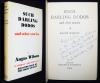

Signed books
Die Liste enthält 34 Einträge. Suchergebnisse löschen und Gesamtbestand anzeigen.
| Abbildung |
Beschreibung Gesamte Buchaufnahme |
Preis EUR |
|
|---|---|---|---|
| Barzilay, Frédéric. La Mirada en el Cos 1940-1993. (Con un ensayo de Antoni Roca). Eivissa, „Sa Nostra“ Caixa de Balears 1994. 4° (28 x 20 cm.). 77, (1) S. mit teils doppelblattgr. Duotone-Tafeln. Orig.-Kartonumschlag mit illustr. Schutzumschlag.
Mit eigenhändiger Widmung von F. Barzilay „Le regard sur le corps. Pari ! Frédéric Barzilay“. – Der französische Fotograf F. Barzilay (1917-2015), geb. in Saliniki in Griechenland, lebte seit 1927 Frankreich. Beide Eltern wurden unter der deutschen Besatzung nach Auschwitz deportiert und ermordet. Seine ersten Aktfotografien stammen aus dem Jahr 1939. Nach dem Zweiten Weltkrieg machte er eindrucksvolle Aufnahmen von Paris und verschiedenen europäischen Städten, was ihm die Mitgliedschaft in der Bewegung der sogenannten humanistischen Fotografen (Robert Doisneau, Willy Ronis und Lucien Hervé) einbrachte. Das Hauptthema seiner Arbeit ist der weibliche Körper und er etablierte sich als einer der wichtigsten Aktfotografen Frankreichs.1953 bis 1977 war Barzilay Beamter bei der UNESCO. Die erste Einzelausstellung fand 1960 in der Société française de photographie statt. 1965 wurden seine Fotografien erstmals vom Mercure de France in „Les corps illuminés“ veröffentlicht. Barzilay war mit Rotraut, Yves Klein, Dominique und Paul Éluard, Brassaï, Pablo Neruda und Man Ray befreundet. – Sehr gutes Exemplar. Schlagwörter: Aktfotografie, Aktphotographie, Photography of the nude, Signed books, Signierte Bücher, Widmungsexemplar |
300,-- |  |
|
 |
Piene, Otto. More sky. Cambridge, Massachusetts, London, MIT Press (1973). 4°. 237 S. mit teils farbigen Abbildungen. Farbig illustr. Orig.-Kartonumschlag.
Mit eigenhändiger Widmung von Otto Piene, datiert „VIII. 11-78“. – Manifest für Pienes sogenannte Sky Art (Himmelskunst) – Kunstwerke, die im Einklang mit der Natur in den Dimensionen des Himmels realisiert werden. Ursprünglich 1970 als Ringordner und 1973 als erweitertes Buch veröffentlicht, gilt „More Sky“ als das erste umfassende Kompendium von Piene nach seiner Zeit in der deutschen ZERO-Bewegung. Vom 17. Juli bis 31. August 2014 zeigten die Neue Nationalgalerie und die Deutsche Bank KunstHalle unter dem Titel „Otto Piene. More Sky“ eine viel beachtete Retrospektive seines Früh- und Spätwerks. Am Abend des 19. Juli 2014 versammelten sich tausende Besucher vor der Neuen Nationalgalerie. Trotz anfänglicher Windprobleme stiegen gegen Mitternacht drei bis zu 90 Meter hohe, illuminierte Luftskulpturen in Sternenform über dem Museumsdach in den Berliner Nachthimmel auf. Das Event markierte das Ende eines Lebenswerks. Otto Piene verstarb überraschend am 17. Juli 2014 im Alter von 86 Jahren – exakt am Eröffnungstag der Ausstellung und nur zwei Tage vor seinem letzten großen Himmelsspektakel. – Sehr gutes Exemplar. Schlagwörter: Kinetic sculpture, Pop art, Signed books, Signierte Bücher, Widmungsexemplar, ZERO |
240,-- | |
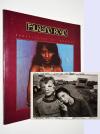 |
Mark, Mary Ellen. Bombay Falkland road. London, Thames and Hudson (1981). 4° (28 x 25,5 cm.). 17, (1) p., 65 full-page color illustrations, [1] p. Original color-illustrated paper cover.
Auer 634 (French edition). Koetzle, Fotographen A-Z 253. Roth, The Open Book 324 f. – First British edition; published simultaneously by Alfred A. Knopf in New York. – Inscribed by M. E. Mark on a photo postcard „For Stefan (Thull) – with all my best wishes – Mary Ellen Mark, Barcelona 1987″. – „The central theme of Mary Ellen Mark’s work was always the human being. … From heroin addicts in the 1960s to circus performers in the 1990s, people remain the constant focus of her engagement with photography. The desire to get as close as possible to the complexities of individual lives—to discover, understand, and reveal them—lends a deeply personal touch to Mark’s entire body of photographic work. Viewed from this perspective, the boundaries between individual stories begin to dissolve, and one perceives a single, continuous narrative running through her work“ (M. Fulton in Koetzle). – Very well-preserved copy. Schlagwörter: India, Portrait photography, Portraitphotographie, Porträtfotografie, Porträtphotographie, Signed books, Widmungsexemplar |
240,-- | |
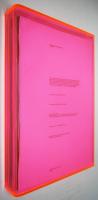 |
Paolozzi, Eduardo. Moonstrips Empire News. Introductory text by Christopher Finch Screenprinted by Kelpra Studio London. London, Editiones Alecto 1967. Folio (40 x 28 cm.). Titlepage and 100 serigraphs, on different types of paper and acetate (8 of which are signed and numbered by E. Paolozzi). Loose sheets in a transparent pink acrylic box.
Arnold 2191. R. Konnertz, Paolozzi S. 174 f. Miles, Kat. London 1977, S. 26. Papiergesänge 101. – Eines von 450 nummerierten Exemplaren (Gesamtauflage 500). – Gedruckt von den Kelpra Studios und herausgegeben von Editions Alecto, London, mit deren Stempeln auf der Rückseite der meisten Blätter. – „Moonstrips Empire News bestehen aus hundert losen Text- und Bilderblättern, Collagen, die durch den Siebdruck eine gewisse Einheit erhalten haben. Die bildlichen Vorlagen der Collagen stammen aus Paolozzis reichhaltiger Sammlung von „Alltagsrelikten des 20. Jahrhunderts […] Es sind ‚Imagos from Kino and Other Kitz Items‘, wie der Titel ursprünglich lauten sollte: Fotos von Computerchips, Filmstars, Luftaufnahmen von Städten, Stills aus Horror- und Comicfilmen, berühmte Rockmusiker, Reproduktionen von Kunstwerken, abstraktgeometrische Muster, Donald Duck- und Mickey Mouse-Illustrationen, Vergrößerungen von grafischen Strukturen und technischen Symbolen … technischen Symbolen … Zeitungsabbildungen, Automobilprospekte, kinetischkonstruktive Bilder usw.“ (Konnertz, 1984, S. 171) Paolozzi trug die Flemente zusammen und ordnete, kombinierte sie neu. Nach demselben Muster wurde der Text hergestellt. Es sind Collagen, cleren Teile mehreren Quellen entnommen wurden und die durch die unterschiedlichen Schrifttypen und Typengrößen erkennbar sind. Die hundert Blätter können vom Leser beliebig geordnet werden. In einer frei-assoziativen Art hat Paolozzi Moonstrips Empire News geschaffen und eine „terrestrial i mage bank“ (Miles, 1977, S. 26) angelegt. Auf den Einfluß des Philosophen Ludwig Wittgenstein, dessen Werke dem Künstler gut bekannt waren, wurde schon hingewiesen (Miles, 1977); Roussel und Duchamp wurden ebenso genannt. Mit der komplexen farbigen Bilder- und Textfolge Moonstrips Empire News hat Paolozzi einen bedeutenden Beitrag zur künstlerischen Anerkennung des Sie bdrucks geliefert, welcher als eines der wichtigen technischen Verfahren der heutigen Druckgraphik gilt“ (Karin von Maur in Papiergesänge). – Rückendeckel der Plexiglas Box mit Kratzspuren, sonst sehr gut erhalten. Schlagwörter: Avantgarde, Limited edition, Limitierte Ausgaben, Nummerierte Bücher, Pop art, Signed books, Signierte Bücher |
4.800,-- | |
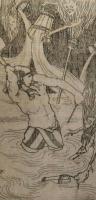 |
Goethe, (Johann Wolfgang v.). Balladen und Romanzen. Mit 15 Originalradierungen von Rolf Schott. (Herausgegeben von Anton Putz zu Adlersthurn). Grünwald-München, Hesperos-Verlag 1924. 4o. 93, (2) S. mit 15 Radierungen. Orig.-Halbpergamentband mit goldgepr. Rückentitel und Kopfgoldschnitt. (14. Hesperos-Druck).
Rodenberg 403, 14. Sennewald 24, 1. – Eines von 160 Exemplaren (Gesamtauflage 260); im Druckvermerk von R. Schott signiert. – Druck bei der Mandruck, München, die Radierungen auf der Kupferpresse J. Betz eingedruckt. – Der weitgehend autodidaktisch ausgebildete Rolf Schott (1891–1977) war früh „von der Geisteswelt des Ostens und der der Griechen und Römer angezogen“ (Adolf Sennewald). Seine ersten Illustrationswerke erschienen ausschließlich im Hesperos-Verlag. – Schönes sauberes Exemplar der Halbpergamentausgabe. Schlagwörter: Illustrated books, Illustrierte Bücher, Nummerierte Bücher, Signed books, Signierte Bücher |
140,-- | |
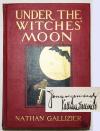 |
Gallizier, Nathan Under the Witches’ Moon. A romantic tale of mediaeval Rome. Boston, The Page Company 1917. 8°. VIII, [2], 455, [5], 10 pages with a colour frontispiece, an illustrated title page and 3 colour plates by Margaret West Kinney and Troy Sylvanus Kinney. Publisher’s decorated cloth with gold-embossed titles on the spine and front cover, and a front cover illustration in black, gold and red.
Bleiler, The Checklist of Fantastic Literature 122. Bleiler, The Guide to Supernatural Fiction 677. Nitka Collection of Fantastic Fiction (UCLA) 1605, Box 74. – First edition, first impression. – Signed by N. Gallizier. – The pilgrim Tristan of Avalon travels to the Eternal City to atone for his forbidden love for Hellayne – the wife of his feudal lord. Once there, however, Tristan quickly becomes entangled in a dense web of power struggles, passion and betrayal. He encounters the influential ‘Courtesan Queen of the Aventine’, is appointed commander of Castel Sant’Angelo by Senator Alberich, and must stand his ground against the sinister machinations of Grand Chamberlain Basil. – *Under the Witches’ Moon* marks the conclusion, or late climax, of a series of Gallizier’s novels set in Italy. He had previously explored similar themes in *The Sorceress of Rome* (1907) and *The Hill of Venus* (1913), all of which revolve around the ambivalence between Christian asceticism (pilgrimage) and worldly, often sinful passion. The book is a classic example of turn-of-the-century American historical romance. Unlike the European historical novel, which was often socially critical (as in the works of Walter Scott or Victor Hugo), the American trend of this period focused on escapism, melodrama and a rich atmosphere. Gallizier was known for combining meticulous historical research with highly imaginative, emotional tales of love and adventure. – Featuring beautiful Art Nouveau illustrations by the famous American artist couple Troy Kinney (1871–1938) and Margaret West Kinney (1872–1952), who were among the leading illustrators. As well as Nathan Gallizier’s lavish historical novels, they designed, amongst other things, book covers for Harper’s Bazaar magazine and illustrations for prominent authors such as Arthur Conan Doyle (for his historical novel *Sir Nigel*). Their shared passion was dance, which is why, in 1914, they wrote and illustrated the seminal work *The Dance: Its Place in Art and Life*, which remains well-known to this day. – The front cover has a small grease stain in the bottom right-hand corner, contemporary owner’s inscription in German (″Erhalten vom Autor am 15 August 1919 …“), a very good copy. Schlagwörter: Fantasie, Illustrated books, Illustrierte Bücher, Middle Ages, Mittelalter, Phantastik / Utopie, Rom, Signed books, Signierte Bücher, Trivial literature, Trivialliteratur, Trivialroman |
140,-- | |
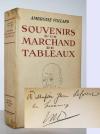 |
Vollard, Ambroise. Souvenirs d’un marchand de tableaux. Paris, Albin Michel (1937). 8°. 458 p., avec un frontispice et 23 planches. Couverture cartonnée avec jaquette illustrée (par Pablo Picasso)
Mit eigenhändiger Widmung von A. Vollard für den Pariser Kunsthändler Jean-François Lefranc (1890-1950). – Erste französische Ausgabe der berühmten Autobiographie des wohl bedeutendsten Pariser Kunsthändlers. Die amerikanische Erstausgabe erschien 1936 mit dem Titel „Recollections of a Picture Dealer“ bei Little, Brown and Company in Boston. Da Vollard 1939 bei einem Autounfall verstarb, stellt die bei Albin Michel vorliegende Fassung von 1937 die letzte zu seinen Lebzeiten erschienene und von ihm selbst autorisierte Version dar. Sie bildet bis heute die Textgrundlage für alle modernen Nachdrucke und Übersetzungen. Das Buch, eines der wichtigsten Dokumente über die Geburt der modernen Kunst in Paris um die Jahrhundertwende, gewährt tiefe Einblicke in den Pariser Kunstmarkt, die Mentalität von Sammlern sowie Vollards eigene Pionierarbeit als avantgardistischer Galerist und Verleger von Künstlerbüchern (Livres d’artiste). Außerdem beschreibt Vollard darin humorvoll und anekdotenreich seine persönlichen Begegnungen und Arbeitsbeziehungen mit Künstlern wie Paul Cézanne, Pierre-Auguste Renoir, Pablo Picasso, Edgar Degas, Paul Gauguin und Henri Matisse. – Der Widmungsempfänger Jean-François Lefranc erlangte 1942 traurige Berühmtheit als Kollaborateur und Profiteur des nationalsozialistischen Kunstraubs in Frankreich während des Zweiten Weltkriegs. – Kapital und Fuß mit geringen Fehlstellen, stellenweise etwas braunfleckig, sonst gut erhalten. Schlagwörter: Autobiographie, Autobiography, Avantgarde, Biographie, Biography, Kunsthandel, Paris, Signed books, Widmungsexemplar |
400,-- | |
 |
Goettl – Hiepe, Richard. Der Maler Helmut Goettl. München, Verlag der Neuen Münchner Galerie 1987. 4°. XLIV, 209, (5) S. mit teils farbigen und ganzseitigen Abbildungen und 3 signierten und nummerierten Orig.-Radierungen. Farbig illustr. Kartonumschlag.
Eines von 100 Exemplaren der Vorzugsausgabe; mit eigenhändiger Widmung von H. Goettl und den drei signierten Radierungen zu den Vorzugsausgaben A und B: „Amsterdam“, „Der Türmer“ und „Straßenstrich″ (Blattgr. jeweils 36,5 x 26,5 cm.). – Vorderdeckel an der unteren Ecke mit Knickspur, Stempel auf dem Titelblatt, gutes Exemplar. Schlagwörter: Catalogue raisonné, Catalogues raisonnés, Nummerierte Bücher, Signed books, Signierte Bücher, Signierte Künstler-Graphik, Vorzugsausgaben, Werkverzeichnis, Werkverzeichnisse, Widmungsexemplar |
300,-- | |
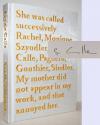 |
Calle, Sophie. She was called successively Rachel, Monique, Szyndler, Calle, Pagliero, Gonthier, Sindler. My mother did not appear in my work, and that annoyed her. Paris, Éditions Xavier Barral (2017). Gr.-8° (24,5 x 18 cm.). [200] p. with 102 color illustrations, some spanning full pages or double-page spreads. White Original silk binding with embroidered title in Gold on the spine and cover.
First English edition. The original French edition was published in 2012. – Signed by Sophie Calle. – „My mother loved being talked about. Her life does not appear in my work. That annoyed her. When I placed my camera at the foot of the bed where she lay dying fearing she might pass away while I was absent, yet wanting to be there to hear her last word she exclaimed: „Finally.“ Sophie Calle tells the story of Monique through excerpts from private diaries and photographs from family albums, presenting an installation created at the Palais de Tokyo as a tribute to her mother, who died in 2007. Yet this book is, above all, a unique object designed in collaboration with the artist. The cover text is embroidered, making it a precious object, while the texts accompanying the installation are embossed to evoke the tactile quality of some of Sophie Calle’s other works. It is a deeply personal and moving book, as well as a reflection on death that resonates with us all. For over twenty years, Sophie Calle’s work has taken the form of installations combining photography and narrative arrangements that echo the narrative art of the 1970s. In reality, Calle’s works represent the culmination and extension of situations that are both staged and lived out autobiographically. In the 1980s, she embarked on a distinctive path that places significant emphasis on emotion and feeling. The artist devises rules and rituals aimed at improving her life and restoring its existential dimension“ (Xavier Barral, transl. from french). – The book is based on an installation that was exhibited at the Palais de Tokyo in Paris, among other venues. It incorporates diary entries, intimate notes, and photographs from old family albums. – The video of her mother’s final moments premiered at the 2007 Venice Biennale, where Sophie Calle represented France, under the title „Couldn’t Capture Death.“ – Copy in mint condition. Schlagwörter: Concept-art, Konzeptkunst, Signed books, Signierte Bücher |
240,-- | |
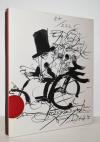 |
Schindehütte, Albert. Radsherrn & Pedaleure. Die Draisinen des Albert Schindehütte zu Ehren von Karl Friedrich von Drais, dem Erfinder des Fahrrads. Mit einer Würdigung von Horst Brandstätter. Hamburg, Rasch und Röhring 1996. 4°. 95, (1) S. mit zahlr. Abbildungen, 2 signierten Orig.-Radierungen und 1 signierten Orig.-Tuschezeichnung. Illustr. Orig.-Halbleinenband und roter Kartonumschlag in illustr. Pappschuber.
Nr. 27 von 66 Exemplaren der Vorzugsausgabe mit der Original-Zeichnung (lavierte Feder- und Pinselzeichnung; Gesamtauflage der Vorzugsausgabe 222 Exemplare). – „Albert Schindehütte, Mitbegründer der legendären Berliner ‚Rixdorfer Werkstatt‘, widmet dem genialen Erfinder Karl von Drais und seinen Nachfolgern eine prachtvolle, humorvolle und künstlerisch virtuose Hommage. Seine unnachahmlichen Zeichnungen fangen den Geist der frühen ‚Laufmaschinen‘ und die Leidenschaft der Pedaleure ein. Ein literarisch-grafischer Genuss für Liebhaber der Radsportgeschichte und feiner Buchkunst. Mit einer einführenden Würdigung von Horst Brandstätter“ (Rasch und Röhring). Erschienen als offizielle bibliophile Begleitpublikation zur großen Kunstausstellung der HEW Cyclassics 1996 in Hamburg. – Tadellos. Schlagwörter: Fahrrad, Fahrräder, Fahrradliteratur, Illustrated books, Illustrierte Bücher, Nummerierte Bücher, Original-Graphik, Originalzeichnung, Signed books, Signierte Bücher, Signierte Künstler-Graphik, Vorzugsausgaben |
240,-- | |
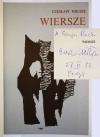 |
Milosz, Czeslaw. Wiersze (Poems). (Mit illustr. Umschlag und 4 illustr. Vorsätzen von Jan Le Witt). Londyn (London), Oficyna Poetów i Malarzy 1967. 8°. 340 S., [2] Bl. Halblederband der Zeit mit goldgepr. Rückentitel (illustr. Orig.-Umschlag beigebunden).
Erste Ausgabe; mit eigenhändiger Widmung von C. Milosz für den französischen Schauspieler Georges Rucki „À Georges Rucki Czeslaw Milosz 27. II. 82 Paryz“. – Legendäre Exilausgabe der Sammlung mit Gedichten aus den Jahren 1934 bis 1965 des polnischen Nobelpreis-Trägers C. Milosz (1911-2004). Mit kongenialer Buch-Ausstattung des herausragenden polnisch-britischen Grafikers, Illustrators und Malers Jan Le Witt (1907-1991). – Milosz gilt „als der herausragendste polnische Dichter des 20. Jahrhunderts. Zwischen 1951 und 1993 war er im Exil, bis 1960 in Frankreich, dann in den Vereinigten Staaten; in Polen bis 1980 wurde er zensiert. … Die Gedichte von Czeslaw Milosz sind intellektuell, und die Metaphern, die er verwendet, sind suggestiv. Sein Werk aus den 30-er Jahren vor dem Zweiten Weltkrieg ist von Katastrophen gesättigt. Es wird von Momentum, Metapherlichkeit, Rhythmizität, Visionen der Apokalypse dominiert. Die Gedichte, die während des Krieges geschrieben wurden, haben nicht mehr so viel Pathos in sich. Sie sind viel weniger dekorativ. Der Dichter konzentriert sich auf die Kommunikativität des Gedichts – auf die darin enthaltene Verständlichkeit philosophischer und intellektueller Inhalte. Einige dieser Gedichte sind von Milosz dem besetzten Warschau (Stadt, Wandering) gewidmet, in dem er fast die gesamte Zeit des Krieges verbrachte. In der Arbeit von Milosz während des Krieges ist es auch möglich, eine bewusste Abkehr vom Thema Krieg zu bemerken. Darunter sind Gedichte, die die gewöhnliche Schönheit der Welt beschreiben, die – wie es scheinen mag – den Krieg nie kannte. Dies ist der Fall in dem Gedicht Das Pastorallied oder in der Reihe World (naiv) von 1943. Er führte in die polnische Literatur ein neues literarisches Genre ein – eine poetische Abhandlung (Vertragsgedicht), die nach Angaben des Dichters auf die Moderne abzielte, die als Verengung verstanden wurde und die „Fähigkeit“ der Poesie erweiterte. Im Band Licht des Tages stigmatisiert der Moralvertrag das Verschwinden von Werten, kritisiert den Mangel an Moral und zeigt an, was seiner Meinung nach in der menschlichen Mentalität verändert werden sollte“ (Wikipedia aus dem Polnischen Übersetzt). – Sehr schönes Exemplar. Schlagwörter: Exilliteratur, Illustrated books, Illustrierte Bücher, Inscribtion, Lyrik, Poetics, Signed books, Signierte Bücher, Widmungsexemplar |
750,-- | |
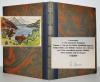 |
Hesse, Hermann. Sinclairs Notizbuch. Zürich, Rascher & Cie. 1923. Gr.-8° (24,5 x 18,5 cm.). 108 S., [2] Bl. mit 4 Farbtafeln nach Aquarellen des Verfassers. Orig.-Halbleinenband mit goldgepr. Rückentitel und Rückenvergoldung.
Kliemann/Silomon 43. Mileck II, 44. Waibler E 172. W.-G.² 127. – Erste Ausgabe; eines von 1100 Exemplaren der Luxusausgabe, im Druckvermerk von H. Hesse signiert. – Die Aufsätze und Dichtungen dieses kleinen Buches sind in den Jahren 1917 bis 1920 geschrieben, und die Mehrzahl von ihnen ist damals in Zeitungen und Zeitschriften unter dem Pseudonym Emil Sinclair erschienen, demselben Pseudonym, unter welchem ich damals den Roman „Demian“ erscheinen ließ. Sie gehören innerlich zusammen. Ihre Ergänzung finden sie in meinen beiden Schriften „Zarathustras Wiederkehr“ und „Blick ins Chaos“ (H. Hesse im Vorwort). – „Der Band, der durch die limitierte Auflage, den Verlagswechsel und durch den Ladenpreis alle Merkmale eines Privatdrucks unter Ausschluß der Öffentlichkeit hat, enthielt nur eine Auswahl aus den pseudonym veröffentlichten Aufsätzen; darunter die erste Sinclair-Veröffentlichung überhaupt, „Im Jahre 1920“; aus der „Neuen Zürcher Zeitung“ vom 15./16.11.1917. „Eigensinn“ aus dem Jahrbuch „Die Schweiz“, Jg. 22 von 1918 und „Aus Martins Tagebuch“ aus der Berner Zeitschrift „O mein Heimatland“, Jg. 9 von 1921. Hesse unterlegte der pseudonymen Veröffentlichung ein imaginäres Tagebuch seines jüngsten Sohnes Martin. Später ließ er das Stück als „Fragment aus einem unvollendeten Roman“ drucken“ (Hesse Katalog Marbach S. 108). – Rücken etwas aufgehellt und berieben, Vorsätze etwas braunfleckig, gutes Exemplar. Schlagwörter: Illustrated books, Illustrierte Bücher, Signed books, Signierte Bücher |
600,-- | |
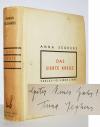 |
Seghers, Anna (d. i. Netty Radvanyi geb. Reiling). Das siebte Kreuz. Roman aus Hitlerdeutschland. Mexico, Editorial „El Libro Libre“ 1942 (Januar 1943). 8°. 468 S., [2] Bl. Orig.-Pappband mit Rücken- und Deckeltitel in Rot und Schwarz.
Sternfeld/Tiedemann 461. W.-G.² 13. – Erste Ausgabe. – Mit eigenhändiger signierter Widmung von A. Seghers „Gutes Neues Jahr! Anna Seghers“. Darunter eine Bleistiftnotiz von anderer Hand mit Zitat aus einem Brief von A. Seghers vom 5. 1. 1947 an Grete Katz, die vermutlich die Widmungsempfängerin ist. Grete Katz (1919-?) war die jüngste Schwester des Schriftstellers und Journalisten Otto Katz (1895-1952), der Mitarbeiter des 1942 gegründeten Emigranten-Verlag El libro libre in Mexiko war. – „Dieses Buch ist den toten und lebenden Antifaschisten Deutschlands gewidmet. Es verdankt sein Erscheinen in Mexiko der Freundschaft und gemeinsamen Arbeit deutscher und mexicanischer Schriftsteller, Kuenstler und Drucker“ (Anna Seghers). – „1938 begann Anna Seghers die Arbeit an ihrem Roman im Exil in Südfrankreich. Da sie keine Recherchen an den Örtlichkeiten des Romans durchführen konnte, griff sie auf eine Region als Schauplatz zurück, die sie als gebürtige Mainzerin kannte. Das von ihr zugrundegelegte Konzentrationslager Osthofen befand sich auf einem damals stillgelegten Fabrikgelände nahe Worms. Bereits 1939 erschien das erste Kapitel in der Moskauer Zeitschrift Internationale Literatur. 1942 wurde der komplette Roman in den USA in englischer Sprache und im mexikanischen Exilverlag El Libro Libre („Das Freie Buch“) in deutscher Sprache veröffentlicht. Ebenfalls 1942 wurde in den USA eine Comic-Fassung verlegt. Durch den Abdruck in zahlreichen Zeitungen Amerikas dürfte die complete pictorial version damals bis zu 20 Millionen Leser erreicht haben. 1944 erschien eine überarbeitete und gekürzte Ausgabe für die auf den europäischen Kriegsschauplatz entsandten US-Soldaten. Später wurde von Anna Seghers das weitere Leben einiger Romanfiguren in Erzählungen fortgeführt (Das Ende, Die Saboteure, Vierzig Jahre der Margarete Wolf)“ (Wikipedia). – Rücken etwas gebräunt, vorderes Gelenk in der Mitte leicht beschädigt, Deckel etwas angestaubt und leicht fleckig, sonst gut erhalten. Schlagwörter: Exilliteratur, Signed books, Signierte Bücher, Weltkrieg <1939-1945>, Weltkrieg II, Widmungsexemplar |
1.800,-- | |
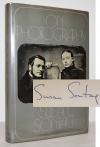 |
Sontag, Susan. On photography. Sixth printing. New York, Farrar, Straus and Giroux (1978). 8°. (7), 207 p. Publisher’s linen binding with an illustrated dust jacket.
Lederman/Yatskevich, What they saw 346. Roosens/Salu 2624. – Signed by Susan Sontag. – „Susan Sontag’s On Photography, a text-based work that does not include photographic illustrations, is a collection of six essays originally published in the New York Review of Books between 1973 and 1977. Written in a modernist style that crosses the boundaries between high and low culture, Sontag explores the power of photography and its unlimited authority in society from both a historical and 1970s perspective. With a background in English and philosophy and no formal training in art or photography, Sontag posits that a photograph is a perceived reality, a way of preserving the past while also holding on to the present. Referencing Plato’s allegory of the cave in the book’s first essay, she observes that photographs are perceived as representations of reality more than other art forms; and that the more pervasive photography becomes, the more photography shapes reality and how the world is seen. In the book’s successive essays, Sontag examines the representation of America by photographers, moving on to discussions of shock imagery, commodification in photography and the role images play in everyday life. On Photography remains one of the most celebrated books on the subject of photography, and has become essential reading for anyone involved in the field or study of photography“ (Anna Jacobsen in Lederman/Yatskevich). – Dust jacket on the back cover with a small tear; a very fine copy. Schlagwörter: Foto-Philosophie, Fotografiegeschichte, Photo Essays, Photo-Philosophy, Photography literature, Signed books, Signierte Bücher |
320,-- | |
 |
Hofbauer, Ludwig. Der Pestkrieg. Ein Zukunftsroman. Regensburg, Ludwig Rath 1927. 8°. 350 S., [1] Bl. Orig.-Leinenband.
Bloch 2/1502. – Erste Ausgabe. – Von L. Hofbauer auf dem Vortitel signiert „L. Hofbauer, Schwandorf i. Bayern“. -Science-Fiction- und Katastrophenroman; Eine geheime asiatische und amerikanische Organisation versucht, mithilfe von künstlich gezüchteten Pestkulturen die Weltherrschaft zu erringen. Bevor die Seuche eingedämmt werden kann, fallen Hunderttausende Menschen dem biologischen Krieg zum Opfer. Am Ende steht der utopische beziehungsweise dystopische Neuanfang einer vermeintlich gestärkten Gesellschaft. – Der Roman gilt in der Karl-May-Forschung als vermeintliche Quelle für die reale Existenz Winnetous; Ludwig Hofbauer schreibt S. 82, Winnetou sei keine reine Phantasiegestalt, sondern eine historisch reale Person gewesen: „Mein Großvater hatte als Häuptling der Apachen in den Bergen des Westens einen guten Namen. Sie haben von Winnetou, dem großen Häuptling, gehört. Ein Deutscher hat vor Jahrzehnten viel von ihm geschrieben…“ – Hofbauer „stützt sich dabei auf historische Briefe des deutschen Auswanderers Fritz Saul aus den Jahren 1869/1870. Saul schrieb damals aus Nordamerika an seinen Bruder in Deutschland und behauptete, den echten Apachenhäuptling Winnetou im Südwesten der USA persönlich gekannt zu haben. Da Karl Mays erster großer Winnetou-Roman erst 1893 erschien, löste diese Erwähnung in einem Dokument aus dem Jahr 1869 unter Karl-May-Anhängern eine Sensation aus. Es entstand kurzzeitig die Theorie, Karl May habe seine Figur nach einem realen Vorbild geformt oder alte Reiseberichte als Quelle genutzt. Der Karl May Verleger E. A. Schmid veröffentlichte im Karl-May-Jahrbuch 1929 die Ergebnisse der Nachforschungen, demnach hatte Fritz Saul sich wohl geirrt. Er hatte in Arizona sehr wahrscheinlich mit dem realen Apachen-Häuptling Chief Victorio zu tun (dem Nachfolger von Cochise) und brachte diesen Jahrzehnte später fälschlicherweise mit Karl Mays berühmter Romanfigur in Verbindung. Winnetou bleibt somit eine reine Erfindung Karl Mays. Hofbauers „Pestkrieg“ ging dadurch jedoch als eines der kuriosesten Fundstücke in die literaturwissenschaftliche Geschichte der Karl-May-Forschung ein“ (Karl-May Gesellschaft). – Rücken etwas berieben, Deckel leicht fleckig, sonst gut erhalten. Schlagwörter: Phantastik / Utopie, Phantastische Literatur, Signed books, Signierte Bücher |
70,-- | |
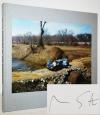 |
Soth, Alec. Sleeping by the Mississippi. Essays by Partricia Hampl and Anne Wilkes Tucker. Third edition. Göttingen, Steidl (2008). 4° (28 x 29 cm.). [120] S. mit 46 Farbtafeln. Orig.-Leinenband mit farbigem Deckelbild.
Koetzle, Fotografen A-Z 376. – Von Alec Soth auf dem Titelblatt signiert. – „Evolving from a series of road trips along the Mississippi River, Robert Frank’s The Americans. Like Frank’s classic book, Sleeping by the Mississippi merges a documentary style with a poetic sensibility. The Mississippi is less the subject of the book than its organizing structure. Not bound by a rigid concept or ideology, the series is created out of a quintessentially American spirit of wanderlust“ (Steidl). – „Mit erzählerisch-dokumentarischem Hintergrund entwickelt Soth in seinen Langzeitstudien eine eigene ästhetische und künstlerische Sprache. Als Mitglied der Fotografenvereinigung und -agentur Magnum (seit 2004) ist er ein typisches Beispiel für eine disziplinübergreifende Erweiterung, die sich nicht mehr in die Bereiche der „angewandten“ oder „künstlerischen“ Fotografie aufgliedern lässt“ (F. Hoffmann in Koetzle). – Neuwertiges Exemplar. Schlagwörter: Color photography, Farbfotografie, Farbphotographie, Mississippi River Valley, Signed books, Signierte Bücher, Soth, Alec, USA |
240,-- | |
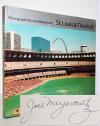 |
Meyerowitz, Joel. St. Louis & The Arch. Photographs. Preface by James N. Wood. Boston, Little, Brown & Co. (1980). Quer-4° (24,5 x 27,5 cm.). 112 p. with 107 color plates. Publisher’s linen binding with a color-illustrated dust jacket.
Koetzle, Fotografen A-Z 267. – Erste Ausgabe der zweiten Veröffentlichung. Von Joel Meyerowitz signiert. – Der New Yorker Fotograf J. Meyerowitz (geb. 1938), „Hauptvertreter der ‚new color photography‘ seit den 60er Jahren in den USA“ (H.-M. Koetzle), „hat sich beständig um Ehrlichkeit sowohl seinem Thema wie seinen eigenen Emotionen gegenüber bemüht. Seine Absicht beim Bildermachen ist es, ‚meine Gefühle angesichts des Themas einzufangen‘. Die so entstehende Arbeit … vermittelt eine positive und optimistische Haltung zur Welt, wie sie durch seine Linse zu sehen ist. Meyerowitz’ Blick ist nie durch formale Erwägungen bestimmt. Schönheit in seinen Fotografien entsteht durch den Ausdruck des menschlichen Gehalts des Motivs. Seine Bilder berühren uns mehr durch ihre Poesie denn durch ihre Komposition“ (Jim Wood in Koetzle). – Schutzumschlag am Kapital und den oberen Ecken mit Knickspuren, gutes Exemplar. Schlagwörter: Color photography, Farbfotografie, Farbphotographie, Signed books, Signierte Bücher, USA |
200,-- | |
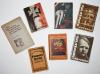 |
Wandt, Heinrich (Louis). Etappe Gent. Streiflichter zum Zusammenbruch. I. Band. Berlin, Buchverlag der „Freien Presse“ o. J. (1920). 8°. 182 S., [1] Bl. Farbig illustr. Orig.-Pappband.
Seltene erste Ausgabe. – Dazu: Derselbe. Etappe Gent. Zweites Hunderttausend, erweiterte Ausgabe. Berlin, Wien, Agis-Verlag 1926. 8°. 176 S. Farbig illustr. Orig.-Kartonumschlag. – Derselbe. Etappe Gent. 240.-250 Tsd. Wien, Agis-Verlag 1926. 8°. 176 S. Orig.-Leinenband. Mit eigenhändiger Widmung von H. L. Wandt „Dem Genossen Willy Schick zum freundlichen Gedenken…″. – Derselbe. Etappe Gent. Streiflichter zum Zusammenbruch. Nie wieder Krieg. I. Band. 3. Auflage, 50. Tausend. Berlin, Buchverlag der „Freien Presse“ o. J. (um 1925). Kl.-8°. 182 S., [1] Bl. Orig.-Broschur. – Derselbe. Erotik und Spionage in der Etappe Gent. (Band II). Erste Ausgabe. Wien, Berlin 1928. 8°. 208 S. Illustr. Orig.-Kartonumschlag (von John Heartfield). – Derselbe. Das Justizverbrechen des Reichsgerichts an dem Verfasser der „Etappe Gent“. Berlin, Verlag „Der Syndikalist“ Fritz Kater 1926. Gr.-8°. 28 S. Illustr. Orig.-Kartonumschlag. – Derselbe. Der Gefangene von Potsdam. 2 Bände. Wien, Berlin, Agis-Verlag 1927. 8°. 206 S., [1] Bl.; 207, (1) S. Illustr. Orig.-Kartonumschläge. – Haufe/Rettej, Heartfield 97 f. (Band II). Holstein, Buchumschläge 438 ff. (Abbildungen von I, II, IV und V.). NDB XXVII, 402. – Interessante Sammlung zu dem bedeutendenen Enthüllungs- und Antikriegsbuch, welches in der Weimarer Republik einen der größten politischen Skandale auslöste. – H. L. Wandt (1890-1965) arbeitete 1912 „kurzzeitig als Redaktionssekretär der sozialdemokratischen Frauenzeitschrift „Die Gleichheit“. Noch im selben Jahr zum Militärdienst eingezogen, desertierte W. 1913 nach Paris. Im März 1914 stellte er sich, verbüßte acht Monate Haft in einem Militärgefängnis und kam nach seiner Entlassung an die Westfront. Im Frühjahr 1915 wurde W. als nicht mehr frontdienstfähig zur Etappen-Inspektion 4 nach Gent versetzt, wo er bis 1918 bei der Kriegszeitung der 4. Armee tätig war. Nach Kriegsende arbeitete er als Redakteur der linksradikalen Tageszeitung „Freie Presse“ in Berlin. In deren Verlag erschien 1920 W.s Buch „Etappe Gent, Streiflichter zum Zusammenbruch“ (zahlr. Nachdrr., niederl. u. franz. Übers.), in dem er am Beispiel namentlich genannter Offiziere und ihrer Verfehlungen die endemische Korruption der dt. Besatzungsherrschaft im belg. Etappengebiet anprangerte. Ein zweiter Band, der wegen seines von John Heartfield (1891–1968) gestalteten, als moralisch anstößig empfundenen Umschlags bald vom Markt genommen werden mußte, erschien 1928. … W.s Buch brachte ihm zahlreiche Beleidigungsklagen ehemaliger Offiziere ein. Nachdem der Oberreichsanwalt beim Reichsgericht im Okt. 1921 ein Verfahren wegen des Diebstahls von Akten aus dem Reichsarchiv eröffnet hatte, wurde W. bis Jan. 1922 in Haft genommen, dann jedoch aufgrund mangelnden Tatverdachts entlassen. Um weiterer justizieller Verfolgung zu entgehen, floh W. in das belg. besetzte Aachen, dann nach Belgien. 1923 wurde er in Düsseldorf verhaftet und des Landesverrats angeklagt. Die Verhandlung vor dem Reichsgericht im Dez. 1923 begann mit der Verlesung von Abschnitten aus „Etappe Gent“ durch den Richter, was verdeutlicht, daß W. letztlich wegen seiner kriegskritischen Veröffentlichungen vor Gericht stand. W. wurde zu sechs Jahren Zuchthaus verurteilt. Zeitungen in Belgien und den USA bezeichneten das Verfahren als „deutschen Dreyfusprozeß“. Öffentlicher Druck, u. a. durch den SPD-Abgeordneten Paul Levi (1883–1930) im Reichstag, führte dazu, daß W. 1926 begnadigt wurde“ (B. Ziemann in NDB). – Interessant ist besonders die „Einbandillustration des Pappbands in Rot, Schwarz und Lila mit provokanter Darstellung eines Offiziers, der mit einer Prostituierten Champagner trinkt“; die Umschlagillustration zu „Das Justizverbrechen…“ „Richter beim Versuch Justitia zu vergewaltigen“ sowie die „Photomontage über beide Deckel und Rücken in Rot und Schwarz von John Heartfield (vorn: Offizier mit Mädchen, rückseitig halbbekleidete Frau). Erste Fassung des Heartfield-Umschlags (wie hier vorliegend), der sofort nach Erscheinen der Zensur zum Opfer fiel“ (J. Holstein). – Umschläge und die Gelenke des Pappbands restauriert, sonst alle Bände von Alters- und Gebrauchsspuren abgesehen gut erhalten. – Zusammen 7 Bände; die Erstausgabe, die erste Fassung von Band II und die beiden Bände von „Der Gefangene…“ mit den illustr. Kartonumschlägen sehr selten. Schlagwörter: Pazifismus, Signed books, Signierte Bücher, Weimarer Republik, Weltkrieg <1914-1918>, Weltkrieg I, Widmungsexemplar |
1.000,-- | |
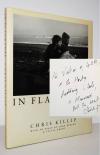 |
Killip, Christopher. In flagrante. With an essay by John Berger & Sylvia Grant. London, Secker & Warburg (1988). 4° (31 x 21,5 cm.). 93 S. mit 50 Tafeln. Publishers cloth binding with illustrated dust jacket.
Auer 675. Parr/Badger II, 299. Roth, The Open Book 340 f. – First edition; inscribed by C. Killip „For Victor on 4 OB, Hasty Pudding Club, + Harvard All the best Chris“. – „In Flagrante is a singulary original work of art, both passionate and partisan. This is not an objective report. Killip tells his personal tale through these pictures, but he also allows his subjects’ collective story a clear voice of its own. The pictures in In Flagrante – primarily candid portraits and urban landscapes made in rich-toned black and white, predominantly shot with a 4x5 camera – were made in the northeast of England during the premiership of Margaret Thatscher… In Flagrante is a dark, pessimistic journey, perhaps even a secret odyssey, where rigorous documentary is suffused with a contemplative inwardness, a rare quality in modern photography“ (Parr/Badger). – „Renowned documentary photographer and former professor of visual and environmental studies Chris Killip died from lung cancer on Oct. 13. He was 74. Killip was a professor of photography in VES (now Art, Film, and Visual Studies) from 1991 to 2017, and the department chair from 1994 to 1998. For more than two decades, he had worked from the basement of the Carpenter Center, sharing his love of the art form with students and colleagues. … In 1988, Killip published his second and most famous book of photographs, “In Flagrante,” which captured the everyday fallout from deindustrialization and economic decline in northeastern England in the 1970s and 1980s. His arresting documentary style of photography captured the attention of critics and viewers alike, and Killip received the inaugural Henri Cartier-Bresson Award, now called le Prix HCP. … “His photographs embodied Henri Cartier-Bresson’s emphasis on the decisive moments, and Josef Koudelka’s eye for the surreal. He captured in arresting black-and-white photographs fleeting moments filled with powerful emotions,” said AFVS Professor Sharon Harper. “He was looking closely at people, labor, and the plight of the worker.“ The introductory photography course VES 40a, which he ran for many years, accommodated 100 students split into 10 sections. Even with so many spots, said Moss, the class often attracted two or three times as many students as it could accommodate. “Chris leaves quite a legacy of his documentary photography, which is known internationally, but also he has a legacy of students who were devoted to him and discovered photography through their studies with him,” added Harper“ (M. Aggarwal-Schifellite, Documentary photographer Chris Killip dies at 74, The Harvard Gazette, October 21, 2020). – A very fine copy of the rare hardback edition. Schlagwörter: England, Great Britain, Großbritannien, Signed books, Signierte Bücher, Sozialdokumentarische Fotografie, Widmungsexemplar |
1.400,-- | |
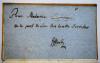 |
Iffland, August Wilhelm. Bewustseyn. Ein Schauspiel in fünf Aufzügen. Berlin, George Jacob Decker 1787. Kl.-8° (17 x 10,5 cm.). VIII, 168 S. mit gestoch. Titelvignette von Darchow nach G. W. Hoffmann. Pappband der Zeit mit handschr. Rückenschild.
Goedeke V, 267, 10. VD18 11524790. – Erste Ausgabe. – Mit eigenhändiger Widmung von A. W. Iffland „Pour Madame … [Name gelöscht] de la part de son tres hamble Serviseur Iffland“. – „Zusammen mit Ekhof und Schröder gehört I. zu den großen Charakterdarstellern des 18. Jh., am meisten lagen ihm bürgerliche Rollen wie die der Helden in seinen eigenen Dramen. … (Der Ideengehalt seiner bürgerlichen Schauspiele) läßt sich wie folgt zusammenfassen: rührende Ausmalung der Lebensweise des mittleren Bürgertums und der armen Volksschichten mit den Tugenden Arbeitsamkeit, Sparsamkeit, Häuslichkeit, Familiensinn, Gutmütigkeit, Biederkeit, Rechtschaffenheit, Frömmigkeit. Nächstenliebe und Treue zu dem angestammten Fürstenhaus; Kritik an der schmarotzerartigen Stellung des Adels und seinem verderblichen Einfluß auf das bürgerliche Leben, wobei diese Kritik sich auf den moralischen Bereich beschränkt, nur einzelne Bösewichte herausstellt und nicht etwa eine Gleichheit der Stände fordert“ (H.-G. Winter in NDB X, 120 ff.). – Einband etwas berieben, angestaubt und fleckig, stellenweise, teils stärker braunfleckig. Schlagwörter: Autographen, Drama in German, Signed books, Signierte Bücher, Theaterstücke, Widmungsexemplar |
300,-- | |
 |
Rolling Stones – Wyman, Bill und Richard Havers. Bill Wymans Rolling Stones Story. (Übersetzung: Markus Diedrich, Hans Freundl, Werner Horwath, Christian Kennerknecht und Inga-Brita Thiele. Redaktion: Petra Kirchmann und Janette Schroeder). Starnberg, Dorling Kindersley (2002). Gr.-4°. 512 S. mit über 3000 meist farb. Abb. Farbig illustrierter Orig.-Pappband mit farbig illustr. Orig.-Schutzumschlag.
Erste deutsche Ausgabe. – Von Bill Wyman signiert. – „Keith Richards von den Rolling Stones prophezeite einst, dass man die „größte Band der Welt“ nur im Sarg verlassen könne. Doch Bill Wyman, der Bassist und stille Mann im Hintergrund, strafte ihn Anfang der 90er-Jahre Lügen. Da beschloss Wyman, sich nicht mehr das exzessive Leben eines Rock-Musikers anzutun. Er lebt heute bei bester Gesundheit in London, kümmert sich um seine Familie und seine Sammlungen. Seit jeher hat er gesammelt. „Im Krieg lebte ich in London bei meiner Großmutter“, erzählte er kürzlich in München bei einer Pressekonferenz. „Sie besaß großartige Sammlungen von Briefmarken und Münzen und gab sie an mich weiter. Ich hebe alles auf. Für später, nicht für mich, für meine Kinder. Sie werden das brauchen, wenn ich nicht mehr bin. Mein Sohn betreut bereits die Website meiner Sammlung.“ Nun hat er mit Bill Wymans Rolling Stones Story einen wunderbaren und liebevoll gestalteten Bildband über seine Schätze veröffentlicht. Alles, ob Fotos, Instrumente, Eintrittskarten, Autogramme, Fan-Post, Tour-Plakate, Schlüsselanhänger oder Zeitungsausschnitte, hat Bill Wyman dazu aus seinem 35 Jahre langen Leben als Rolling Stone zusammengetragen. Und er lädt ein zu einer sagenhaften Zeitreise von den ersten harten Tagen als Rhythm- und Blues-Combo bis hin zum Gipfel der Popularität. Unterlegt ist das Ganze mit hunderten von Kommentaren von Experten, Freunden, Fans und Familienangehörigen. Nichts wird verklärt, nichts ausgelassen, ob Drogenexzesse, Frauengeschichten oder Steuervergehen — Wymans offene, mit sich selbst ehrliche Art sowie sein Humor lassen dieses Buch zu einer aufregenden (Pop-)Kulturgeschichte der letzten vier Jahrzehnte werden. Ein Muss nicht nur für Rolling-Stones-Fans!“ (Teresa Pieschacón Raphael). – Sehr gutes Exemplar. – First German edition; signed by Bill Wyman. Schlagwörter: Pop music, Pop-Kultur, Popmusik, Rock music, Rolling Stones, Signed books, Signierte Bücher |
320,-- | |
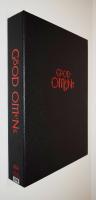 |
Pratchett, Terry and Neil Gaiman. Good omens. The nice and accurate prophecies of Agnes Nutter, witch. Illustrated with line drawings and colour plates by Paul Kidby. London, Dunmanifestin (2019). Gr.-4° (31 x 23,7 cm.). 278 S. mit 20 Farbtafeln und Illustrationen von Paul Kidby. Illustr. Orig.-Pappband in Buch-Kassette in Schlangenleder-Optik.
Eines von 1655 num. Exemplaren; von Paul Kidby signiert. – One of 1655 limited copies. Stunning collectors’ hardback in a snakeskin effect solander box, with metallic red page edges, 20 colour illustrations with additional pencil illustrations. Numbered tipped-in sheet signed by Paul Kidby. – „Working with Terry was a life-enriching experience for me, both professionally and personally. He had so much to say and do, books to write, orang-utans to save, campaigns to wage. His creative energy was irrepressible, always questing and dynamic – brimming over with ideas and plots that needed pinning down. Never one to sit back, Terry had so much that he wanted to achieve, and in the final years, as he was all too aware, there just wasn’t enough time. If I could speak to Terry again, I’d thank him for writing the books that are my greatest source of creative inspiration, and for the belief and encouragement he showed by giving me the fantastic opportunity to illustrate his writing. I’d thank him for the laughs and friendship we shared too. I remember snippets of our conversations about folklore, astronomy, gardening and recipes for nettle soup. We shared an affinity for the chalk downlands where we both lived for a time, the landscape seemed to exert a creative energy for us both. My dog and I tramped many of the ancient drove roads that traverse the grassy backbone of the downs, I knew well the wide skies, the far-reaching views and the leaping hare that he described. Blue butterflies, skylarks, soaring buzzards and harebells in the close-cropped turf were all observed on my walks, and many a flint and fossil weighted my pockets – including the shepherd’s crown“ (Paul Kidby). Schlagwörter: Fantasy, Illustrated books, Illustrierte Bücher, Nummerierte Bücher, Phantastik / Utopie, Signed books, Signierte Bücher, Vorzugsausgaben |
500,-- | |
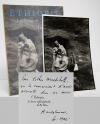 |
Macé, Gérard. Éthiopie. Le livre et l’ombrelle. (Avec une citation de Werner Herzog). Cognac, Le Temps qu’il fait (2006). Gr.-8° (24 x 16,5 cm.). 107, (4) S. mit 52 Duotone-Tafeln und 1 signierten Orig.-Photographie (Silbergelatine, 22 x 15 cm.). Orig.-Kartonumschlag mit illustr. Schutzumschlag.
Eines von 30 Exemplaren „h.c.“ mit signiertem Original-Abzug (Umschlag-Foto „Ethiopie, le livre et l’ombrelle“) und signierter eigenhändiger Widmung von G. Macé „Pour Esther Woerdehoff …“. – L’un des 30 exemplaires « h.c. » avec tirage original signé (photo de couverture « Ethiopie, le livre et l’ombrelle ») et dédicace manuscrite signée par G. Macé « Pour Esther Woerdehoff … ». – „Avec Le livre et l’ombrelle (…), nous partons du côté de Lalibela et de la fascinante Eglise éthiopienne, plus ancienne que Rome et Byzance, puisque c’est la deuxième Eglise nationale, précédée de très peu par l’Arménie, au début du quatrième siècle. Et son histoire autonome, sa théologie particulière sont attestées par les manuscrits en guèze, lus inlassablement par un clergé qui vit encore au milieu d’un peuple illettré. L’Ethiopie, pays hautement civilisé, c’est le squelette de Lucy, mais aussi un territoire de déserts et de hautes montagnes qui ensorcelle le voyageur par la force de ses rites et des regards.“ (Fabien Ribery). – „Gérard Macé est né en 1946 a Paris. Aux éditions Gallimard (collection “Le Chemin”, puis collection “Le Promeneur”), il a publie depuis 1974 des proses narratives et poétiques, comme Bois dormant, Le dernier des Egyptiens, la série intitulee Colportage, ou plus récemment Illusions sur mesure. À l’image poétique, il ajoute ’image photographique depuis 1997, comme en témoignent La photographie sans appareil et Mirages et solitiudes, parus aux éditiomns Le temps qu’il fait“ (Editeur). – „Gérard Macé, 1946 in Paris geboren, veröffentlichte ab 1974 zahlreiche Werke, die zwischen Dichtung und Essay stehen. Gegenstand seiner Bücher ist oft die Sprache, sei es die literarische Sprache, sei es die zu entziffernde Sprache der Hieroglyphen (»Le Dernier des Égyptiens«, 1988) oder das Chinesische und seine Kultur. Seit 1997 arbeitet er auch als Fotograf. Macé erhielt 1980 den Prix Femina Vacaresco, 2002 den Prix Roger Caillois und 2008 den Grand Prix de Poésie der Académie française für sein dichterisches Lebenswerk“ (Hanser Verlag). Schlagwörter: Africa, Afrika, Äthiopien, Original-Photographie, Signed books, Signierte Bücher, Signierte Photographie, Vorzugsausgaben, Widmungsexemplar |
320,-- | |
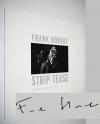 |
Horvat, Frank. Strip-tease. Exposition à la galerie Dina Vierny – octobre 2001. Paris, Galerie Dina Vierny 2001. Gr.-8° (24,5 x 24,5 cm.). 22 S., [1] Bl. mit 15 Duotone-Tafeln. Illustr. Orig.-Kartonumschlag.
Koetzle, Fotografen A-Z 179. – Von F. Horvat signiert. – 1956 bis 1962 in Pariser Cabarets entstandene Aufnahmen des italienisch-französischen Foto-Künstlers F. Horvat (1928-2020). In twen (Nr. 8, 1960) als einer der „besten Fotografen der Welt“ präsentiert. – Tadellos. Schlagwörter: Cabaret, Signed books, Signierte Bücher |
80,-- | |
 |
Shames, Stephen. The Black Panthers. Foreword by Bobby Seale. Essay by Charles E. Jones. New York, Aperture Foundation (2006). 4°. 151, (1) S. mit illustr. Titel und 72 Duotone-Tafeln. Illustr. Orig.-Pappband.
First edition. – Signed by S. Shames. – „In 1966, as the largely nonviolent Civil Rights movement swept through America, Huey P. Newton and Bobby Seale founded the legendary Black Panther Party in Oakland, California. Revered by some and vilified by others, the party burst onto the scene with a militant vision for social change and the empowerment of African-Americans. Its methods were so controversial and polarizing that in 1968, FBI head J. Edgar Hoover described the organization as the country’s greatest threat to internal security. During the height of the movement, from 1967 to 1973, photographer Stephen Shames had unprecedented access to the organization. He captured not only its public face—street demonstrations, protests and militant armed posturing—but also life behind the scenes, from private Party meetings to Bobby Seale at work on his Oakland mayoral campaign. Shames was prolific and his archive of Panther images is the largest in the world, presenting an uncommonly nuanced portrait of this dynamic social movement. Released on the occasion of the Party’s fortieth anniversary, this illuminating publication gathers an astonishing collection of never-before-published images, offering an electrifying visual history. Panther newspapers, posters and other ephemera help convey the ethos of the Panthers and of a transformative period of social upheaval for the whole nation“ (Aperture). – Fine copy. Schlagwörter: Black Panthers, Black power, Racism, Rassismus, Signed books, Signierte Bücher |
280,-- | |
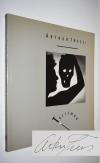 |
Tress, Arthur. Talisman. Edited by Marco Livingstone. London, Thames & Hudson 1986. Gr.-8° (23,3 x 21,3 cm.). 156 p. with 172 illustrations, 22 in color and 150 in duotone. Illustrated cardboard cover by the publisher.
First edition. – Signed by A. Tress. – Very well preserved. Schlagwörter: Signed books, Signierte Bücher, Surrealism, Surrealismus |
80,-- | |
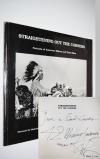 |
Vermes, Philippe. Straightening out the corners. Portraits of american bikers and their bikes. Foreword by Malcolm Forbes. Introduction by A. D. Coleman. Boca Raton, Florida, Iris Publications (1989). Gr.-8° (23 x 23 cm.). 95 S. mit 40 Duotone-Tafeln und einigen Abbildungen im Text. Illustr. Orig.-Kartonumschlag.
First edition. Inscribed by P. Vermes „To Jean and Robert Graves 42 Wedding Anniversary September 11. 1990 Philippe Vermes Lacornia 9. 5. 90“. – „Anyone seeking to find out what became of Robert Frank’s black bikers or Danny Lyon’s young white working-class cyclists – a disciple of Frank who later photographed these marginal heroes – can turn to the work of Philippe Vermès. Perhaps they will find them there. Like the itinerant portraitist of small towns of yesteryear, Philippe Vermès grants them the right to be seen without judgement, accepting them as they are. The result is portraits brimming with information, teeming with rich observational details that draw on two traditions: photography and painting. A classically trained painter who became a photographer, Philippe Vermès is the logical custodian of these two related approaches“ (A. D. Coleman). – Philippe Vermès born in 1942, is a French artist photographer who lives and works in Paris. A graduate of the Ecole Nationale Supérieure des Beaux-Arts de Paris, the photographer and portraitist transcribes with the eye of a painter in love with black & white portraiture. Schlagwörter: Motorcycles, Motorcycling, Motorcyclists, Motorrad, Motorräder, Motorradfahrer, Portrait photography, Portraitphotographie, Porträtfotografie, Porträtphotographie, Signed books, Signierte Bücher, Widmungsexemplar |
140,-- | |
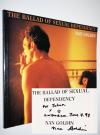 |
Goldin, Nan. The ballad of sexual dependency. Edited with Marvin Heiferman, Mark Holborn and Suzanne Fletcher. New York,, Aperture (1989). Quer-Gr.-8° (23 x 25,5 cm.).. 144 p. with 120 coloured plates. Colour illustrated Paperback.
Auer 667. Koetzle 173 f. Roth, The Book of 101 Books 252 f. Roth, The Open Book 332 f. Parr/Badger II, 39. – First paperback edition. The first hardcover edition appeared 1986. – Inscribed and signed by N. Goldin „For Johan x amsterdam. June 7. 97 Nan Goldin″. – „Nan Goldin might be considered a female equivalent of Larry Clark, photography’s resident bohemian. Her book The Ballad of Sexual Dependency is comparable with Clark’s notorious Teenage Lust (19823), in that it is diaristic and hedonistic – a soap opera of sexual mores mediated through the colour-snapshot aesthetic developed by William Eggleston. But whereas Clark gleefully courts the sleazy and blatantly depicts the sexual act, Goldinm is concerned neither with the sleazy for its own sake nor primarily with sex. Her brief is more complex, and a good deal more ambitious than Clark’s. She examines the limitations of sanctioned gender roles and the conflicting, often violent nature of sexual relationships amongst her friends and lovers. Her view is profoundly pessimistic, yet she also admits the illogical pull of the biological imperative in her introduction to the book: „I often fear that men and women are irrevocably strangers to each other, irreconcilably unsuited, almost as if they were from different planets. But there is an intense need for coupling in spite of it all. Even if relationships are destructive, people cling together“.“ (Martin Parr). – Very good copy. Schlagwörter: Aktfotografie, Aktphotographie, Inscribtion, Photography of the nude, Signed books, Signierte Bücher, Widmungsexemplar |
450,-- | |
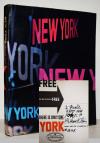 |
Klein, William New York. Life is good for you and good in New York Trance witness Reveals: Trance Witness Revels. Paris, Éditions du Seuil (1956). 4°. 192 p. with 188 Pictures on plates and Booklet (16 p., „Delay may be serious now free…“). Original cloth binding with color illustrated dust jacket. (Album Petite Planète, Vol. 1).
Auer 365. The Open Book 165 f. Parr/Badger I, 243. Roth, The Book of 801 Books 140 ff. – First printing of the first edition. – Boldly dedicated and signed by W. Klein to Belgian photographer Gerald Dauphin „To Gerald, / HAPPY NEW / YORK!* / William Klein / *YORK″. – „By virtue of its preface, written by Jack Kerouac, Robert Frank’s The Americans is usually regarded as the epitome of the Beat photobook. But William Klein’s magnum opus, Life is good for you and good in New York Trance witness Reveals: Trance Witness Revels, a book with Beat mantra for a title, surely has the edge in this regard. This is partly because it was the earlier model, partly because it is less political and more exuberant, and impotantly, because its conception is so complete – photographs, layout, design, topography, ‚found‘ ephemera coalescing into what is in effect one of the first great ‚Pop‘ books. … Klein’s masterpiece reminds us that much great, serious art is often about play, archieved simply by experimenting with the possibilities of the material. Forget trance and witness – the revels are the thing“ (Parr/Badger). – „With no interest from American publishers, Klein went back to Paris and set to work on a graphic design that was as aggressive and idiosyncratic as its photos. „I saw the book as a tabloid gone berserk, gross, over-inked, brutal layout, bull-horn headlines,“ he wrote in its radically revised 1995 edition. „This is what New York deserved and would get.“ Published in France, Italy, and England, but not in America, Life is good for you and good in New York was a sensation“ (A. Roth). – Dust jacket with inconspicuous restored loss at the spine, very good copy. Schlagwörter: New York, Pop-Kultur, Signed books, Signierte Bücher, Widmungsexemplar |
4.800,-- | |
 |
Hugnet, George (Edition). Petite anthologie poétique du surréalisme. Introduction par Georges Hugnet. Paris, Éditions Jeanne Bucher 1934. 8°. 166 p. avec 16 planches, 1 collage par G. Hugnet et 1 photogramme par Max Ernst. Broche, couverture imprimée.
Première édition, l’un des 2000 exemplaires sur papier Alfa Bouffant. – Avec dédicace manuscrite et collage original de G. Hugnet pour Noël Armand, ainsi qu’un photogramme retravaillé à l’or et signé par Max Ernst. Avec ex-libris pour Noël Armand par René Magritte. – Avec des contributions (textes et illustrations) de H. Arp, A. Breton, S. Dali, M. Duchamp, Max Ernst, P. Picasso, Man Ray et autres. – Légèrement taché de brun par endroits, sinon en bon état. Schlagwörter: Originale, Signed books, Signierte Bücher, Surrealism, Surrealismus, Widmungsexemplar |
6.000,-- | |
 |
Clement, Krass. Skygger af Ojeblikke. Fotografier af Krass Clement. Kobenhavn, Chr. Erichsens Forlag 1978. Quer-Gr.-8° (22,5 x 26 cm.). 61 S., [1] Bl. mit 53 Duotone-Tafeln. Illustr. Orig.-Pappband.
Erste Ausgabe der seltenen ersten Veröffentlichung des bedeutenden dänischen Fotografen. Von Krass Clement signiert (″Paris 14 XI 2025“). – „Born in Copenhagen in 1946, Krass Clement is an autodidact photographer. Graduated as a film director from the Danish Film School in 1973, though continued with photography when it became evident that his future was not to be in film. A photographer since his early youth, Krass published his first book, Skygger af Øjeblikke (Shadows of Moments) in 1978. His photographic work emerges from two traditions: The Scandinavian melancholy on the one hand and the ‚flaneur‘ tradition from the Parisian school on the other. Starting out in black and white, Krass has persisted in developing and modernizing his artistic expression so that his production today also includes work in colour. … In his photography Krass is more concerned with capturing a state of mind than with situations. They are less documentary depictions than subjective moods somewhere between spectator and reality. Insisting on an artistic integrity, Krass Clement has created a strong personal body of work with the photo book as his favourite medium“ (krassclementdotcom). – Einband etwas gebräunt, sehr gutes Exemplar. Schlagwörter: Dänemark, Denmark, Signed books, Signierte Bücher, Sozialdokumentarische Fotografie |
850,-- | |
 |
Petersen, Anders und Jan Stolpe Gröna Lund. Om människor pa ett nöjesfält (About people at an amusement park). Helsingborg, Fyra Förläggare (1973). 4° (28,5 x 21,5 cm.). [11] Bl. und 123 Abb. auf Duotone-Tafeln. Illustr. Orig.-Pappband. (Aktuell Fotolitteratur 1).
Auer 566. Koetzle, Fotografen A-Z 314. – Seltene erste Ausgabe der ersten Veröffentlichung des wichtigen schwedischen Fotografen A. Petersen (geb. 1944), „international bekannt durch seine (formal an Frank bzw. Davidson geschulten) freien Bildessays über Außenseiter der Gesellschaft“ (H.-M. Koetzle). – Von A. Petersen auf dem Titelblatt signiert. – „Anders Petersen ist einer der herausragenden Vertreter der schwedischen Fotoszene und hat nachfolgende Generationen wie kaum ein anderer beeinflusst. Sein fotografisches Interesse gilt insbesondere dem Milieu der gesellschaftlichen Außenseiter. Seine Bilder entstehen in Hafenbars, Gefängnissen oder Zirkuswagen. […] Ende der 60er-Jahre entstand seine Serie über das legendäre „Café Lehmitz“, eine Hamburger Kneipe, die hauptsächlich von Prostituierten und Homosexuellen besucht wurde. Die Fotografien strömen neben einer unglaublichen Kraft große Liebe und Verbundenheit mit den Menschen aus. Da Petersen einige Jahre zuvor nach Hamburg gekommen war, um seine Deutschkenntnisse zu verbessern, waren ihm viele der Personen schon vertraut. „Man muss direkt auf die Menschen zugehen können und sich seiner sehr sicher sein, um die Wirklichkeit sichtbar werden zu lassen“, sagt er über sein Vorgehen, „dann können mit etwas Glück Bilder entstehen, die auch für andere etwas ausdrücken“.“ (W. Vollmer in Koetzle). – Kapital geringfügig bestoßen, sehr gutes sauberes Exemplar. Schlagwörter: Schweden, Signed books, Signierte Bücher |
580,-- | |
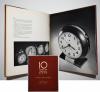 |
Dreyfuss – Seldes, Gilbert (Indroduction). Henry Dreyfuss. 10 Years of Industrial Design 1929 – 1939. New York, Self-published (1939). 4°. [32] 16 pages with numerous illustrations. Original cloth binding with gold-embossed title on the cover.
First and only edition. – With handwritten dedication and drawing (female nude) by Henry Dreyfuss. – „10 YEARS ago Henry Dreyfuss began designing for industry. The following pages-a small portion of the designs he has made – will suggest the connection between his work and the progress of industrial design as a whole.“ – Henry Dreyfuss (1904-1972) „is known for designing the Western Electric Model 500 telephone, the Westclox Big Ben alarm clock, and the Honeywell T87 Round Thermostat. Dreyfuss, a native of Brooklyn, New York City, is one of the celebrity industrial designers of the 1930s and 1940s who pioneered his field. Dreyfuss dramatically improved the look, feel, and usability of dozens of consumer products. Sometimes compared to Raymond Loewy and other contemporaries, Dreyfuss was much more than a stylist; he applied common sense and a scientific approach to design problems, making products more pleasing to the eye and hand, safer to use, and more efficient to manufacture and repair. His work helped popularize the role of the industrial designer while also contributing significant advances to the fields of ergonomics, anthropometrics and human factors.“ (Wikipedia). – Fronts slightly brown-stained, otherwise very well preserved. Schlagwörter: Design, Design, Industrial, Industriedesign, Industrieformgestaltung, Signed books, Signierte Bücher, Widmungsexemplar |
540,-- | |
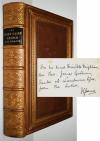 |
Soames, Henry. The Anglo-Saxon church. Its history, revenues and general character. The third edition, with additions and corrections. – (Beigebunden: Ders.) The romish reaction, and its present operation on the Church of England. – (Beigebunden: Ders.). The evils of innovation; a sermon preached at Romford at the visitation of the venerable Hugh Chambers Jones, M.A., on Monday, May 29, 1843. – (Beigebunden: Ders.) A vindication of the church and clergy of England from the misrepresentations of the Edinburgh Review. By a beneficed clergyman. – (Beigebunden: Ders.). Reasons for opposing the romish claims. – (Beigebunden: Ders.). The romish decalogue. 6 Werke in 1 Band. London, John W. Parker 1844. 8°. XVI, 358 S.; 78 S.; 24 S.; 68 S.; 43 S.; 63 S. Kalbslederband der Zeit mit goldgepr. Rückenschild, reicher Rückenvergoldung, 7-fache Deckel-Filetten, Kanten- und Innenkantenvergoldung und Goldschnitt.
With handwritten dedication by H. Soames „For his kind Friend & Neighbour, the Rev. James Goodwin, Rector of Lambourne, Essex, from the author, H. Soames“. – The English clergyman and ecclesiastical historian Henry Soames (1785-1860), „graduated B.A. in 1807, M.A. in 1810. He held the post of assistant to the high master of St. Paul’s school from 1809 to 1814, and took holy orders. In 1812 he was made rector of Shelley, Essex, and at this time, or later, rector of the neighbouring parish of Little Laver. From 1831 to 1839 he was vicar of Brent with Furneaux Pelham, Hertfordshire. In 1839 he became rector of Stapleford Tawney with Theydon Mount, Essex, where he remained till his death. He was Bampton lecturer in 1830, and was appointed chancellor of St. Paul’s Cathedral by Bishop Blomfield in 1842“ (R. Bayne in Dictionary of National Biography LIII, 209). – Contemporary calfskin binding with gilt-stamped spine label, rich gilt decoration on spine, seven-fold cover fillets, gilt edges and inner edges, and gilt edging. – Only a few scattered brown spots, signed copy in a magnificent binding. Schlagwörter: Einbände, Einbandkunst, Signed books, Signierte Bücher, Widmungsexemplar |
350,-- | |
|
Einträge 1–34 von 34
Zurück · Vor
|
|||
| Seite: 1 |