


Photographie
Die Liste enthält 828 Einträge. Suchergebnisse löschen und Gesamtbestand anzeigen.
| Abbildung |
Beschreibung Gesamte Buchaufnahme |
Preis EUR |
|
|---|---|---|---|
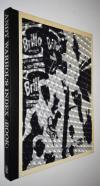 |
Warhol, Andy. Index (book). With the assistance of Stephen Shore, Paul Morrissey, Ondine, Nico. Several photographs by Nat Finkelstein, Christopher Cerf, Alan Rinzler … Factory Fotos by Billy Name. New York, Random House (1967). 4° (28,5 x 22 cm.). [36] Bl., davon 2 gefalt., mit zahlr. Abb. und 10 teils farbigen Pop-Art-Beilagen. Illustr. Orig.-Halbleinenband mit Hologramm-Deckelbild.
Crone 419. Dickel, Künstlerbücher 69 ff. Laub, Spielbilderbücher 313. Slg. Missmahl 868. Papiergesänge S. 43 (mit Abb.). Parr/Badger II, 144-145. Roth, The Book of 101 Books 188 f. – Erste Ausgabe des legendären Pop Art-Buches, hier in der seltenen gebundenen Ausgabe. – Mit allen zehn Faltfiguren und Beilagen: Ritterburg, Ziehharmonika (tönt), Flugzeug, Federscheibe „Andy Warhol’s ’The Chelsea Girls’“, faltbarer Dodekaeder, Folienschallplatte (Lou Reed), Faltnase, Hunt’s Tomato Past-Dose, 8 (4 bedruckte) Abreißzettel mit dem Namenzug Warhols, Luftballon (dieser wie meist mit den angrenzenden Blättern verklebt). – „One of the most important and exuberant Pop art objects ever published. From its … cover to the various pop-ups and … to the stream-of-consciousness photographs by such artists as Billy Name and Nat Finkelstein, it is also one of the ultimate photobooks-as-objects. It is, in addition, the primary Factory photo album, one of the most authoritative biographies of Warhol and a supreme example of the diaristic photographic mode before there was a considered diaristic mode“ (Parr/Badger). – „Das Medium Photographie spielt (in Andy Wahrhol’s Index (Book) in seiner amateurhaften Aneignung durch die Akteure der ‚Factory‘ eine wichtige Rolle: es lieferte Zeichen zur Befestigung des eigenen Lebensgefühls und wurde als Medium auch selbst zum Gegenstand von Warhols Kunst. Die tautologische Darstellung der photographischen Bilder durch die Siebdrucke beziehungsweise den Offsetdruck des Buches erzeugt ein ironisches Echo derselben“ (H. Dickel). – Andy Warhol (1928-1987), Hauptvertreter der Pop-Art, vermittelt die wohl ehrlichsten Aussagen zum „American way of life“ durch seine Kunst der „totalen Dominanz des Kommerziellen, der reinen Sensation, der Trivialisierung und Vulgarisierung“ (Pierre, Lexikon der Pop Art, S. 138). – Sehr gut erhaltenes Exemplar der Luxusausgabe mit dem Hologramm-Einband. Schlagwörter: Konzeptkunst, Photography, Pop-art, Pop-Kultur, Pop-up-Buch |
1.200,-- |  |
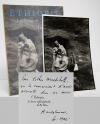 |
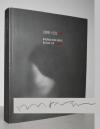
Macé, Gérard. Éthiopie. Le livre et l’ombrelle. (Avec une citation de Werner Herzog). Cognac, Le Temps qu’il fait (2006). Gr.-8° (24 x 16,5 cm.). 107, (4) S. mit 52 Duotone-Tafeln und 1 signierten Orig.-Photographie (Silbergelatine, 22 x 15 cm.). Orig.-Kartonumschlag mit illustr. Schutzumschlag.
Eines von 30 Exemplaren „h.c.“ mit signiertem Original-Abzug (Umschlag-Foto „Ethiopie, le livre et l’ombrelle“) und signierter eigenhändiger Widmung von G. Macé „Pour Esther Woerdehoff …“. – L’un des 30 exemplaires « h.c. » avec tirage original signé (photo de couverture « Ethiopie, le livre et l’ombrelle ») et dédicace manuscrite signée par G. Macé « Pour Esther Woerdehoff … ». – „Avec Le livre et l’ombrelle (…), nous partons du côté de Lalibela et de la fascinante Eglise éthiopienne, plus ancienne que Rome et Byzance, puisque c’est la deuxième Eglise nationale, précédée de très peu par l’Arménie, au début du quatrième siècle. Et son histoire autonome, sa théologie particulière sont attestées par les manuscrits en guèze, lus inlassablement par un clergé qui vit encore au milieu d’un peuple illettré. L’Ethiopie, pays hautement civilisé, c’est le squelette de Lucy, mais aussi un territoire de déserts et de hautes montagnes qui ensorcelle le voyageur par la force de ses rites et des regards.“ (Fabien Ribery). – „Gérard Macé est né en 1946 a Paris. Aux éditions Gallimard (collection “Le Chemin”, puis collection “Le Promeneur”), il a publie depuis 1974 des proses narratives et poétiques, comme Bois dormant, Le dernier des Egyptiens, la série intitulee Colportage, ou plus récemment Illusions sur mesure. À l’image poétique, il ajoute ’image photographique depuis 1997, comme en témoignent La photographie sans appareil et Mirages et solitiudes, parus aux éditiomns Le temps qu’il fait“ (Editeur). – „Gérard Macé, 1946 in Paris geboren, veröffentlichte ab 1974 zahlreiche Werke, die zwischen Dichtung und Essay stehen. Gegenstand seiner Bücher ist oft die Sprache, sei es die literarische Sprache, sei es die zu entziffernde Sprache der Hieroglyphen (»Le Dernier des Égyptiens«, 1988) oder das Chinesische und seine Kultur. Seit 1997 arbeitet er auch als Fotograf. Macé erhielt 1980 den Prix Femina Vacaresco, 2002 den Prix Roger Caillois und 2008 den Grand Prix de Poésie der Académie française für sein dichterisches Lebenswerk“ (Hanser Verlag). Schlagwörter: Africa, Afrika, Äthiopien, Original-Photographie, Signed books, Signierte Bücher, Signierte Photographie, Vorzugsausgaben, Widmungsexemplar |
320,-- | |
 |
Horvat, Frank. Strip-tease. Exposition à la galerie Dina Vierny – octobre 2001. Paris, Galerie Dina Vierny 2001. Gr.-8° (24,5 x 24,5 cm.). 22 S., [1] Bl. mit 15 Duotone-Tafeln. Illustr. Orig.-Kartonumschlag.
Koetzle, Fotografen A-Z 179. – Von F. Horvat signiert. – 1956 bis 1962 in Pariser Cabarets entstandene Aufnahmen des italienisch-französischen Foto-Künstlers F. Horvat (1928-2020). In twen (Nr. 8, 1960) als einer der „besten Fotografen der Welt“ präsentiert. – Tadellos. Schlagwörter: Cabaret, Signed books, Signierte Bücher |
80,-- | |
 |
Warhol – Wilcock, John. The autobiography and sex life of Andy Warhol. By John Wilcock and a cast of thousands. Photos by (Harry Shunk (and) (János) Kender except where indicated. New York, Other Scenes 1971. 4°. [62] Bl. mit teils ganzs. Abbildungen. Illustr. Orig.-Kartonumschlag.
First edition. – With interviews by John Wilcock with Charles Henry Ford, Nico, Eleanor Ward, Gerard Malanga, Naomi Levine, Viva, Paul Morrisey, Taylor Mead, Marisol, Ultra Violet, Fred Hughes, Lou Reed et al. – Edges slightly rubbed, otherwise well preserved. Schlagwörter: Pop art, Warhol, Andy |
80,-- | |
 |
Lafontaine, Marie-Jo. Babylon babies. Herausgegeben von Bernd Barde. (Texte von: Christine Buci-Glucksmann, Hawa Djabali, Simon Njami, Paul Ardenne, Romuald Hazoumé). Ostfildern-Ruit, Hatje Cantz (2003). 4°. 248 S. mit 96 Farbtafeln. Orig.-Pappband.
„Seit ihrem legendären Auftritt bei der documenta 8 1987 mit der Video-Installation »Les larmes d’acier« (Stählerne Tränen) zählt die belgische Foto- und Videokünstlerin Marie-Jo Lafontaine zu den angesehensten zeitgenössischen Künstlerinnen überhaupt. In ihren neueren Werkeinheiten befasst sie sich häufig mit übergreifenden Themen wie Identität, Stadt, den Erlebnisraum von großen Metropolen, Jugend und Jugendkultur. So auch in ihrer jüngsten Serie »Babylon Babies«, die großformatige Porträtfotos von Jugendlichen vor intensivfarbigen monochromen Hintergründen umfasst. Mit dieser Serie setzt die Künstlerin ihre in den letzten Jahren geschaffene Ikonographie von Kindern und Jugendlichen fort, die jenseits der üblichen Klischees liegen. Die Betrachter werden mit eigenständigen jungen Menschen konfrontiert, deren fotografische Präsentation jedoch jeden Kontext verweigert und deshalb auch offen für Projektionen ist“ (Hatje Cantz). – Tadellos. Schlagwörter: Portrait photography, Portraitphotographie, Porträtfotografie, Porträtphotographie |
40,-- | |
 |
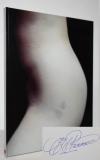
Min, Byung-Hun. Byung-Hun Min’s book of nudes. Seoul, Munhak (2012). Gr.-8°. 291, (1) S. mit ca. 150 Duotone-Tafeln und signierter Beilage (Foto-Karte). Illustr. Orig.-Kartonumschlag.
One of 1,500 numbered copies; signed by Byung-Hun Min on the accompanying card. – Im Byung-Hun Min’s photographs, the gradation from black to white is an important element of expression by which the ordinary and the extraordinary, the universal and the particular are distinguished. Min’s photographs braxe up his spectators by showing the world in monochrome, a worid u navailable to the naked eye. In every one of his works are vividly inscribed the processes of facing a human being, sharing feelings, measuring the decisive moment, and capturing it in Bight. A new experience of sense begins on this unreal footing, that is to say, a place marked out only through the photographed image. Immersion and imagination become most alive when awakened through the fresh senses: to immerse oneself in the sensory, and to imagine so as to be freed from one’s particular time and place. Not only do we see Mirm’s images through the eyes, but we also encounter them through the ears, upon the skin. The photographer stimulates our imagination beyond the original context of time, space and subject through depicting fragments of bodies in ambiguous shapes and subtle tones, revealing only a narrow range of grey tones, or evading clarity. In this way, Min’s photographs, stirring deeply hidden desires, become the story of our own“ (Su-Jin Shin, photography pschologist). – Very well preserved. Schlagwörter: Aktfotografie, Aktphotographie, Nummerierte Bücher, Photography of the nude, Signed books, Signierte Bücher |
240,-- | |
 |
Puttelaar, Carla van de. (Galateas). Tekst / text Rudy Kousbroek. Amsterdam, Basalt Publishers & Van Zoetendaal Collections (2004). 4°. 79, (1) S. mit 34 Farbtafeln. Farbig illustr. Orig.-Pappband.
First edition. – Signed by Carla van de Puttelaar. – „The photography of Carla van de Puttelaar allows the eye to touch the skin on many levels. Through her lens, she makes the viewer aware of the sensitivity and the sensuality of skin, which she examines in detail, without ever forgetting to be aware of the importance of the shapes of the structure that the skin envelopes. The female body has long been her main subject, but in recent years she has also successfully begun to examine the skin and texture of flowers, particularly those on the brink of fading. In them she has discovered the same fascinating sensitivity and sensuality as in her female models. Natural light is one of Carla’s most important tools and assets. She allows it to play around with her subjects and then catches it at its most seductive moment and from that moment on, it is captured for posterity“ (carlavandeputtelaar(dot)com). – In very good condition. Schlagwörter: Aktfotografie, Aktphotographie, Photography of the nude, Signed books, Signierte Bücher |
100,-- | |
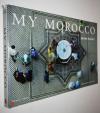 |
Barbey, Bruno. My Morocco. With texts by and for Jemia and J. M. G. Le Clézio. London, Thames & Hudson (2003). Quer-4° (24,5 x 38 cm.). 184 S. mit 95 Farbtafeln. Orig.-Pappband mit farbig illustr. Schutzumschlag.
First edition. – „Photography is the only language that can be understood anywhere in the world.“ (Bruno Barbey). – „Throughout Bruno Barbey’s travels, one constant remains – his love for and fascination with Morocco, his homeland. He focuses on the yellow ochre/burnt umber tones of the towns and rural areas to create colour-drenched, strongly graphic images rendered dazzling by Morocco’s scorching light“ (Thames & Hudson). – The French photographer B. Barbey (1941-2020), „is known particularly for his free and harmonious use of color. He frequently worked in Morocco, the country of his childhood. In 1999, the Petit Palais in Paris organized a large exhibition of photographs that Barbey had taken in Morocco during the previous three decades. He received many awards for his work, including the French National Order of Merit. His photographs have been exhibited internationally and are in numerous museum collections“ (magnumphotos(dot)com). – Dust jacket with minor edge damage, otherwise in very good condition. Schlagwörter: Marokko, Naher Osten, Nordafrika, North Africa |
200,-- | |
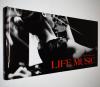 |
Kremer-Khomassouridze, Alexandra. Life music. (Fotoalbom). Moskau, PoRog (2008). Quer-4° (22 x 43 cm.). 202, (5) S. mit ca. 190 Duotone-Tafeln. Orig.-Leinenband mit illustr. Schutzumschlag.
One of 1,000 numbered copies. – „Behind the scene stories of the Classical Music world. The birth of first sounds and note lines. The Backstage of concerts and rehersals hidden from the ordinary eye. Mstislav Rostropovich, Yuri Bashmet, Daniel Barenboim, Gidon Kremer, Vladimir Spivakov, Yuri Temirkanov, Valery Guergiev, Evgeny Kissin, Nicolaus Harnoncour, Marta Argerich, Vladimir Askenasi, Vadim Repin, Denis Mazuev, Yo-Yo Ma, Sofia Gubaidulina, Arvo Part, Leonid Desiatnikov, Giya Kanchelly, Natalia Gutman, Christof Echenbach, Mikhail Pletnev, Genadi Rojdestvensky … The invisible part of an iceberg – a World where the greatest Maestros of all times live and work in. My grandmother from Baku was a well brought up young girl from a respectable family and she thought that «a day without music is a day lost !» That’s why she spent her money on music lessons for her six children. They were gifted and patient and everybody (except for my freedom-loving mother) conscientiously studied to play violins, cellos, pianos and the harp. Then they began to find themselves husbands and wives who were also musically gifted, and their children inherited their love of music. I grew up in a very musical family which consisted of a cellist, three pianists, two violinists and two harpists. All my uncles and aunts, their children, their friends and their friends’ children were musicians, everybody, except for my mother and me. When i was a girl i found it very advantageous to have a lot of free time and to get my knees dirty. I investigated the world by playing football with friends in the backyards of Baku, while my diligent family practiced music, rehearsed and sweated (in summer it is 40°C in Baku) over the notes. However, they sometimes took me with them to the rehearsals and put me into the orchestra pit. I began to become familiar with the goings on of the Baku operas and conservatories, and even now I hear the sounds of the Azerbaijani symphonic orchestra, headed by the elegant maestro Niyazi. I lived near music, but outside it. I heard it with my eyes“ (A. Kremer-Khomassouridze). – Dustjacket with minor edge wear, very good copy. |
240,-- | |
| Wiedenhöfer, Kai. Book of destruction. Gaza – one year after the 2009 war. Göttingen, Steidl / Fondation Carmignac Gestion (2010). 4°. 155 S., [2] Bl. mit teils doppelblattgr. Farbtafeln. Orig.-Leinenband mit farbig illustr. Schutzumschlag.
Erste Ausgabe. – „Seit über zwanzig Jahren ist Kai Wiedenhöfer im Nahen Osten unterwegs. Dort sind viele Journalisten und Fotografen, um der Welt von den Konflikten zwischen Israelis und Palästinensern zu berichten. Doch keiner konzentriert sich wie Wiedenhöfer ausschließlich auf Gaza. Und anders als die meisten, fotografiert er noch dort, wenn sich die internationale Aufmerksamkeit längst wieder anderen Themen zugewendet hat. Auch 2009, ein Jahr nach dem Angriff der israelischen Armee, war Wiedenhöfer in Gaza. Bei dieser Recherchereise entstanden verstörend ruhige, fast repetitive Panoramabilder von zerstörten Gebäuden und Porträts versehrter Körper. Auf den Fassadenresten niedergebombter Häuser und den Gliedmaßen der Palästinenser zeigt Kai Wiedenhöfer in seiner eigenen dokumentarischen Ästhetik die Landschaft des Kriegs, eine Geographie der Zerstörung“ (Steidl). – Tadellos. Schlagwörter: Gaza War, 2008-2009, Palestinian Arabs, War photography, War victims |
50,-- | |
|
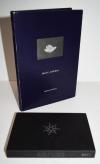 |
Burkhard, Balthasar. Helix Aspersa. Gent, Imschoot, Uitgevers for IC (1991). 8°. [23] Bl. mit 29 Duotone-Tafeln. Orig.-Leinenband mit illustr. Schutzumschlag.
Eines von 20 Exemplaren, von B. Burkhard signiert. – Interessante Nahaufnahmen der gefleckten Weinbergschnecke. – Der Berner Fotograf B. Burkhard (1944-2010) wurde mit dem Tier-Bilderbuch „Klick! sagte die Kamera“ (Baden 1997, vgl. Schweizer Fotobücher 454 ff.) bekannt. – B. Burkhard, Lehrling von Kurt Blum in Bern, „arbeitete zunächst als Dokumentarfotograf der Kunsthalle Bern, bevor er im Jahr 1969 seine Künstlerlaufbahn begann. Seine Arbeiten wurden vor allem im Zusammenhang mit zeitgenössischer Kunst ausgestellt, in der Fotografieszene tauchte sein Name nur selten auf. Dabei brachte er durchaus seine Fähigkeit als klassischer Fotograf zur Geltung – mit Werken in Schwarzweiss und im Grossformat. Das Buch „Klick!, sagte die Kamera“ kann denn auch als eine Hommage an die Geschichte der Fotografie gedeutet werden. Burkhard ist in die Rolle eines Studiofotografen geschlüpft. Indem er die Zirkustiere vor einem Laken posieren lässt, schliesst er alles Exotische aus. Bei seinen Bildern denkt man an Porträts des 19. Jahrhunderts, als Fotografen ihr Studio auf den Jahrmärkten aufbauten. Die serielle Vorgehensweise verweist aber auch auf eine wegweisende Arbeit des 20. Jahrhunderts, die Urformen der Kunst von Karl Blossfeldt. Das 1928 erschienene Fotobuch führte ein, was später zu einem Merkmal der deutschen Fotografie werden sollte: die Beschäftigung mit „Typologien“. Die seriellen Aufnahmen erlaubten es, die individuellen Merkmale einer Kategorie herauszuarbeiten. August Sander ging bei seiner Bestandsaufnahme gesellschaftlicher Typen ähnlich vor. Ein spätes Echo auf diese Arbeiten der 1920er-Jahre. Mit seinem Ansatz beugt er, genau wie die Fotografen der Neuen Sachlichkeit, jedwedem subjektiven Ausdruck vor. Diese stringente und ungekünstelte Vorgehensweise findet sich auch bei anderen Künstlern seiner Generation wieder, so etwa bei Bernd und Hilla Becher. Das Subjekt, das seinem Kontext enthoben ist, wird zum Motiv“ (N. Herschdorfer in Schweizer Fotobücher S. 457). – Kanten und Gelenke des Schutzumschlags geringfügig berieben, sonst sehr gut erhalten. – Beiliegt: Burkhard, Balthasar et René Wochner. Le jeu de sept familles (Animal – Corps – Desert – Neige – Nuage – Vegetation – Ville). Hornu (Belgique), Musée des Arts Contemporains du Grand-Hornu (MAC) s. d. (vers 1995). Quer-Kl.-8° (10,5 x 15 cm.). 42 Images sur carton. Étui de l’éditeur. Schlagwörter: Nummerierte Bücher, Signierte Bücher |
600,-- | |
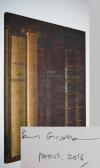 |
Graham, Paul. Paris 11-15th November, 2015. London, Mack 2016. 4° (26,3 x 18,8 cm.). [84] p. with 28 partly double-sided colour plates. Publishers’ colour-illustrated cloth binding.
Signed by Paul Graham „Paris, 2016″. – „During the terrorist attacks on Paris in November 2015, photographer Paul Graham took refuge in an apartment in the city with his partner and young child. In response to the suffocating tension on the city’s streets, he made this series. Looking at the images you would never know of the traumatic events unfolding outside, but suffusing the photographs is an inscrutable longing for the safe, the everyday, the known“ (Mack). Schlagwörter: Signierte Bücher |
240,-- | |
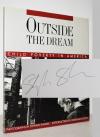 |
Shames, Stephen. Outside the dream. Child poverty in America. Introduction by Jonathan Kozol. Afterword by Marian Wright Edelman. New York, Aperture (1991). 4°. 87, (1) S. mit teils doppelblattgr. Duotone-Tafeln. Orig.-Leinenband mit illustr. Schutzumschlag.
First edition of the first photobook by the American photojournalist S. Shames (born 1947). – Signed by Stephen Shames. – „Just as Walker Evans photographs helped America see the poverty of Appalachia, the vivid images in Outside the Dream will open our hearts to the deprivation that today afflicts not a region, but an entire generation“ (Senator Bill Bradley). – „Stephen Shames is a tremendous asset to the disadvantaged children of this nation….His photographs have helped bring the plight of poor children to the mainstream public“ (Marian Wright Edelman). – „Stephen Shames creates award winning photo essays on social issues for publications, books, foundations, advocacy organizations, and art museums such as Newsweek, Esquire, US News, Time; Aperture; The Ford, Robert Wood Johnson, Mott, and Casey Foundations; Childrens Defense Fund, Family Resource Coalition of America, Inner City Hope; International Center of Photography, The Corcoran Gallery of Art, and Museum of Photographic Arts. – Steve was a profiled artist in Esquire and on CBS Sunday Morning. He testified about child poverty to the United States Senate; was featured speaker at American Bar Association and Childrens Defense Fund national conferences. documentaries, and web sites. Steves images have been exhibited at and are in the permanent collections of the International Center of Photography, Museum of Photographic Arts, and Museum of Fine Arts, Houston. He has received awards from Kodak Crystal Eagle for Impact in Photojournalism, World Hunger Year, Leica, International Center of Photography, and Robert F. Kennedy Journalism Foundation“ (Aperture). – In very good condition. Schlagwörter: Armut, Children in photograpy, Kinder-Fotografie, Photojournalism, Photojournalismus, Poor children, Reportage-Photographie, Signierte Bücher, USA |
200,-- | |
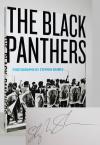 |
Shames, Stephen. The Black Panthers. Foreword by Bobby Seale. Essay by Charles E. Jones. New York, Aperture Foundation (2006). 4°. 151, (1) S. mit illustr. Titel und 72 Duotone-Tafeln. Illustr. Orig.-Pappband.
First edition. – Signed by S. Shames. – „In 1966, as the largely nonviolent Civil Rights movement swept through America, Huey P. Newton and Bobby Seale founded the legendary Black Panther Party in Oakland, California. Revered by some and vilified by others, the party burst onto the scene with a militant vision for social change and the empowerment of African-Americans. Its methods were so controversial and polarizing that in 1968, FBI head J. Edgar Hoover described the organization as the country’s greatest threat to internal security. During the height of the movement, from 1967 to 1973, photographer Stephen Shames had unprecedented access to the organization. He captured not only its public face—street demonstrations, protests and militant armed posturing—but also life behind the scenes, from private Party meetings to Bobby Seale at work on his Oakland mayoral campaign. Shames was prolific and his archive of Panther images is the largest in the world, presenting an uncommonly nuanced portrait of this dynamic social movement. Released on the occasion of the Party’s fortieth anniversary, this illuminating publication gathers an astonishing collection of never-before-published images, offering an electrifying visual history. Panther newspapers, posters and other ephemera help convey the ethos of the Panthers and of a transformative period of social upheaval for the whole nation“ (Aperture). – Fine copy. Schlagwörter: Black Panthers, Black power, Racism, Rassismus, Signed books, Signierte Bücher |
280,-- | |
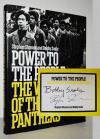 |
Shames, Stephen and Bobby Seale. Power to the people. The world of the Black Panthers. New York, Abrahams (2016). 4° (28,5 x 22,5 cm.). 254 S. mit Tafeln in Duetone und Farbe. Illustr. Orig.-Pappband mit illustr. Schutzumschlag.
First edition. – Signed by Bobby Seale and Stephen Shames. – „This pictorial history tells the story of the revolutionary Black Panther Party in the words of its co-founder, Bobby Seale. Coming toward the end of America’s epic Civil Rights Movement, the Black Panther Party was one of the most creative and influential responses to racism and inequality in American history. They advocated armed self-defense to counter police brutality, and initiated a program of patrolling the police with shotguns—and law books. In words and photographs, Power to the People explores the impact and achievements of this revolutionary organization. The words are Bobby Seale’s, with contributions by other former party members. The photographs are by Stephen Shames, the Panther’s most trusted documentarian. Power to the People is a testament to their warm association, combining Shames’s memorable images with Seale’s colorful in-depth commentary culled from many hours of conversation. Shames also interviewed major party figures for this volume, including Kathleen Cleaver, Elbert „Big Man“ Howard, Ericka Huggins, Emory Douglas, and William „Billy X“ Jennings. His photography is supplemented with Panther ephemera and graphic art“ (Abrahams). – Fine copy. Schlagwörter: Black Panthers, Black Power, Racism, Rassismus, Signierte Bücher |
380,-- | |
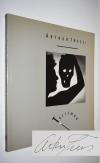 |
Tress, Arthur. Talisman. Edited by Marco Livingstone. London, Thames & Hudson 1986. Gr.-8° (23,3 x 21,3 cm.). 156 p. with 172 illustrations, 22 in color and 150 in duotone. Illustrated cardboard cover by the publisher.
First edition. – Signed by A. Tress. – Very well preserved. Schlagwörter: Signed books, Signierte Bücher, Surrealism, Surrealismus |
80,-- | |
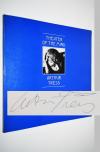 |
Tress, Arthur. Theater of the mind. (Essays: Duane Michals, Michel Tournier. Introduction: A(llan) D(ouglass) Coleman). Dobbs Ferry, New York, Morgan & Morgan (1976). Quer-Gr.-8° (22,8 x 22,8 cm.). [47] Bl. mit 84 Duotone-Tafeln. Illustr. Orig.-Kartonumschlag.
First edition. – Signed by Arthur Tress. – „Tress will upset you. When he photographs you with a friend or lover, you will become an actor. You will perform in his theater and that drama one soon realizes is one’s own. Don’t be surprised if Arthur suddenly asks you to put your mother in a wheelbarrow, and don’t be amazed to find yourself doing it. It all seems a joke, but when our smiles fade we are quietly shocked by what we are experiencing. Something disconcerting has happened. Looking at some of these photographs is like listening in on some strange family’s argument“ (Duane Michals). – „Born in Brooklyn, New York, on November 24, 1940, Arthur Tress began his first camera work as a teenager in the surreal neighborhood of Coney Island where he spent hours exploring the decaying amusement parks. … Seeing the destructive results of corporate resource extraction, Tress began to use his camera to raise environmental awareness about the economic and human costs of pollution. Focusing on New York City, he began to photograph the neglected fringes of the urban waterfront with a straight documentary approach. This gradually evolved into a more personal mode of “magic realism” combining improvised elements of actual life with stage fantasy that became his hallmark style of directorial fabrication. In the late 1960s Tress was inspired to do a series based upon children’s dreams that combined his interests in ritual ceremony, Jungian archetypes, and social allegory. Later bodies of work dealing with the hidden dramas of adult relationships and the reenactments of male homosexual desire evolved from this primarily theatrical approach“ (arthurtress(dot)com). – In excellent condition. Schlagwörter: Signierte Bücher, Surrealism, Surrealismus |
120,-- | |
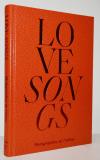 |
Alves, Jordan (Ed.). Love songs. Photographies de l’intime (par René Groebli, Emmet Gowin, Nobuyoshi Araki, Hervé Guibert, Alix Cléo Roubaud, Larry Clark, Nan Goldin, Sally Mann, J. H. Engström & Margot Wallard, Rong Rong & Inri, Hideka Tonomura, Leigh Ledare, Lin Zhipeng alias No 223, Collier Schorr, Motoyuki Daifu, Karla Hiraldo Voleau). Paris, Atelier EXB (2022). 4° (28 x 20 cm.). 221, (3) p. avec de nombreuses illustrations sur des planches en duetone et en couleur. Couverture en similicuir de l’éditeur.
Catalogue de l’exposition à la Maison Européenne de la Photographie (MEP, Paris). Textes par Simon Baker, Frédérique Dolivet, Pascal Hoël, Laurie Hurwitz et Clothilde Morette. – „A sentimental journey in photography (of the nude 1950-2021).“ (Simon Baker). Schlagwörter: Aktfotografie, Aktphotographie, Photography of the nude |
200,-- | |
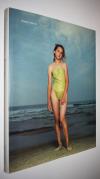 |
Dijkstra, Rineke. Portraits. (Mit einem Essay von Hripsimé Visser und einem Nachwort von Urs Stahel). München, Schirmer/Mosel (2005). Gr.-4° (33,5 x 26 cm.). 160 S. mit 69 Farbtafeln. Orig.-Pappband mit farbig illustr. Schutzumschlag.
Die niederländische Fotografin Rineke Dijkstra (geb. 1959) „fotografierte – manchmal über lange Zeiträume hinweg – Jungen und Mädchen verschiedener Nationalitäten am Strand, die Entwicklung eines jugendlichen bosnischen Flüchtlingsmädchens in Abständen von zwei Jahren, junge Mütter kurz nach der Geburt ihrer Kinder, junge Israelis vor und nach ihrer Einberufung zum Militärdienst, junge Stierkämpfer nach dem Kampf… Dijkstras „klassische” Porträts halten die Veränderungen fest, die wichtige Erfahrungen oder entscheidende Ereignisse in den Gesichtern und Körperhaltungen junger Menschen hervorrufen“ (Schirmer/Mosel). – Rineke Dijkstra, die heute in Amsterdam und Berlin lebt, wurde 1987 mit dem Kodak Award Nederland ausgezeichnet und 1990 für Young European Photographers nominiert; 1994 erhielt sie den Werner Mantz Award und 1999 den Citibank Private Bank Photography Prize. – Sehr gutes Exemplar. Schlagwörter: Portrait photographers, Portrait photography, Portraitphotographie, Portraits, Porträtfotografie, Porträtphotographie, Porträts |
140,-- | |
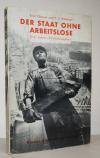 |
Glaeser, Ernst und F(ranz) C(arl) Weiskopf. Der Staat ohne Arbeitslose. Drei Jahre „Fünfjahresplan“. Mit einem Nachwort von Alfred Korella. Berlin, Gustav Kiepenheuer (1931). Gr.-8°. VIII, 198 S., [1] Bl. mit 265 Abbildungen nach Fotografien von Alexander Michailowitsch Rodtschenko u. a. und 2 Karten. Orig.-Kartonumschlag mit Schutzumschlag (Fotomontage von John Heartfield).
Heiting/Jaeger I, 285 ff. Heidtmann 15387. Melzwig 744.1. W.-G.² 5. – Erste Ausgabe. – „Während Tucholskys Blick auf Deutschland von Kritik und beißendem Sarkasmus durchzogen war, warfen Ernst Glaeser und Franz Carl Weiskopf 1931, anlässlich von „Drei Jahren ‚Fünfjahresplan‘“, einen wohlwollend-bewundernden Blick auf die junge Sowjetunion, den vermeintlichen Staat ohne Arbeitslose. Schon 1927 hatte Weiskopf in seinem bei Malik erschienenen Reisebericht Umsteigen ins 21. Jahrhundert den Sowjetstaat als Vorbild für die Gesellschaftsordnung der Zukunft gefeiert. Für den Bildband im Berliner Verlag Gustav Kiepenheuer wurde ein 184-seitiger, lateinisch durchnummerierter Buchblock mit 265 Abbildungen zusammengestellt, die die Herausgeber laut Impressum aus über 5.000 Bildern der russischen Agentur Ogonjok und der Berliner Unionbild aus wählten. Dieser Bildteil, im Kupfertiefdruck bei Oscar Brandstetter in Leipzig produziert, enthält die Bildunterschriften in drei Sprachen (Deutsch / Englisch / Französisch) und wurde analog für die französische und englische Ausgabe des Buches verwendet. Lediglich das römisch nummerierte Vorwort der Herausgeber und das erklärende Nachwort zum Fünfjahresplan von Alfred Kureila wurden für die jeweiligen nationalen Ausgabennoch übersetzt. Die deutsche Variante erschien zunächst ohne Angabe einer Auflagenhöhe in einer kartonierten Ausgabe mit aufgeklebtem Schutzumschlag von John Heartfield, der sich zur selben Zeit auf einer mehrmonatigen Reise in die Sowjetunion befand.“ (P. Rössler in Heiting/Jaeger). – Schutzumschlag mit geringfügigen Randläsuren, sehr gutes Exemplar. Schlagwörter: Propaganda, Sozialismus |
140,-- | |
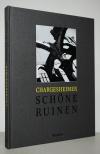 |
Chargesheimer (d. i. Karl-Heinz Hargesheimer). Schöne Ruinen. Herausgegeben von Reinhold Mißelbeck. Mit einem Beitrag von Anke Solbrig unter Verwendung von Originaltexten von Günther Weiß-Margis und einem Nachwort von Anneliese Weiß-Margis. Köln, Wienand Verlag (1994). 8°. 96 S. mit 44 Duotone-Tafeln. Orig.-Leinenband mit Deckelbild in Pappschuber.
„Vor etwa drei Jahren jedoch machte Anneliese Weiß-Margis – Buchhändlerin und dem Freundeskreis Chargesheimers zugehörig – einen Besuch in meinem Büro und legte mir einen Ordner mit Triimmerphotographien vor. Außer Bildern enthielt er auch Texte von Chargesheimer und seinem Freund Günther Weiß-Margis, einen bereits gestalteten Titel »Form und Urform« sowie eine grobe Ordnung der Bildabfolge. Das Buch war Ende der vierziger Jahre von Chargesheimer und Weiß-Margis konzipiert worden, fand jedoch keinen Verlag. Ein Blick auf die Photos genügte, um dies zu erklären: Wer in Deutschland war ein paar Tage nach Kriegsende schon bereit, das Trümmerfeld Deutschland aus einer Position zu sehen, die mit der eines Walter Hege angesichts der Akropolis vergleichbar ist? Expressive Dramatik, mahnendes In-Szene-Setzen, metaphorische Bilder, wie sie Hermann Claasen im »Gesang im Feuerofen« vorlegte, ja, aber Ruinen als ästhetisches Erlebnis? Das konnte kaum ein Kölner, kaum ein Deutscher damals verkraften, das wollte kein Verleger seinen Lesern zumuten“ (R. Mißelbeck). – Neuwertiges Exemplar. Schlagwörter: Documentary photography, Köln, Weltkrieg <1939-1945>, Weltkrieg II |
70,-- | |
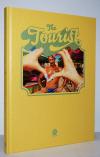 |
Roy, Kourtney. The tourist. (Introduction by Del Barrett. Traduit de l’anglais par Brice Matthieussent). Marseille, André Frère Éditions (2020). 4°. [6] p. (folder) and 93 partly double-page-sized colour plates. Publisher’s imitation leather binding.
First and only edition. – „The Tourist contains all the Roy hallmarks we love and expect: auto-portraiture, a filmic approach, her characteristic colour palette, as well as a tension ‚between the witty and the sinister, the conventional and the unorthodox, the glamour and the sleaze. … Having toured this world of ersatz glamour, we are sad to leave, but we should take with us a sense of relief that at least the daily routine in our world does not require self-grilling with aluminium foil“ (Del Barrett). – The Canadian photographer Kourtney Roy (born in 1981) „studied photography at Emily Carr University of Art and Design in Vancouver and later at the École Nationale Supérieure des Beaux-Arts in Paris. These formative years shaped her meticulous visual aesthetic, one that translates seamlessly across photography and film, from glossy print to moving images. Working independently across the art and advertising worlds, Roy brings a dark sense of humour to her practice, drawing on the grotesque undercurrents of seemingly placid settings and the tensions simmering just beneath the surface. Her photographs have received numerous awards and grants, including the Prix Picto (2007), the Emily Award, ECUAD (2012), the Prix Carte Blanche PMU / Le Bal (2013), Pernod Ricard’s prestigious Carte Blanche (2018), and the Prix Swiss Life à 4 mains (2024). She was also awarded grants from the French National Centre of the Arts in 2018 and the National Library of France photographic commission in 2022“ (kourtneyroy(dot)com). – Copy in mint condition. |
100,-- | |
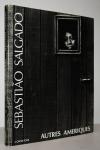 |
Salgado, Sebastiao (Ribeiro). Autres amériques. (Textes de Claude Nori, Sebastião Salgado, Alan Riding et Gonzalo Torrente Ballester). Paris, Éditions Contrejour (1986). 4°. 111, (1) S. mit 48 teils doppelblattgr. Duotone-Tafeln. Orig.-Leinenband mit illustr. Schutzumschlag.
Auer 666 (spanische Ausgabe). Koetzle, Fotografen A-Z 342 f. – Erste Ausgabe der zweiten Veröffentlichung des berühmten Brasilianischen Fotografen. Im selben Jahr erschienen auch eine amerikanische Ausgabe in New York. Die erste Veröffentlichung „Fotografias“ erschien 1982 in Rio de Janeiro. – „En 1986, paraissait le premier livre Autres Amériques de Sebastião Salgado aux éditions Contrejour, un ensemble de photographies, fruit de nombreux voyages entre 1977 et 1984 qui revisitaient l’Amérique Latine en évoquant la persistance des cultures paysannes et indiennes. La force de conviction des photographies en noir et blanc, leur puissance plastique, la maquette de Lélia Salgado présentant la plupart des images en doubles pages participèrent au succès de ce livre qui reçut le Prix du Premier Livre Photo, fut édité en quatre langues puis épuisé en quelques mois. Ce livre devenu mythique au fil du temps, est enfin publié à nouveau accompagné des textes originaux de l’époque de Sebastião Salgado, Alan Riding, Gonzalo Torrente Ballester et d’un texte de Claude Nori racontant sa genèse. Par son œuvre monumentale en noir et blanc sur des projets pensés sur le long terme, par la puissance esthétique de ses photographies, son engagement auprès des populations opprimées et son combat en faveur de la planète, Sebastião Salgado est aujourd’hui le maître incontesté du reportage dans la tradition humaniste“ (Éditions Contrejour). – Sehr gutes Exemplar. Schlagwörter: South America, Südamerika |
180,-- | |
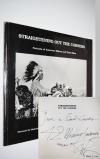 |
Vermes, Philippe. Straightening out the corners. Portraits of american bikers and their bikes. Foreword by Malcolm Forbes. Introduction by A. D. Coleman. Boca Raton, Florida, Iris Publications (1989). Gr.-8° (23 x 23 cm.). 95 S. mit 40 Duotone-Tafeln und einigen Abbildungen im Text. Illustr. Orig.-Kartonumschlag.
First edition. Inscribed by P. Vermes „To Jean and Robert Graves 42 Wedding Anniversary September 11. 1990 Philippe Vermes Lacornia 9. 5. 90“. – „Anyone seeking to find out what became of Robert Frank’s black bikers or Danny Lyon’s young white working-class cyclists – a disciple of Frank who later photographed these marginal heroes – can turn to the work of Philippe Vermès. Perhaps they will find them there. Like the itinerant portraitist of small towns of yesteryear, Philippe Vermès grants them the right to be seen without judgement, accepting them as they are. The result is portraits brimming with information, teeming with rich observational details that draw on two traditions: photography and painting. A classically trained painter who became a photographer, Philippe Vermès is the logical custodian of these two related approaches“ (A. D. Coleman). – Philippe Vermès born in 1942, is a French artist photographer who lives and works in Paris. A graduate of the Ecole Nationale Supérieure des Beaux-Arts de Paris, the photographer and portraitist transcribes with the eye of a painter in love with black & white portraiture. Schlagwörter: Motorcycles, Motorcycling, Motorcyclists, Motorrad, Motorräder, Motorradfahrer, Portrait photography, Portraitphotographie, Porträtfotografie, Porträtphotographie, Signed books, Signierte Bücher, Widmungsexemplar |
140,-- | |
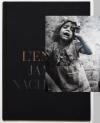 |
Nachtwey, James (Allen). L’Enfer. (Inferno). Paris, Phaidon (1999). Folio (38 x 27,5 cm.). 480 p. avec 382 Triton-Planches. Couverture en toile de l’éditeur.
Koetzle, Fotografen A-Z 286. Parr/Badger II, 254 f. – Première édition française, publiée simultanément avec l’édition originale anglaise. « Nachtwey décrit un monde sombre dans (ses) photographies. Elles peuvent être vues individuellement – dans des expositions – comme des illustrations symboliques intemporelles, ou bien assemblées en séries – dans des contextes journalistiques – accompagnées de reportages écrits dans la presse écrite. En tant que photojournaliste, Nachtwey partage la compassion et l’orientation humaniste du légendaire « combattant » et photographe du magazine Life, W. Eugene Smith, qui, dans une conversation sur son reportage consacré aux pêcheurs japonais rendus infirmes par la pollution au mercure, a un jour déclaré : « Il n’y a bien sûr pas de vérité objective en photographie, mais on peut être subjectif et honnête. » En conséquence, Nachtwey remarque à propos de son travail de photojournaliste qu’il n’y a pas de véritable impartialité ; on a toujours une certaine perception du bien et du mal, de qui sont les oppresseurs et qui sont les opprimés » (R. Hassner dans Koetzle). – Très bon exemplaire. Schlagwörter: Guerre, Krieg, Photographie de guerre, Reportage-Photographie, War photography |
350,-- | |
 |
Schmidt, Michael. Lebensmittel (Food). (Herausgegeben von Markus Heinzelmann). Köln, Snoeck (2012). Gr.-4° (32 x 30 cm.). 262 S., [1] Bl. mit 174 Tafeln in Duotone und in Farbe. Orig.-Leinenband in Pappschuber.
Erste Ausgabe. – „Es ist nicht weniger als ein epochales künstlerisches Werk anzukündigen, eine der großen Arbeiten, eine Serie, die spätere Generationen als Wegmarke im 21. Jahrhundert beschreiben werden, weil sie nicht nur auf der Höhe ihrer Kunst, sondern auch auf der Höhe ihrer Zeit ist. Über viele Jahre hat Michael Schmidt an dieser Serie gearbeitet, hat auf Reisen durch ganz Europa wie selbstverständlich diese Ansichten gesammelt, die keinen Betrachter unberührt lassen werden. Es geht dem Künstler dabei keinesfalls um die Sensationen, die Shots und Schocks des Themas, sondern um die eigene ausgewogene Komposition, Darstellung und Bildabfolge eines Werkes, dessen Thema viele Menschen bewegt: Lebensmittel. Und das meint die Produktion unter industriellen Bedingungen. Wer dieses eindringliche Porträt unserer Lebensgrundlagen durchgeblättert hat, erkennt, dass Michael Schmidt selbst in den von ihrer Funktion abgeschiedenen Lebensmitteln empathisch unsere Welt zu zeigen vermag.“ (Snoeck). – Sehr gutes Exemplar. Schlagwörter: Lebensmittelproduktion, Lebensmittelverarbeitung |
180,-- | |
 |
Mikhaylov – Kölle, Brigitte (Hrsg.). Boris Michajlov. (Katalogbuch zur Ausstellung im Portikus Frankfurt am Main, 21. 10. – 3. 12. 1995 und in der Kunsthalle Zürich, 13. 1. 1995 – 10. 3. 1996). Stuttgart, Oktagon-Verlag (1995). 4°. 175 S. zahlr. teils farbigen Abbildungen. Farbig illustr. Orig.-Pappband.
Mit Textbeiträgen von Brigitte Kölle, Marta Kuzma, Victor Tupitsyn und Boris Michajlov. – Sehr gutes Exemplar. |
40,-- | |
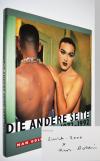 |
Goldin, Nan. Die andere Seite 1972 – 1992. Zusammengestellt mit Hilfe von David Armstrong und Walter Keller. Zürich, Der Alltag / Parkett bei Scalo-Verlag (1992). 4° 27,5 x 22,5 cm.). 143 S. mit 133 Abbildungen in Duotone und Farbe. Orig.-Pappband mit farbig illustr. Schutzumschlag.
Koetzle, Fotografen A-Z 147. – Erste Ausgabe. – Von Nan Goldin signiert und datiert „Zürich 2000 x Nan Goldin“. – „Nan Goldin ist eine leidenschaftliche Chronistin der Liebe im Zeitalter von ungeklärter Geschlechtlichkeit, Glamour, Schönheit, Gewalt, Tod, Rausch und Maskierung. … Ihre Kamera hält das Auf und Ab der sozialen Erfahrungen fest, die mit dem Verlangen nach dem Anderen verknüpft sind: Liebe und Hass imintimen Beziehungen; Augenblicke der Einsamkeit, der Selbstenthüßllung und der Anbetung; eine Sexualität, die von den Zwängen der biologischen Festlegung befreit ist. Aber Goldins Geschichte ist nicht abstrakt. Sie wird durch das Leben der Menschen ezählt, die Teil ihres eigenen Lebens sind“ (E. Sussmann in Koetzle). – Sehr gutes Exemplar. Schlagwörter: Aktfotografie, Aktphotographie, Cross-dressers, Photography, Signierte Bücher |
200,-- | |
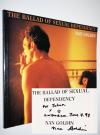 |
Goldin, Nan. The ballad of sexual dependency. Edited with Marvin Heiferman, Mark Holborn and Suzanne Fletcher. New York,, Aperture (1989). Quer-Gr.-8° (23 x 25,5 cm.).. 144 p. with 120 coloured plates. Colour illustrated Paperback.
Auer 667. Koetzle 173 f. Roth, The Book of 101 Books 252 f. Roth, The Open Book 332 f. Parr/Badger II, 39. – First paperback edition. The first hardcover edition appeared 1986. – Inscribed and signed by N. Goldin „For Johan x amsterdam. June 7. 97 Nan Goldin″. – „Nan Goldin might be considered a female equivalent of Larry Clark, photography’s resident bohemian. Her book The Ballad of Sexual Dependency is comparable with Clark’s notorious Teenage Lust (19823), in that it is diaristic and hedonistic – a soap opera of sexual mores mediated through the colour-snapshot aesthetic developed by William Eggleston. But whereas Clark gleefully courts the sleazy and blatantly depicts the sexual act, Goldinm is concerned neither with the sleazy for its own sake nor primarily with sex. Her brief is more complex, and a good deal more ambitious than Clark’s. She examines the limitations of sanctioned gender roles and the conflicting, often violent nature of sexual relationships amongst her friends and lovers. Her view is profoundly pessimistic, yet she also admits the illogical pull of the biological imperative in her introduction to the book: „I often fear that men and women are irrevocably strangers to each other, irreconcilably unsuited, almost as if they were from different planets. But there is an intense need for coupling in spite of it all. Even if relationships are destructive, people cling together“.“ (Martin Parr). – Very good copy. Schlagwörter: Aktfotografie, Aktphotographie, Inscribtion, Photography of the nude, Signed books, Signierte Bücher, Widmungsexemplar |
450,-- | |
 |
Goldin, Nan. I’ll be your mirror. Edited by Nan Goldin, David Armstrong and Hans Werner Holzwarth. Curated by Elisabeth Sussman and David Armstrong. New York, Whitney Museum of American Art, Scalo 1996. 4°. 491, (1) S. mit meist farbigen Tafeln. Farbig illustr. Orig.-Kartonumschlag.
Koetzle 173 f. (mit Abb.). – Erste Ausgabe. – Sehr gutes Exemplar. Schlagwörter: Portrait photography, Portraitphotographie, Porträtfotografie, Porträtphotographie |
50,-- | |
 |
Goldblatt, David. Photographs. (Introduction by Martin Parr. Essays by Lionel Abrahams and Rory Bester). First edition. Rom, Contrasto (2006). Quer-4°. 255, (1) S. mit Tafeln in Duotone und Farbe. Orig.-Leinenband mit Deckelbild.
„David Goldblatt is South Africa’s most important photographer. He has produced a body of work that is an original and extensive study of South Africa during and after apartheid. His On The Mines (1973), with a text by Nadine Gordimer, Some Afrikaners Photographed (1975), and Lifetimes: Under Apartheid (1986), again with a text by Gordimer, document the complexity of South African lives, and are considered milestones in the history of photography. His following work on built structures, the human landscape that speaks of the forces shaping South African society from colonial times up to the end of white domination, led to the exhibition of his most somber works, “Structures,” at The Museum of Modern Art, and to publication of South Africa: the Structure of Things Then (1998).“ (Contrasto). – Neuwertiges Exemplar. Schlagwörter: Apartheid, Dokumentarfotografie, South Africa, Südafrika |
70,-- | |
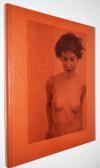 |
Schmidt, Michael. Frauen. (Herausgegeben von Heinz Liesbrock und Thomas Weski). Köln, Walter König (2000). 4°. 140 S. mit 82 Duotone-Tafeln. Orig.-Leinenband mit bedrucktem Klarsicht-Schutzumschlag.
Michael Schmidts Serie „Frauen“ wurde speziell für die Expo 2000 in Hannover konzipiert und porträtiert junge Frauen in ihren Zwanzigern, die noch dabei sind, die charakteristischen Merkmale einer eigenständigen Identität zu entwickeln. – Sehr gutes Exemplar. Schlagwörter: Aktfotografie, Aktphotographie, Photography of the nude, Portrait photography, Portraitphotographie, Porträtfotografie, Porträtphotographie |
250,-- | |
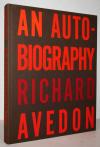 |
Avedon, Richard. An autobiography. (Englische Ausgabe mit deutscher und französischer Texteinlage). München, Paris, London, Schirmer-Mosel und New York, Random House (1993). Folio (36,5 x 29 cm.). [432] S. mit teils doppelblattgr. Duotone-Tafeln. Orig.-Leinenband mit Deckelbild in Pappschuber.
Koetzle, Fotografen A-Z 18 f. – Erste Ausgabe der wichtigen Monographie. – „Während eines Großteils seines Lebens hat Richard Avedon in unterschiedlichen Genres der amerikanischen Fotografie den Ton angegegeben, sie aber gleichzeitig auch provoziert und ihre Grenzen ausgelotet. Als Porträt-, Mode- und Werbefotograf hat Avedon eine Reihe fotografischer Stile praktisch erfunden“ (Jane Livingston in Koetzle). – Ohne den Klarsicht-Schutzumschlag, gutes Exemplar. Schlagwörter: Portrait photography, Portraitphotographie, Porträtfotografie, Porträtphotographie |
100,-- | |
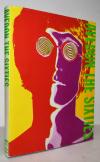 |
Avedon, Richard und Doon Arbus. The Sixties. München, Schirmer-Mosel (1999). Gr.-4°. 248 S. mit 160 Abbildungen in Farbe und Duotone. Illustr. Orig.-Pappband mit farbig illustr. Schutzumschlag.
Schutzumschlag mit minimalen Gebrauchsspuren, gutes und sauberes Exemplar. Schlagwörter: Pop-Kultur, Portrait photography, Portraitphotographie, Porträtfotografie, Porträtphotographie |
40,-- | |
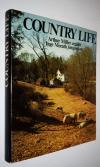 |
Morath – Miller, Arthur. Country life. Arthur Miller erzählt. Inge Morath (eig. I. Mörath) fotografiert. Luzern, Reich Verlag (1977). Quer-4° (26 x 22 cm.). 184, (8) S. mit teils doppelblattgr. Duotone-Tafeln. Orig.-Halbleinenband mit farbig illustr. Schutzumschlag. (Ein terra magica Bildband).
Koetzle, Fotografen A-Z 280. – Erste deutsche Ausgabe. – „Die amüsant zu lesenden Episoden, die geistige Durchdringung der materiellen Wirklichkeit dieses,,country life“ finden in der sehr persönlichen und durch den Blick fürs Besondere und Typische gekennzeichneten Art Inge Moraths, zu fotografieren, eine kongeniale Entsprechung“ (Reich Verlag). – „Ihr fotografisches Handwerkszeug stammt aus der ‚Schule‘ von Henri Cartier-Bresson und der Magnum-Fotografie der 50er Jahre. […] Inge Morath war und ist in diesem Sinne eine Reise- und Reportagefotografin, deren Bildmaterial für die Printmedien vorgesehen ist. Doch daneben entsteht als direkte Antwort auf das ‚bestellte‘ Bild eine Flut von ‚freien‘ Bildern, ein Reservoir an intimen und persönlichen Fotos, deren Zweckfreiheit ihnen eine gleichsam novellistische Erzählebene ermöglicht“ (M. Zuckriegl in Koetzle). – Gutes Exemplar. |
100,-- | |
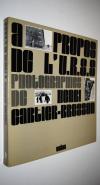 |
Cartier-Bresson, Henri. À propos de l’U.R.S.S. Paris, Éditions Chêne (1973). 4°. [4] Bl., 141 teils doppelblattgr. Duotone-Tafeln, 1 ausfalltbares Blatt (Bildbeschreibungen). Orig.-Pappband mit illustr. Schutzumschlag.
Koetzle, Fotografen A-Z 66. – Erste Ausgabe. – „Cartier-Bresson made two extended visits to the Soviet Union. The first was in a sense news in its own right, because he was the first Western photographer to be admitted to the Soviet Union after Joseph Stalin died in 1953. [He] didn’t get permission to go until 1954. But that was a very big deal, because by then the Soviet Union was a substantial mystery to the West“ (Peter Galassi, MoMA, New York). – Sehr gutes sauberes Exemplar der gebundenen Ausgabe. Schlagwörter: Russland, Soviet Union, UdSSR |
100,-- | |
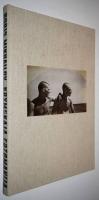 |
Mikhailov (Mihailov Michailov), Boris. Krymskaja fotomanija. Photomania in Crimea. – Fotomanie auf der Krim. (Faksimile-Ausgabe des originalphotographischen Künstlerbuchs von 1995 mit vorder- und rückseitig montierten 117 Photographien (Silbergelatine Baryt), teils sepiagetönt in unterschiedlichen Formaten). Köln, Walter König (2013). 4° (29,7 x 21 cm.). [60] Duotone-Tafeln, [1] Bl. Orig.-Leinenband mit Deckelbildern.
Vgl. Koetzle, Fotografen A-Z 269. – Eines von 180 nummerierten und von B. Mikhailov signierten Exemplaren. – „In „Fotomanie auf der Krim“ arbeitet Boris Mikhailov mit Überblendungen von menschlichen Körpern und der karstigen, urgewaltigen Küstenlandschaft der Halbinsel Krim. Die Protagonisten haben die Zeitgeschichte (in einer Hütte „prangt“ im Hintergrund eine „Ikone“ Lenins als Führer des Volkes) und den Raum der Gegenwart (Menschen in ihrer Freizeit am Strand) verlassen. In Formauflösung und Formfindung vollzieht der Künstler, mit zahlreichen Zitaten, die Geschichte der photographischen Bildproduktion im großen Bogen nach.“ (W. König). – Rücken etwas berieben. Schlagwörter: Aktfotografie, Aktphotographie, Faksimile, Nummerierte Bücher, Photography of the nude, Signierte Bücher |
250,-- | |
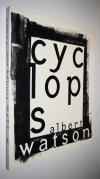 |
Watson, Albert. Cyclops. Introduction by James Truman, Essay by Jeff Koons, Design by David Carson, Photographs edited by Laurie Kratochvil. Produced by Callaway Editions. Boston, New York, Toronto, London, Bulfinch Press, Little, Brown and Company (1994). Folio (36,5 x 29 cm.). [180] S. mit 246 quadratone Tafeln. Orig.-Pappband mit illustr. Schutzumschlag.
Auer 720 (franz. Ausg.). Koetzle, Fotografen A-Z 420. – Erste Ausgabe. – „Albert Watsons Fotos bestechen durch ihre makellose Schönheit und ihre wohldurchdachte Raffinesse.“ (James Crump in Koetzle). – „This first-ever collection of photographs from one of today’s most talented and versatile image makers represents a quarter of a century’s worth of photographic exploration. Watson stands in a small elite group of photographers who are constantly and internationally sought after“ (American Photographer). – Sehr gutes Exemplar. Schlagwörter: Portrait photography, Portraitphotographie, Porträtfotografie, Porträtphotographie |
100,-- | |
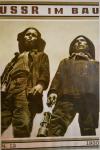 |
Pjatakov, G(eorgi Leonidowitsch, Editor in Chief). USSR im Bau. Illustrierte Monatsschrift. (Erster Jahrgang) 1930. 9 Hefte (Heft 5/6, 7/8 und 10/11 als Doppel-Nr.) in 1 Band. Moskau, State Publishing House of the RSFSR 1930. Folio (43 x 30 cm.). Mit zahlreichen Abbildungen. Halbleinenband der Zeit mit goldgepr. Rückenschild (Orig.-Umschläge beigebunden).
Hellyer 860. Karasik/Heiting 17 ff. Rowell/Wye 242 f. – Erster Jahrgang des wichtigsten sowjetischen Propagandamagazins. Die Zeitscchrift erschien von 1930 bis 1949 monatlich in fünf Sprachen (Russisch, Englisch, Französisch, Spanisch und Deutsch). Jede Ausgabe war einem anderen Thema gewidmet, beispielsweise Lebensmittel- und Industrieproduktion, der Republik Georgien, dem sowjetischen Kino und Wahlen. – „In the early 1930s photo-reportage became the foundation of the magazine USSR in Construction that „was created as a publication for the popularization of large-scale construction projects by photographic means. But as the magazine grew and developed, the task of ‘popularization’ evolved into that of presenting Socialist reality with dramatic artistry.“ (L. Mezhericher, „Na putiakh k sotsialisticheskomu stiliu fotografii” [“On the way to a Socialist style of photography“], No. 2, p. 14). Well known Soviet designers and photographers worked on USSR in Construction. The industrial spirit of the magazine, expressed in compositionally sharp subjects, panoramas and dynamic shots evokes admiration even today and conveys the atmosphere of enthusiasm that carried along not just the photographers, but also the builders themselves. The creative scale of the construction engendered the photographic epic, a style of monumental artistic photography. The founders of this most successful and high-quality periodical were Gorky and Koltsov“ (Mikhail Karasik). – Umschläge teils etwas fleckig, Umschläge von Heft 4-12 mit kleinen Abriebstellen im Rand, Heft 9 bis 12 mit Feuchtigkeitsspuren, teils etwas verfärbt, insgesamt noch ordendliches Exemplar. Schlagwörter: Avantgarde, Magazines, Propaganda, Soviet Union, Zeitschriften |
950,-- | |
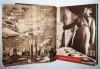 |
Pjatakov, G(eorgi Leonidowitsch, Editor in Chief). USSR im Bau. Illustrierte Monatsschrift. (Dritter Jahrgang) 1933. 12 Hefte in 1 Band. Moskau, State Publishing House of the RSFSR 1933. Folio (43 x 30 cm.). Mit zahlreichen Abbildungen, teils auf gefalteten Tafeln.. Halbleinenband der Zeit mit goldgepr. Rückenschild (Orig.-Umschläge beigebunden).
Hellyer 860. Karasik/Heiting 17 ff. Rowell/Wye 242 f. – Dritter Jahrgang des wichtigsten sowjetischen Propagandamagazins. Mit zwei von El Lissitzky und einer von A. Rodchenko gestalteten Nummern. Die Zeitschrift erschien von 1930 bis 1949 monatlich in fünf Sprachen (Russisch, Englisch, Französisch, Spanisch und Deutsch). Jede Ausgabe war einem anderen Thema gewidmet, beispielsweise Lebensmittel- und Industrieproduktion, der Republik Georgien, dem sowjetischen Kino und Wahlen. – „In the early 1930s photo-reportage became the foundation of the magazine USSR in Construction that „was created as a publication for the popularization of large-scale construction projects by photographic means. But as the magazine grew and developed, the task of ‘popularization’ evolved into that of presenting Socialist reality with dramatic artistry.“ (L. Mezhericher, „Na putiakh k sotsialisticheskomu stiliu fotografii” [“On the way to a Socialist style of photography“], No. 2, p. 14). Well known Soviet designers and photographers worked on USSR in Construction. The industrial spirit of the magazine, expressed in compositionally sharp subjects, panoramas and dynamic shots evokes admiration even today and conveys the atmosphere of enthusiasm that carried along not just the photographers, but also the builders themselves. The creative scale of the construction engendered the photographic epic, a style of monumental artistic photography. The founders of this most successful and high-quality periodical were Gorky and Koltsov“ (Mikhail Karasik). – Umschläge teils etwas berieben, sonst von leichten Gebrauchs- und Altersspuren abgesehen sehr gut erhalten. Schlagwörter: Avantgarde, Magazines, Propaganda, Soviet Union, Zeitschriften |
3.200,-- | |
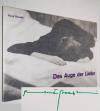 |
Groebli, René. Das Auge der Liebe. 30 Photos. Rita, in Erinnerung, 1923-2013. (Mit einem Essay von Walter Gort Bischof). Zürich, Sturm & Drang (2014). Quer-Gr.-8°. [21] Bl. mit 30 Duotone-Tafeln, 1 Blatt (engl. Text). Orig.-Kartonumschlag mit illustr. Schutzumschlag und Japanpapier-Schutzumschlag.
Vgl. Auer 350. Bertolotti 148 f. (engl. Ausgabe). Heidtmann 10450. Koetzle 176. Schweizer Fotobücher 169 ff. – Reedition der Originalpublikation von 1954 mit fünf zusätzlichen Fotos und einem Text von Birgit Filzmaier. Eines von 1000 Exemplaren; von René Groebli auf dem Titelblatt signiert. – „Seine Fotografien im Halbdunkel, in Bewegung oder bei Gegenlicht lud hier die intime, narrative Bildserie einer Frankreichreise mit seiner jungen Frau Rita mit einer für die 1950er-Jahre geradezu provozierend lyrisch-erotischen Spannung auf“ (T. Koenig in Schweizer Fotobücher S. 171). – „Eroticism and narrative tension are evident in ‚Das Auge der Liebe‘ (The Eye of Love; 1954), by the Swiss Photographer René Groebli. The subject of the work is love. On the cover, the woman lying on a bed with her body and face pushed into the sheets seems to have the intelligent complexity of a character in an Ingmar Bergman film. Inside the book, once again as in a film, the scenes unfold one by one, telling the story of an amorous encounter; a woman goes upstairs, undresses, makes love, remains alone, then gets dressed again in front of the mirror. Finally she is seen sitting alone in a café, with the rose that her partner has given her“ (A. Bertolotti). – Tadellos. Schlagwörter: Aktfotografie, Aktphotographie, Nummerierte Bücher, Photography of the nude |
200,-- | |
 |
Bischof, Werner. 24 Photos. Mit einer Einleitung von Manuel Gasser. Bern, Kohler (1946). 4° (31,5 x 23,5 cm.). Portfolio, [2] Bl. und 24 (statt 23) Duotone-Tafeln auf Karton. Illustr. Orig.-Halbleinen-Flügelmappe.
Auer 315. Heidtmann 5349. Koetzle 51 f. Schweizer Fotobücher S. 127. – Seltene erste Veröffentlichung des bedeutenden Schweizer Photographen, der besonders durch seine Arbeit für die Agentur „Magnum“ bekannt wurde. – Die Aufnahmen entstanden zwischen 1939 und 1945. Die erste Aufnahme „Abstraktion“ auf den Vorderdeckel montiert. – „Das schöne Bild von Bischof … war nicht pures ästhetisches Anliegen, sondern entsprach seinem Credo an eine heile Welt. Doch was er zu zeigen hatte, das vom Krieg zerstörte Europa, der Hunger in Indien, die Kriege in Indochina und Korea, zeugten für eine Welt des Unheils. So gehört zu Bischof gleicherweise die Entschlossenheit, sich mit dem Unheil der Welt mit der Kamera zu stellen, wie die Absatzbewegung“ (H. Loetscher in Koetzle). – Die Flügelmappe am Vorderdeckel mit übermalter Abriebstelle (Buchstabenverlust beim Vornamen des Fotografen), die letzte Tafel „Flüchtlingskind“ doppelt vorhanden, gutes Exemplar. |
320,-- | |
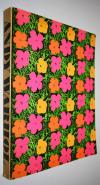 |
Warhol – Andy Warhol. [Publication on the occasion of the Andy Warhol Exhibition at Moderna Museet in Stockholm, February-March 1968]. Malmö, Melin, Svensson, Arbman (1968). Gr.-8°. Ca. [250] Bl. mit über 300 meist ganzs. Abbildungen nach Photographien von Rudolph Burckhardt, Eric Pollitzer und John D. Schiff. Farbig illustr. Orig.-Kartonumschlag.
Parr/Badger II, 144 f. The Open Book 238 f. – Erste Ausgabe. – Von Andy Warhol, Kaspar König, Pontus Hultén und Olle Granath herausgegeben. – „The Moderna Museet book is a worthy adjunct to Index (Book), an exhibition catalogue that transcends any limitations that might be suggested by this genre. It is a fine example of the catalogue-as-artist’s-book, a form that ostensibly began with the Dadaists and Surrealists, and is produced with some of the roughest reproductions ever seenm which are entirely appropriate, and supplemented by a long sections of Factory snapshots again by Billy Name. The genre was revitalized by the Pop movement, and Warhol in particular, which demonstrates his position as a latter-day Dadaist. If you could only have one Warhol-inspired photobook, the Index must rank first, but the Moderna Museet book is close behind“ (Parr/Badger). – „Die Fotografie und das Fotografieren bilden das Zentrum des Werks von Andy Warhol“ (U. M. Schneede in Koetzle). – Die ersten vier Blatt an den unteren Ecken produktionsbedingt mit Knickspuren, papierbedingt wie immer gebräunt, sehr gutes Exemplar. Schlagwörter: Pop art, Pop-Kultur |
280,-- | |
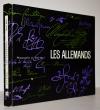 |
Burri, René. Les Allemands. (Textes réunis et présentés par Jean Baudrillard). Paris, Robert Delpire (1963). Quer-8°. 170 S. mit ganzs. Abb. Farbig illustr. Orig.-Pappband.
Heiting/Wiegand 452 f. (mit mehr. Abb.). Koetzle 78 f. (mit Abb.). Parr/Badger I, 218. Schweizer Fotobücher 244 ff. – Erste französische Ausgabe, „die vielleicht wichtigste Arbeit von Burri“ (T. Wiegand). Die deutsche Original-Ausgabe erschien 1962. – „Burri’s book would be more widly regarded as one of the best photobooks of the 1960s. Seen here in its German edition, Die Deutschen. which was published the year before Les Allemands. exactly mirrors Les Américains in conception – an extended photo-essay of the same size and similar design, with excerpted text from writers commenting on the country’s national characteristics“ (Parr/Badger). – Sehr gutes sauberes Exemplar. Schlagwörter: Portrait photography, Portraitphotographie, Porträtfotografie, Porträtphotographie |
140,-- | |
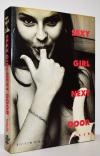 |
Vulis, Ralf. Sexy girl next door. München, Edition Reuss (2001). 4°. [244] S. mit Duotone Tafeln. Illustr. Orig.-Pappband mit illustr. Schutzumschlag.
Erste Ausgabe. – Einleitung in Deutsch, Englisch, Französisch und Italienisch. – „Latvian photographer Ralf Vulis loves to delve into fantasies and bring them to life through his camera. He is unquestionably one of the most creative talents in erotic photography today. In this outing he tackles the concept of the girl-next-door and brings it to glorious fruition. His beautiful model is one that has appeared in many of his books and she is perfect for this project“ (J. del Castello Gilbert). – Gutes Exemplar. Schlagwörter: Aktfotografie, Aktphotographie, Erotische Fotografie, Photography of the nude |
40,-- | |
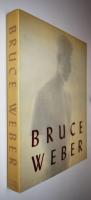 |
Weber, Bruce. Bruce Weber. (Edited and designed by John Cheim). München, Paris, Schirmer-Mosel (1989). 4°. Mit 140 teils farbigen Tafeln. Orig.-Leinenband mit illustr. Schutzumschlag und zusätzlichem halbtransparentem Umleger.
Koetzle 482 (mit Abb.). – Erste deutsche Ausgabe. – „Kultfotograf der 80er und 90er Jahre“ (Koetzle). – „Zusammen mit Robert Mapplethorpe hat Bruce Weber die Art und Weise, wie Männer fotografiert werden, verändert. Beide haben Männer so betrachtet, wie es zuvor nur als männliche Betrachtungsweise von Frauen akzeptabel war. Aber während männliche Sexualität, wie im Falle Webers, als ungehemmt – körperlich oder romantisch – sinnlich dargestellt sein mag, wird sie zugleich mit einem Gefühl für Spaß und Kameradschaft ausgedrückt“ (M. Harrison in Koetzle). – Sehr gutes Exemplar. Schlagwörter: Aktfotografie, Aktphotographie, Photography, Artistic, Weber Bruce |
140,-- | |
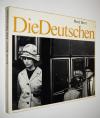 |
Burri, René. Die Deutschen. Auswahl der Texte von Hans Bender. Zürich, Stuttgart, Fretz & Wasmuth (1962). Quer-8°. 170 S. mit ganzs. Abb. Orig.-Leinenband mit illustr. Schutzumschlag.
Heiting/Wiegand 452 f. (mit mehr. Abb.). Koetzle 78 f. (mit Abb.). Parr/Badger I, 218. Schweizer Fotobücher 244 ff. – Erste deutsche Ausgabe, „die vielleicht wichtigste Arbeit von Burri“ (T. Wiegand). – „Was ich in Deutschland suche: die Weite im Verwandten“ (M. Frisch). – Mit Texten von H. Böll, W. Borchert, B. Brecht, M. Frisch, W. Koeppen, G. Mann, H. W. Richter, F. Sieburg, C. Zuckmayer, G. Zwerenz u.v.a. – „Burri’s book would be more widly regarded as one of the best photobooks of the 1960s. Seen here in its German edition, Die Deutschen. which was published the year before Les Allemands. exactly mirrors Les Américains in conception – an extended photo-essay of the same size and similar design, with excerpted text from writers commenting on the country’s national characteristics“ (Parr/Badger). – „Das Motiv auf der Vorderseite des Schutzumschlags zeigt die Ausschnitte zweier Bilder, die auf einem kleinbildfilm hintereinander aufgenommen wurden und die von einem schwarzen Balken getrennt sind. Das Bild wirkt dennoch als Einheit, was wiederum perfekt zum Inhalt passt. Die Fotos entstanden nicht nur in der BRD und in Westberlin, sondern auch in Ostberlin und Weimar. … Als Hauptautor ist trotz des großen Textanteils René Burri genannt. Das Grundprinzip einer Textanthologie, der fortlaufend immer auf der rechten Seite die Bilder gegenüberstehen, entspricht dabei in ihrer Konzeption der Erstausgabe von Robert Franks „Les Américains“, die 1958 im gleichen Verlag und in der gleichen Reihe wie „Les Allemands“ (franz. Ausgabe) herauskam. Damit ist ein entscheidender Bezugspunkt für René Burris klassische, in Kurzform schon vorab in der Zeitschrift „du“ veröffentlichte Reportage genannt“ (T. Wiegand). – Sehr gutes sauberes Exemplar. Schlagwörter: Portrait photography, Portraitphotographie, Porträtfotografie, Porträtphotographie |
240,-- | |
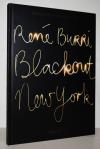 |
Burri, René. Blackout New York. 9. November 1965. (Essai by) Hans-Michael Koetzle. München, (Horst) Moser 2009. Folio (33,5 x 24 cm.). [39] Bl.mit 37 meist doppelblattgr. Duotone-Tafeln und Beilage (12 S., französische Übersetzung). Farbig illustr. Orig.-Pappband.
Koetzle, Fotografen A-Z 58 f. – Erste Ausgabe. – „Stromaus in New York. Eine Nacht lang verfolgt Burri, mit acht Kleinbildfilmen, die Ereignisse. Ohne Blitz. Nur mit dem sparsam vorhandenen Licht. Burris Bildserie ist keine Reportage im herkömmlichen Sinn. Eher eine Meditation über das Licht bzw. dessen Abwesenheit. – Blackout in New York. For one night, Burri follows the events, with eight rolls of 35mm film. Without a flash. Using only the scarcely available light. Burri’s photo series is not a report in the traditional sense. More a meditation on light, or rather the lack of it.“ (H. Moser). – Neuwertiges Exemplar. Schlagwörter: New York, Street photography |
50,-- | |
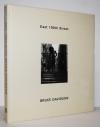 |
Davidson, Bruce. East 100th Street. (Foreword by Mildred Feliciano). Los Angeles, St. Ann’s Press (2003). Gr.-4° (31,5 x 29 cm.). 165 S. mit 143 Duotone-Tafeln. Orig.-Leinenband mit Deckelbild und Klarsicht-Schutzumschlag.
Vgl. Auer 516. Koetzle, Fotografen A-Z 88. Parr/Badger II, 18. Roth, The Book of 101 Books 196 f. Roth, The Open Book 260 f. (alle erste Ausgabe, Cambridge, Mass. 1970). – Schön ausgestattete um 25 Fotos erweiterte und mit 3000 Exemplaren limitierte Neuausgabe. – Von Bruce Davidson signiert. – „In 1970, when Bruce Davidson published his first book, East 100th Street, he was well established as a Magnum photographer with a number of important photo essays to his credit. Perhaps the most memorable was the grainy, cinematic record of the time he spent hanging out with a Brooklyn teen gang called the Jokers, published in Esquire in 1960. „I never felt a separation between myself and what I was photographing because I was really down to the feeling,“ he wrote about the Jokers project, begun when he was just 24, „I just never felt apart. With the gang. I was in the same mood as they where.“ Having spent some of the intervening years photographing the civil rights movement, he approached the East 100th street work with a similar sympathy and dedication, but with an even more pronounced sense of resposibility to his subjects. Davidson returned to this basted strech of East Harlem regularly for nearly two years (always bringing prints for the people he photographede) until he and his bulky view camera began to be a part of the block’s daily life. If the camera on its tripod established a certain pictorial formality, it also opened a new vistas“ (Vince Aletti in Roth). – Der Klarsicht-Schutzumschlag am Fuß gerinfügig eingerissen, sehr gutes Exemplar. Schlagwörter: New York, Street photography |
280,-- | |
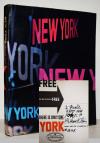 |
Klein, William New York. Life is good for you and good in New York Trance witness Reveals: Trance Witness Revels. Paris, Éditions du Seuil (1956). 4°. 192 p. with 188 Pictures on plates and Booklet (16 p., „Delay may be serious now free…“). Original cloth binding with color illustrated dust jacket. (Album Petite Planète, Vol. 1).
Auer 365. The Open Book 165 f. Parr/Badger I, 243. Roth, The Book of 801 Books 140 ff. – First printing of the first edition. – Boldly dedicated and signed by W. Klein to Belgian photographer Gerald Dauphin „To Gerald, / HAPPY NEW / YORK!* / William Klein / *YORK″. – „By virtue of its preface, written by Jack Kerouac, Robert Frank’s The Americans is usually regarded as the epitome of the Beat photobook. But William Klein’s magnum opus, Life is good for you and good in New York Trance witness Reveals: Trance Witness Revels, a book with Beat mantra for a title, surely has the edge in this regard. This is partly because it was the earlier model, partly because it is less political and more exuberant, and impotantly, because its conception is so complete – photographs, layout, design, topography, ‚found‘ ephemera coalescing into what is in effect one of the first great ‚Pop‘ books. … Klein’s masterpiece reminds us that much great, serious art is often about play, archieved simply by experimenting with the possibilities of the material. Forget trance and witness – the revels are the thing“ (Parr/Badger). – „With no interest from American publishers, Klein went back to Paris and set to work on a graphic design that was as aggressive and idiosyncratic as its photos. „I saw the book as a tabloid gone berserk, gross, over-inked, brutal layout, bull-horn headlines,“ he wrote in its radically revised 1995 edition. „This is what New York deserved and would get.“ Published in France, Italy, and England, but not in America, Life is good for you and good in New York was a sensation“ (A. Roth). – Dust jacket with inconspicuous restored loss at the spine, very good copy. Schlagwörter: New York, Pop-Kultur, Signed books, Signierte Bücher, Widmungsexemplar |
4.800,-- | |
|
Einträge 1–50 von 828
Zurück · Vor
|
|||