



Photographie
Die Liste enthält 810 Einträge. Suchergebnisse löschen und Gesamtbestand anzeigen.
| Abbildung |
Beschreibung Gesamte Buchaufnahme |
Preis EUR |
|
|---|---|---|---|
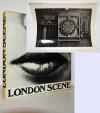 |
Seuss, Juergen, Gerold Dommermuth und Hans Maier. London Scene. Frankfurt a. M., Büchergilde Gutenberg (1969). Gr.-8°. 42 S. und 92 teils farbige Tafeln. Orig.-Leinenband mit illustr. Schutzumschlag.
Nicht bei Heidtmann. – Erste Ausgabe der wohl besten Foto-Dokumentation der Swinging Sixties in London. – Mit 1 Orig.-Photographie von J. Seuss „British Oak Dart Club″ (Silbergelatine, 19,5 x 26,5 cm., rückseitig mit Stempel des Fotografen). – London Scene „ist kein Bildband im üblichen Sinn. Das Bildmaterial ist bestechend; führt den Leser mitten hinein in die Scene; zeigt was wirklich ist. Manifeste, Plakate, Pamphlete, die ‚International Times‘ und andere Underground-Publikationen werden im Text zitiert und gezeigt“ (Klappentext). – Der Buchgestalter, Typograph, Verleger und Fotograf J. Seuss (1935-2023) „hat die Buchgestaltung der Büchergilde Gutenberg jahrzehntelang geprägt und wurde mit zahlreichen (über 100 nationale und internationale) Auszeichnungen und Preisen gewürdigt. Er hat zudem Bücher für andere Verlage, wie etwa C.H. Beck, Faber & Faber, Aufbau, gestaltet. … Juergen Seuss führte selbst einen eigenen, kleinen Verlag, den BrennGlas Verlag: Dort verlegte er unter anderem „Das Tagebuch eines Laien“ (von Wieland Herzfelde) oder „Vom Ornament zur Linie, ein Buch über den frühen Insel-Verlag“. Er hat Gedichte geschrieben, Texte über Buchästhetik verfasst, er hat fotografiert (″London Scene“, 1969, „Beat in Liverpool“, 1965). Es gab Kontakte und gibt Briefwechsel unter anderem mit Hans Joachim Schädlich, Peter Rühmkorf (einige Briefe bei Kalliope), Peter Härtling, Jochen Gelberg, Werner Mittenzwei. Von 1985 bis 2000 war Juergen Seuss Professor für Buchkunst an der Hochschule für Angewandte Wissenschaften Hamburg, dort lernte er seine spätere Frau Nanna kennen. … „Seine Begeisterungsfähigkeit für das Buch und seine gestalterische Kraft, mit der er das ganze Buch von innen nach außen durchgestaltet hat, zeichnen ihn aus sowie sein Engagement, bezahlbare Literatur von guter Qualität – und dies schloss seine Arbeit als Hersteller in der Auswahl der Materialen unbedingt mit ein – zu produzieren“, würdigt Nanna Seuss ihren verstorbenen Mann“ (Börsenblatt vom 24. April 2023). – Schutzumschlag am Rückendeckel mit geringfügiger Randläsur, sehr gutes Exemplar. Schlagwörter: London, Pop art, Pop-Kultur, Portrait photography, Portraitphotographie, Porträtfotografie, Porträtphotographie, Street photography |
220,-- |  |
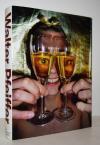 |
Pfeiffer, Walter. In love with beauty. (Mit Essays von Jean-Christophe Ammann und Martin Jaeggi). Göttingen, Steidl, Fotomuseum Winterthur (2008). 4°. 346 S. mit meist farbigen Abbildungen. Farbig illustr. Orig.-Pappband mit farbig illustr. Schutzumschlag.
Werkschau der wichtigsten Schweizer Untergrund-Fotografen W. Pfeiffer (geb. 1946). – „In Love with Beauty“ bietet einen beispiellosen chronologischen Überblick über das Werk des legendären Walter Pfeiffer, der vier Jahrzehnte voller fotografischer Erotik und Witz, klassischer Gelassenheit und ornamentaler Verspieltheit, Kunstfertigkeit und Unmittelbarkeit umfasst. Ursprünglich als Maler, Zeichner und Grafikdesigner tätig, nutzte Pfeiffer Fotografien als Gedächtnisstütze für großformatige fotorealistische Bleistiftzeichnungen, entwickelte jedoch schnell eine echte Leidenschaft für die Fotografie und begann, inspiriert von einer Warhol-artigen Besetzung aus gutaussehenden Driftern und stilvollen Frauen, einen unverwechselbaren Stil zu entwickeln. Sein Durchbruch als Fotograf gelang ihm mit einer Bilderserie eines jungen Mannes in Frauenkleidung, die in Jean-Christophe Ammans wegweisender Ausstellung „Transformer“ von 1974 gezeigt wurde; im selben Jahr fand auch Pfeiffers erste eigenständige Fotoausstellung statt, die hier erstmals reproduziert wird. Seine gleichnamige Monografie von 1981 vermittelte eine freche Erotik und eine rohe Unmittelbarkeit, die gut zur Punk-Bewegung passte und zugleich die Tagebuchfotografie der 1990er Jahre vorwegnahm. Während des größten Teils der 1980er Jahre vertiefte sich Pfeiffer in das Projekt, das in „Das Auge, die Gedanken, unentwegt wandernd“ gipfelte, einer Serie von Nahaufnahmen junger Männer. Pfeiffer widmete sich mehrere Jahre lang dem Zeichnen und kehrte erst Ende der 1990er Jahre zur Fotografie zurück. „In Love with Beauty“ beweist, dass er so jugendlich und überschwänglich geblieben ist wie eh und je“ (Steidl). – Sehr gutes Exemplar. Schlagwörter: Aktfotografie, Aktphotographie, Catalogue raisonné, Catalogues raisonnés, Photography of the nude, Werkverzeichnis, Werkverzeichnisse |
200,-- | |
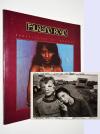 |
Mark, Mary Ellen. Bombay Falkland road. London, Thames and Hudson (1981). 4° (28 x 25,5 cm.). 17, (1) p., 65 full-page color illustrations, [1] p. Original color-illustrated paper cover.
Auer 634 (French edition). Koetzle, Fotographen A-Z 253. Roth, The Open Book 324 f. – First British edition; published simultaneously by Alfred A. Knopf in New York. – Inscribed by M. E. Mark on a photo postcard „For Stefan (Thull) – with all my best wishes – Mary Ellen Mark, Barcelona 1987″. – „The central theme of Mary Ellen Mark’s work was always the human being. … From heroin addicts in the 1960s to circus performers in the 1990s, people remain the constant focus of her engagement with photography. The desire to get as close as possible to the complexities of individual lives—to discover, understand, and reveal them—lends a deeply personal touch to Mark’s entire body of photographic work. Viewed from this perspective, the boundaries between individual stories begin to dissolve, and one perceives a single, continuous narrative running through her work“ (M. Fulton in Koetzle). – Very well-preserved copy. Schlagwörter: India, Portrait photography, Portraitphotographie, Porträtfotografie, Porträtphotographie, Signed books, Widmungsexemplar |
240,-- | |
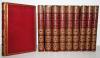 |
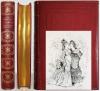
Musset, Alfred de. (Oeuvres). 10 volumes. Paris, Charpentier 1867. 12° (13,3 x 8,5 cm.). Avec 29 photographies originales montées (tirages albumine, 7 x 5 cm), dont 1 portrait de l’auteur par Collin d’après les dessins de Alexandre Bida. Reliures en maroquin rouge bordeaux, dos richement orné de dorures, triple filet sur les plats, tranches intérieures et extérieures dorées (signée Adolphe de Rivaud ?).
Vicaire VI, 1283–1285. – Seconde édition complète des oeuvres; édition de luxe sur chine était illustrée de photographies d’après des dessins d’Alexandre Bida (1813-1895). Une édition in-quarto en un volume, avec illustrations gravées, a également paru la même année. – I.-II. Poésies; III.-V. Comédies et proverbes; VI. Confession d’un enfant du siècle; VII.-VIII. Nouvelles et contes; IX. Mélanges de littérature et de critique; X. Oeuvres posthumes. – Les épreuves photographiques ont été contrecollées sur un carton fin, chacune étant encadrée et légendée en noir ; elles reproduisent les gravures conçues par Bida pour l’édition in-octavo publiée la même année, également chez Charpentier. Le procédé employé par Collin (données biographiques inconnues), encore expérimental à l’époque, constitue l’une des premières applications de la photographie à l’illustration littéraire, bien avant la généralisation de la photogravure. – Le volume 3 est légèrement endommagé en haut, un très bel exemplaire dans une magnifique reliure signée. Schlagwörter: Einbände, Einbandkunst, Gesamtausgaben, Illustrated books, Illustrierte Bücher, Literatur, Photography |
500,-- | |
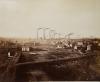 |
Risse, (Friedrich Wilhelm) Edmund. Bochumer Verein für Bergbau und Gussstahlfabrikation zu Bochum in Westfahlen. Bochum, (Druck der Trägerkartons von H. Kunstmann & Co., Berlin), (1872-1873). Quer-Gr.-Folio (45 x 48,5 cm.). Portfolio, 11 Orig.-Photographien (Albuminabzüge, 28,5 x 23 cm.) auf bedruckten Trägerkartons (47,5 x 45 cm.). Leinen-Flügelmappe mit goldgepr. Deckeltitel.
Wichtiges Dokument der Industrie-Fotografie in Deutschland; die frühesten Fotografien der Bochumer Stahlhütte (BVG). Eine Inkunabel der Industriefotografie. Wir können nur ein Exemplar dieser Foto-Serie im Technisches Museum Wien (TMW) nachweisen (Exemplar für die Weltausstellung 1873 in Wien). – Die Aufnahmen zeigen: Gussstahlfabrik in Bochum; Mülheimer Hütte in Mülheim am Rhein; Hochöfen der Mülheimer Hütte in Mülheim am Rhein; Schienenwalzwerk; Werkstatt zum Abschneiden der Räderangüsse; Hammerwerk I; Hammerwerk II; Bandagenwalzwerk II; Achsendreherei; Zeche Vereinigte Maria Anna und Steinbank, neuer Schacht; Zeche Vereinigte Maria Anna und Steinbank, Schacht II und III. – Die Aufnahmen der Hammerwerke I und II, der Achsendreherei, des Bandagenwalzwerks II sowie der hochspezifischen „Werkstatt zum Abschneiden der Räderangüsse“ zeigen die damalige Weltspitze der Eisenbahn- und Radsatzproduktion. Die Mülheimer Hütte am Rhein wurde vom Bochumer Verein im Jahr 1872 erworben. Ziel war es, die akute Abhängigkeit von englischem Roheisen zu brechen und die Zeit zu überbrücken, bis die eigenen Hochöfen in Bochum fertiggestellt waren. Da der BVG bald darauf eigene Hochöfen direkt in Bochum betrieb, verlor der Standort am Rhein schnell seine exklusive Bedeutung für das Hauptwerk. Die beiden Fotos zeigen die Mülheimer Hütte exakt auf dem Zenit seiner strategischen Wichtigkeit für den BVG. – Der Bochumer Verein für Bergbau und Gußstahlfabrikation (BVG) war einer der bedeutendsten und prägendsten Montankonzerne im Ruhrgebiet. Gegründet im Jahr 1842 als Gussstahlfabrik Mayer & Kühne, entwickelte sich das Unternehmen zum dominierenden Wirtschaftsfaktor der Stadt Bochum und beschäftigte in Spitzenzeiten über 20.000 Mitarbeiter. Der technisch versierte Jacob Mayer und der Kaufmann Eduard Kühne gründeten die Fabrik, um das englische Verfahren der Tiegelstahlfabrikation nach Deutschland zu bringen. Eine technische Sensation gelang Jacob Mayer mit der Erfindung des Stahlformgusses (patentiert 1851). Dem Unternehmen glückte es als erstem weltweit, flüssigen Stahl direkt in komplexe Formen zu gießen. Das historische Hammerwerk II von 1865 gilt mit seinen wegweisenden Dreigelenkbindern als Meilenstein der deutschen Ingenieurskunst. – Edmund Risse (1835-1891) war nicht nur ein renommierter kaiserlicher Hoffotograf, sondern in den 1870er Jahren auch als Pionier der frühen deutschen Industriefotografie aktiv. Er betrieb unter anderem Filialen in Bochum und Essen. Seine Aufnahmen für den Bochumer Verein dokumentieren die monumentale Phase der Hochindustrialisierung im Ruhrgebiet. Die Bilder zeigen den Bochumer Verein exakt in seiner wichtigsten Expansionsphase unter Generaldirektor Louis Baare. Sie dokumentieren Werksanlagen, Hochöfen oder Arbeiter, die heute größtenteils längst abgerissen oder völlig verändert sind. – Der Duisburger Lithograf und Fotograf F. W. E. Risse war Hof-Fotograf des deutschen Kronprinzenpaares (Friedrich Wilhelm und Victoria) sowie später von Kaiser Wilhelm II. und Kaiserin Auguste Viktoria. Zudem trug er Titel als Hoffotograf weiterer europäischer Adelshäuser, darunter für die Großfürstin Wera von Württemberg (Großfürstin von Russland). Edmund Risse baute ein beeindruckendes, überregionales Netzwerk aus Ateliers auf; sein Hauptatelier befand sich in Berlin (u. a. in der Prachtstraße Unter den Linden 15). Außerdem betrieb er Ateliers in Essen (Limbecker Platz 8), Bochum, auf Norderney und in Bad Ems. – Flügel und Spiegel der Mappe fachgerecht erneuert, die Trägerkartons angestaubt und etwas fleckig, Trägerkarton von „Werkstatt zum Abschneiden der Räderangüsse“ mit größerer restaurierter Fehlstelle (Verlust der Buchstaben „Werk“), die Fotografien sehr gut erhalten und kontrastreich. Schlagwörter: Architectural photography, Architektur, Architekturfotografie, Bergbau, Eisenbahntechnik, Industrial Photopraphy, Industrial railways, Industriefotografie, Industriephotographie, Nordrhein-Westfalen, Stahl-Industrie |
7.500,-- | |
 |
Richardson, Terry. Kibosh. Bologna, Damiani 2004. Gr.-4° (33,5 x 25 cm.). [320] S. mit 358 Farbtafeln. Orig.-Leinenband.
Erste und einzige Ausgabe. – Pornographische Aufnahmen mit dem Fotografen als Akteur. – Der amerik. Mode-Fotograf T. Richardson (geb. 1965) begann als Jugendlicher während der Tourneen mit seiner Punk-Band zu fotografieren. Er wurde 2000 durch seine provozierenden, sexuell getönten Fotoserien für die Modemarke Sisley bekannt. – Ohne die Kunststoff-Schutzhülle, sehr gutes Exemplar. Schlagwörter: Aktfotografie, Aktphotographie, Erotica, Photography of the nude, Pornografie |
240,-- | |
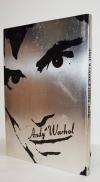 |
Warhol, Andy. Index (book). With the assistance of Stephen Shore, Paul Morrissey, Ondine, Nico. Several photographs by Nat Finkelstein, Christopher Cerf, Alan Rinzler […] Factory Fotos by Billy Name. New York, Random House 1967. 4°. [36] Bl., davon 2 gefalt. gefalt. mit zahlr. Abb. u. 10 teils farbigen Pop-Art-Beilagen. Illustr. silber-schwarzer Orig.-Pappband.
Crone 419. Slg. Missmahl 868. Papiergesänge S. 43 (mit Abb.). Parr/Badger II, 144-145. – Erste Ausgabe des legendären Pop Art-Buches. – Mit allen zehn Faltfiguren und Beilagen: Ritterburg, Ziehharmonika (tönt), Flugzeug, Federscheibe »Andy Warhol’s ›The Chelsea Girls’‹«, faltbarer Dodekaeder, Folienschallplatte, Faltnase, Hunt’s Tomato Past-Dose, 8 Abreißzettel, Luftballon (dieser, wie meist mit den angrenzenden Blättern verklebt). – Andy Warhol (1928-1987), Hauptvertreter der Pop-Art, vermittelt die wohl ehrlichsten Aussagen zum „American way of life“ durch seine Kunst der „totalen Dominanz des Kommerziellen, der reinen Sensation, der Trivialisierung und Vulgarisierung“ (Pierre, Lexikon der Pop Art, S. 138). – Die S. mit dem Luftballon verklebt, sehr gutes Exemplar. Schlagwörter: Kunst, Movable books, Photography, Pop-art, Pop-Kultur, Pop-up-Buch |
600,-- | |
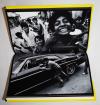 |
Chessex, Luc. Eldorado gibt`s nicht mehr. 157 Fotografien aus Lateinamerika. – Quand il n`y a plus d`Eldorado. 157 photographies d`Amérique latine. (Übersetzung aus dem Französischen Urs Keltz). Zürich, Hans-Rudolf Lutz (1982). 4° (31 x 21,5 cm.). [6] S., 157 Duotone-Tafeln, davon 2 Portfolios mit 36 losen Duotone-Tafeln (18 zu Che Guevara und 18 zu Coca Cola). Orig.-Leinenband mit gelbem Schutzumschlag.
Auer 646. Fernández, The Latin American Photobook 247. Parr/Badger III, 113 ff. – Erste Ausgabe; erschien parallel auch bei Hubschmid & Bouret in Paris. H.-R. Lutz veröffentlichte bereits 1969 „Le Visage de la Revoltion“. – „Luc Chessex is a superb Swiss photojournalist, very much in the ‚concerned photographer‘ mould, who supported the Cuban Revolution in the most practical way possible – by joining it. In 1961, he based himself in Cuba, working for the Ministry of Education as the first official photographer of the revolution and then for the news agency Prensa Latina, travelling around Latin America to make pictures. But in 1975, without explanation or warning, Chessex was declared ‚persona non grata‘ by the Cuban authorities and put on a plane back to Switzerland. … The notion of populist politics being embedded in posters and slogans is also a strong feature of Chessex’s 1982 monograph, Quand il n’y a plus d’Eldorado. A retrospective trip through Chessex’s work in Latin America and other ‚Third World‘ countries, the main book has a striking supplement in the shape of two portfolios of loose images. One is devoted to street images featuring Che, the other to those featuring Coca-Cola. The struggle between socialism and capitalism is symbolized in two images a beard and a bottle although it is ironic that Che became a ‚pop‘ icon, infiltrating the bedsits of capitalist Western students, while Coca-Cola is an irresistible subversive force for US ‚imperialism‘, even in socialist countries“ (Martin Parr). – Sehr gutes Exemplar. Schlagwörter: Lateinamerika, Street photography |
320,-- | |
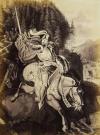 |
Die Sagen der Umgegend von Baden-Baden (nach den Sagenbildern in der neuen Trinkhalle von Jakob Götzenburger). Baden-Baden, F. M. Reichel o. J. (um 1860). 4° (29 x 21 cm.). [14] Bl. und 12 montierte Orig.-Photographien (Albuminabzüge, 17,5 x 12,7 cm.) auf Karton. Weinroter Orig.-Leinenband mit goldgepr. Deckeltitel „Album“ und ornamentaler Deckelvergoldung.
Nicht bei Heidtmann, Wie das Photo ins Buch kam. – Seltene Prachtausgabe des in verschiedener Ausstattung mehrfach aufgelegten Souvenir-Albums. 1868 erschien eine zweite Ausgabe mit dem Untertitel „nach den 14 Sagenbildern in der neuen Trinkhalle“. Die 12 fotografischen Tafeln eines anonymen Fotografen mit dreisprachigen Untertiteln und jeweils einer Seite Beschreibung zeigen: Kloster Lichtenthal, Hohenbaden, Die Geisterhochzeit zu Lauf, Burkart Keller von Yburg, Der Mummelsee, Der Wildsee, Der Fremersberg, Engels- und Teufelskanzel, Alt-Eberstein, Die Felsen, Der Grafensprung, Allerheiligen. – In einer Verlags-Anzeige auf dem letzten Blatt wird außer der vorliegenden „Prachtausgabe“ in Quart-Format auch eine „Taschenausgabe, mit französischem, deutschen und englischem Text“ verzeichnet. – Die Entstehung der 14 Fresken in der Trinkhalle Baden-Baden fiel direkt in die Blütezeit des europäischen Kurtourismus und ist ein Paradebeispiel für den Geist der deutschen Spätromantik. Im Jahr 1844 setzte Jakob Götzenberger zusammen mit dem Maler Johann Baptist Heinefetter die 14 großformatigen Bilder in der Wandelhalle um. Er nutzte dafür die anspruchsvolle Technik der Freskomalerei (Malerei auf dem noch feuchten Putz). Die Entscheidung, lokale Sagen und Mythen abzubilden, entsprang nicht nur der Vorliebe der Romantik für das Mystische, sondern hatte auch einen rein pragmatischen Zweck: Die Kurgäste flanierten im Wandelgang, lasen die Geschichten und bekamen dadurch direkte Ausflugsideen für die Umgebung von Baden-Baden geliefert (wie den Mummelsee, die Burg Windeck oder das Kloster Lichtenthal). – Einband berieben, etwas fleckig und bestoßen, Blattränder und Trägerkartons etwas braunfleckig, sonst gut erhalten. Schlagwörter: Baden-Baden, Original-Photographie, Sagen |
120,-- | |
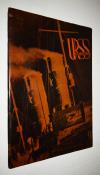 |
Lissitzky – Pjatakov, G(eorgi Leonidowitsch, Editor in Chief). URSS en construction. La seizième année de la Revolution. No. 9, Septembre 1933. Moscou, State Publishing House of the RSFSR 1933. Folio (43 x 30 cm.). 27 feuilles comportant de nombreuses photographies d’El Lissitzky. Couverture illustrée en carton de l’éditeur.
Hellyer 860. Karasik/Heiting 17 ff. Parr/Badger I, 148 f. Rowell/Wye 242 f. – L’un des numéros les plus importants de la quatrième année de parution du magazine de propagande soviétique. La revue paraissait tous les mois de 1930 à 1949 en cinq langues (russe, anglais, français, espagnol et allemand). Chaque numéro était consacré à un thème différent, comme la production alimentaire et industrielle, la République de Géorgie, le cinéma soviétique et les élections. – „In the early 1930s photo-reportage became the foundation of the magazine USSR in Construction that „was created as a publication for the popularization of large-scale construction projects by photographic means. But as the magazine grew and developed, the task of ‘popularization’ evolved into that of presenting Socialist reality with dramatic artistry.“ (L. Mezhericher, „Na putiakh k sotsialisticheskomu stiliu fotografii” [“On the way to a Socialist style of photography“], No. 2, p. 14). Well known Soviet designers and photographers worked on USSR in Construction. The industrial spirit of the magazine, expressed in compositionally sharp subjects, panoramas and dynamic shots evokes admiration even today and conveys the atmosphere of enthusiasm that carried along not just the photographers, but also the builders themselves. The creative scale of the construction engendered the photographic epic, a style of monumental artistic photography. The founders of this most successful and high-quality periodical were Gorky and Koltsov“ (Mikhail Karasik). – Très bel exemplaire. Schlagwörter: Avantgarde, Magazines, Propaganda, Soviet Union, Zeitschriften |
800,-- | |
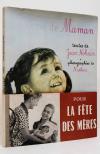 |
Nohain, Jean (c’est Jean-Marie Legrand). Le livre de maman. Photographies de (Marcel) Natkin. Paris, Flammarion (1958). 4°. 125 p., [1] f. avec 62 portraits d’enfants, pour la plupart en pleine page. Couverture cartonnée originale avec jaquette illustrée et bandeau illustré.
Première et unique édition. Livre de photographies rare présentant de remarquables portraits d’enfants de Marcel Natkin (1904-1962), accompagnés de textes du célèbre auteur et pionnier de la radio Jean Nohain (1900-1981). Ce livre était destiné à être offert pour la fête des mères ; cet exemplaire particulier porte la bande promotionnelle. Cette bande représente une jeune fille tendant le livre à sa mère, avec l’inscription « Pour la fête des mères ». – M. Natkin dirigeait un studio de photographie renommé sur l’élégante avenue Victor-Hugo à Paris. Il a publié plusieurs ouvrages sur les techniques photographiques destinés aux amateurs et aux professionnels. Ses manuels (notamment ceux sur le système d’appareil photo Rolleiflex, alors révolutionnaire, et sur la photographie couleur) ont été traduits en plusieurs langues et ont été considérés comme des ouvrages de référence pendant des décennies. En 1937, il publia l’ouvrage fondamental *Le Nu en photographie*, dans lequel il mêlait essais d’histoire de l’art et œuvres d’icônes de l’avant-garde telles que Man Ray, Laure Albin-Guillot et Pierre Boucher. – Jean Nohain fut l’une des figures les plus influentes des débuts de la radio et de la télévision françaises. Il était avocat, parolier, scénariste et pionnier de la radio et de la télévision. Il était le fils du célèbre poète et librettiste Franc-Nohain et le frère de l’acteur Claude Dauphin. Sous le pseudonyme de « Jaboune », il a écrit des livres pour enfants, des magazines (comme Benjamin) et des paroles de chansons très populaires dans les années 1920 et 1930. Dans les années 1950, il est devenu une figure majeure de la télévision française (RTF). Il a conçu et animé des émissions familiales novatrices telles que 36 chandelles, qui ont attiré des millions de téléspectateurs. – Un très bel exemple. Schlagwörter: Children in photograpy, Kinder, Photobilderbücher, Photographie d’enfants, Portrait photography, Portraitphotographie, Porträtfotografie, Porträtphotographie |
70,-- | |
 |
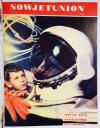
Gribatschow, N(ikolai) M(ichailowitsch, Chefredakteur). Sowjetunion. Illustrierte Monatsschrift. Nr. 131 – 142. (Januar-Dezember) 1961. 12 Hefte in 1 Band. Moskau, „Prawda“-Verlag 1961. Gr.-4° (34 x 27 cm.). Mit zahlreichen teils farbigen Abbildungen von Wladimir Kiwrin, Anatoli Malkin, Wiktor Ruikowitsch, Yuri Tschernyschow, Valeri Prawdin u. a. Halbleinenband mit goldgepr. Rückentitel (farbig illustrierte Orig.-Umschläge beigebunden).
Vollständiger Jahrgang der wichtigsten sowjetischen Propaganda- und Kulturzeitschrift nach dem Zweiten Weltkrieg, die seit 1950 erschienen ist. Vorläufer war die berühmte Zeitschrift „UdSSR im Bau“. Die Zeitschrift erschien weltweit in sechszehn Sprachen. – Das Jahr 1961 war für die UdSSR ein historisch extrem ereignisreiches Jahr. Im April 1961 startete der Kosmonaut Juri Gagarin zum ersten bemannten Weltraumflug (Wostok 1) und im August folgte ihm German Titow (Wostock II). Im Oktober 1961 wurde auf dem XXII. Parteitag der KPdSU die Radikalisierung der Entstalinisierung beschlossen und Stalins Leichnam aus dem Lenin-Mausoleum entfernt. Außerdem berichtet die Zeitschrift über industrielle Großprojekte, wie der forcierte Kraftwerks- und Wolgadeichbau (Wolga-Wasserkraftwerk „W. I. Lenin“ Kuibyschew / Samara; Das Stalingrad-Wasserkraftwerk und das Bratsker Wasserkraftwerk in Sibirien). Neben den Berichten über die Meilensteine der Raumfahrt (wie die Flüge von Gagarin und Titow) wollte die Propaganda-Zeitschrift die technologische und industrielle Überlegenheit der UdSSR im Rahmen des laufenden Siebenjahrplans (1959–1965) demonstrieren. Die künstlerische Leitung und visuelle Identität der Zeitschrift lag über vier Jahrzehnte (von 1950 bis 1992) in den Händen von Alexander Schitomirski (1907-1993), einer der bedeutendsten sowjetischen Grafiker, Karikaturisten und Meister der politischen Fotomontage. – Sehr gutes sauberes Exemplar. Schlagwörter: Gagarin, Juri, Kulturgeschichte, Propaganda, Raumfahrt, Russia, Russland, Soviet Union, Sowjetunion, UdSSR, Zeitschriften |
500,-- | |
 |
Gribatschow, N(ikolai) M(ichailowitsch, Chefredakteur). Sowjetunion. Illustrierte Monatsschrift. Nr. 155 – 166. (Januar-Dezember) 1963. 12 Hefte in 1 Band. Moskau, „Prawda“-Verlag 1963. Gr.-4° (34 x 27 cm.). Mit zahlreichen teils farbigen Fotografien von Alexander Mokejew, Wladimir Lagrange, Wsewolod Tarasewitsch, Georgi Petrusow, Dmitri Baltermants, Michail Trachman, Igor Schangin, Anatoli Garanin u. a. Halbleinenband mit goldgepr. Rückentitel (farbig illustrierte Orig.-Umschläge beigebunden).
Vollständiger Jahrgang der wichtigsten sowjetischen Propaganda- und Kulturzeitschrift nach dem Zweiten Weltkrieg, die seit 1950 erschienen ist. Vorläufer war die berühmte Zeitschrift „UdSSR im Bau“. Die Zeitschrift erschien weltweit in sechszehn Sprachen. – Die künstlerische Leitung und visuelle Identität der Zeitschrift lag über vier Jahrzehnte (von 1950 bis 1992) in den Händen von Alexander Schitomirski (1907-1993), einer der bedeutendsten sowjetischen Grafiker, Karikaturisten und Meister der politischen Fotomontage. Mit hervorragenden Aufnahmen zahlreicher Fotografen. Darunter auch Georgi Petrusow (1903-1971), Pionier der sowjetischen Avantgarde-Fotografie (der schon in den 1930ern für den Vorgänger UdSSR im Bau fotografiert hatte). Er lieferte 1963 technisch perfekte Industrie- und Kulturreportagen. – Mit interessanten Berichten zum sowjetischen Raumfahrt-Programm; über die Flüge von Wostok 5 (Waleri Bykowski) und Wostok 6 (Walentina Tereschkowa, die erste Frau im Weltraum) im Juni 1963. Reportagen über den Bau von Wasserkraftwerken in Sibirien und die Erschließung neuer Industriegebiete. Außerdem Porträts von Arbeitern, Künstlern, wissenschaftlichen Instituten und über den Sport in der Sowjetunion. Im letzten Heft des Jahrgangs sind auf Seite 3 zwei Beileidsschreiben zum Kennedy-Attentat abgedruckt von N. Chrustschow und L. Breshnew. – Sehr gutes sauberes Exemplar. Schlagwörter: Kulturgeschichte, Propaganda, Raumfahrt, Russia, Russland, Soviet Union, Sowjetunion, UdSSR, Zeitschriften |
500,-- | |
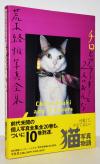 |
Araki, Nobuyoshi. Chiro, Araki and 2 lovers. Tokyo, Heibonsha Limited Publications (1996). Gr.-8° (22,5 x 15,5 cm.). 191, (1) p. with illustrations, some full-page and in color. Publisher’s softcover with color-illustrated dust jacket and belly band (Obi strip). (The works of Nobuyoshi Araki, vol. 10).
First edition. – „The book captures the intimate bond between Araki and his beloved cat Chiro, blending tender, humorous, and melancholic imagery that reflects on companionship and loss before and after the death of his wife Yoko“ (Heibonsha Limited Publications). – Copy in mint condition. Schlagwörter: Cats, Japan, Katzen |
140,-- | |
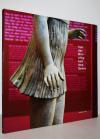 |
El Dib, Amin. On the fragility of being. Von der Brüchigkeit des Seins. (Essays by Rolf Sachsse and Wolfgang Filser). Berlin, Wasmuth & Zohlen (2019). Folio (35 x 34 cm.). 85, (1) S. mit 44 Farbtafeln. Farbig illustr. Orig.-Halbleinenband.
„Drei Jahre lang hat der Schweizer Fotokünstler Amin El Dib in der Basler Skulpturhalle die Gipsabgüsse antiker Skulpturen abgelichtet, die dort zu Studienzwecken versammelt sind. Dem Fotografen ging es weniger um die präzise Wiedergabe der schönen Figuren als um die Situation einer Sammlung in einem Raum, auch und gerade in Momenten des Übergangs von Unterbringung zu Präsentation. Oft sind es Details, die ihn zu Bildern herausfordern, alte und neue Beschädigungen von sonst vollkommenen Skulpturen. Da die Gipse selbst nicht bemalt sind, wird ihre materielle Farbigkeit von Weiß bis Gelb im Gegensatz zu der des Raums – von roten Wänden über weiße Decken bis zur Farbigkeit der Lampen – thematisiert. Denn die Geschichte der Sammlung von Gipsabgüssen antiker Skulpturen ist die eines Mediums und folgt damit einer Dynamik, die El Dib für sein eigenes Medium, für die Fotografie, in ähnlicher Weise wiederholt“ (Wasmuth & Zohlen). – Sehr gutes Exemplar. |
40,-- | |
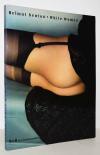 |
Newton, Helmut. White women. Gestaltung von Bea Feitler. München, Rogner und Bernhard bei Zweitausendeins (1976). 4°. [118] S. mit teils farbigen Abbildungen. Farbig illustr. Orig.-Kartonumschlag.
Koetzle, Fotografen A-Z 292. – Erste Ausgabe der ersten Buchveröffentlichung. – „Von der Modefotografie bis zum Porträt, von den Aktstudien bis zu den Aufnahmen aus der Welt des Balletts, von der Erotik bis zum Thema des Todes – Newtons Werk scheint eine beinahe barocke Fülle von Themen zu umfassen, die auch Facetten der von den Massenmedien geprägten Welt des Glamours, der Vorstellung und Inszenierung verkörpert. Newtons kunst beruht darauf, sich von dieser Welt nicht blenden zu lassen, sie nicht nur zu beleuchten, sondern auch zu entlarven“ (Zdenek Felix in Koetzle). – Sehr gutes und sauberes Exemplar. Schlagwörter: Aktfotografie, Aktphotographie, Photography of the nude |
30,-- | |
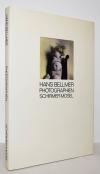 |
Bellmer, Hans. Photographien. (Mit einem Text von Alain Sayag. Aus dem Französischen übertragen von Rudolf Kimmig). München, Schirmer/Mosel (1984). 4°. 150 S. mit zahlr. teils farb. Abbildungen. Orig.-Pappband mit illustr. Schutzumschlag.
Erste deutsche Ausgabe. – Bellmer begann seit 1933 „zwei menschengroße, seltsame, nackte Puppen zu konstruieren … Danach baute er sie langsam wieder auseinander, und dabei fotografierte er sie. Bellmers Puppen sahen ein bisschen nach verdrängten SM-Fantasien aus, ein bisschen nach Konzentrationslager, und es gibt Leute, die sagen, diese Fotos gehörten zu den besten und krankesten Bildern, die sich ein Künstler im letzten Jahrhundert vom Leben gemacht hatte“ (M. Biller, Bellmers böse Puppen, in Die Zeit 18/2008). – „Bei den Puppen aus den 30er Jahren, den ineinander verschlungenen Körpern von 1945/46 oder der Serie mit der gefesselten Unica aus dem Jahr´1958 handelt es sich immer um die gleiche, leidenschaftlich verfolgte Zielgebung. … Bellmer war nicht nur, um Michel Tourniers schöne Formulierung aufzunehmen, ein begnadeter Fotograf, sondern auch ein schöpferischer Mensch, dessen künstlerische Ambitionen ‚Heilmittel, Kompensation für eine bestimmte Lebensunfähigkeit‘ waren“ (A. Sayag in Koetzle, Fotografen A-Z, S. 32). – Sehr gutes Exemplar. |
50,-- | |
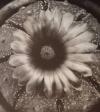 |
Renger-Patzsch, Albert. Pflanzenaufnahmen im Winter. In: Camera. Illustrierte Monatsschrift für die gesamte Photographie. V. Jahrgang 1926/27. S. 186 f. mit 1 Tafel in Kupfer-Tiefdruck nach einem Bromsilber-Abzug (″Kaktus“ Luzern und Zürich, C. J. Bucher 1926. 4°. [3] Bl., 336 S. mit zahlr. Abbildungen und Tafeln. Orig.-Leinenband.
Binder, Die Photozeitschrift Camera 1922-1981. Zürich 1991. – Sehr seltener vollständiger Jahrgang der wichtigsten Schweizer Fotozeitschrift. – „Nachdem Mitteleuropa durch den Krieg von der Aussenwelt fast hermetisch abgeschlossen war, hat es sich nach dem Kriege mit ganz besonderem Interesse der Pflege ausländischer Blumen zugewandt und wir kommen heute selten in eine Wohnung, in der sich nicht einige der stachligen, eigenartigen Gesellen aus der Familie der Kakteen Hausrecht erworben haben. … Das Photographieren dieser Pflanzen hat für mich stets einen besondern Reiz gehabt. Die Kakteen und verwandten Familien haben nämlich einen derartigen Reichtum in der Gestalt von Körper und Stacheln so nennt man bei dieser Gattung die Blätter, die aus biologischen Gründen die Funktion des Assimilierens an den fleischigen chlorophyllhaltigen Pflanzenkörper abgegeben haben – wie man so deutlich optisch wahrnehmbar kaum an einer andern Pflanzengattung wiederfindet.“ (A. Renger-Patzsch). – Außerdem mit Beiträgen von J. M. Eder, Robert Müller, Guido Seeber, Alexander Niklitschek, Hans Zäpernick, Paul Ziegler u. a. Die 1925 bei C. J. Bucher eingeführten Tiefdruck-Tafeln mit Aufnahmen von Emanuel Balley, Hans Bircher, Fred Judge, Nikolai Nylander, Alexander Niklitschek, Josef Pecsi, Ernst Sandau, Ernst Schneider, Albert Steiner, Paul Unger, A. S. Weinberg u. a. – Sehr gutes Exemplar. Schlagwörter: Zeitschriften |
140,-- | |
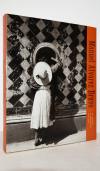 |
Bravo – Kismaric, Susan. Manuel Alvarez Bravo. (February 20 – May 18, 1997; also shown at: Centro Culturale Arte Contemporaneo, Mexico City). New York, NY, Harry N. Abrams 1997. 4°. 240 p. with 198 illustrations, including 170 in tritone and 5 in full color. Original cloth binding with illustrated dust jacket.
First edition. – Copy in mint condition. |
40,-- | |
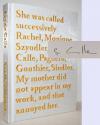 |
Calle, Sophie. She was called successively Rachel, Monique, Szyndler, Calle, Pagliero, Gonthier, Sindler. My mother did not appear in my work, and that annoyed her. Paris, Éditions Xavier Barral (2017). Gr.-8° (24,5 x 18 cm.). [200] p. with 102 color illustrations, some spanning full pages or double-page spreads. White Original silk binding with embroidered title in Gold on the spine and cover.
First English edition. The original French edition was published in 2012. – Signed by Sophie Calle. – „My mother loved being talked about. Her life does not appear in my work. That annoyed her. When I placed my camera at the foot of the bed where she lay dying fearing she might pass away while I was absent, yet wanting to be there to hear her last word she exclaimed: „Finally.“ Sophie Calle tells the story of Monique through excerpts from private diaries and photographs from family albums, presenting an installation created at the Palais de Tokyo as a tribute to her mother, who died in 2007. Yet this book is, above all, a unique object designed in collaboration with the artist. The cover text is embroidered, making it a precious object, while the texts accompanying the installation are embossed to evoke the tactile quality of some of Sophie Calle’s other works. It is a deeply personal and moving book, as well as a reflection on death that resonates with us all. For over twenty years, Sophie Calle’s work has taken the form of installations combining photography and narrative arrangements that echo the narrative art of the 1970s. In reality, Calle’s works represent the culmination and extension of situations that are both staged and lived out autobiographically. In the 1980s, she embarked on a distinctive path that places significant emphasis on emotion and feeling. The artist devises rules and rituals aimed at improving her life and restoring its existential dimension“ (Xavier Barral, transl. from french). – The book is based on an installation that was exhibited at the Palais de Tokyo in Paris, among other venues. It incorporates diary entries, intimate notes, and photographs from old family albums. – The video of her mother’s final moments premiered at the 2007 Venice Biennale, where Sophie Calle represented France, under the title „Couldn’t Capture Death.“ – Copy in mint condition. Schlagwörter: Concept-art, Konzeptkunst, Signed books, Signierte Bücher |
240,-- | |
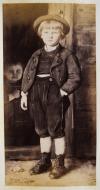 |
Stieler, Karl. Von Dahoam. In Bildern von Franz Defregger, Dichtungen. 2. Auflage. München, Franz Hanfstaengl o. J. (ca. 1885). 4°. [28] Bl. mit 23 mont. Orig.-Photographien nach Gemälden und 1 Portrait von F. Defregger (Albuminabzüge, ca. 12 x 10 cm.). Illustr. Orig.-Leinenband mit Goldschnitt.
Heidtmann, Wie das Photo ins Buch kam 406. – Wohl zweite illustrierte Ausgabe mit Mundart-Gedichten auf den Rückseiten der Trägerkartons; die erste Ausgabe erschien 1881 mit nur 18 Photographien. Die 3. Ausgabe erschien 1887 mit 25 Tafeln und die 4. Ausgabe erschien 1890 wieder mit 24 Photographien. – Franz Seraph Hanfstaengl (1804-1877) eröffnete 1852 zusammen mit seinem Schwager Moritz Eduard Lotze (1809-1890) sein „aristisch-photographisches Atelier“. Später zum bayr. Hoffotografen ernannt, porträtierte er zahlreiche berühmte Persönlichkeiten König Ludwig II von Bayern, O. v. Bismarck, Kaiserin Elisabeth von Österreich, F. Liszt, R. Wagner u.v.a. Auf der Pariser Weltausstellung 1855 gewann er eine Goldmedaille für die Vorführung retuschierter Fotografien und gilt als Erfinder der Negativretusche. – Deckel berieben und etwas fleckig, gutes Exemplar. Schlagwörter: Bavarica, Bayern, Bayrisch, Lyrik, Mundart, Original-Photographie |
100,-- | |
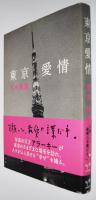 |
Araki, Nobuyoshi. Tokyo Love (Japanisch). Tokyo, Poplar Publishing (2008). 8°. [76] Bl. mit zahlr. Abbildungen. Orig.-Pappband mit illustr. Schutzumschlag und Bauchbinde (Obi, Bellyband).
Japanische Originalausgabe. – Die Aufnahmen zeigen Personen bei Sportveranstaltungen und anderen Freizeitbeschäftigungen in Tokio. – „Wie ein Getriebener hetzt er von Aufnahme zu Aufnahme, von Bild zu Bild. Wolkenhimmel, Blicke in die Badewanne, Katzen, Stadtansichten, immer wieder Blumen und natürlich Nackte – es scheint, als wolle der rastlose Bildersammler jeden Moment im Foto festhalten. Für Nobuyoshi Araki sind die unzähligen Aufnahmen, die er täglich macht, wie eine Art Tagebuch, das ‚die Vergangenheit ebenso beinhaltet wie die Projektion der Zukunft‘. Nicht selten belichtet er mehr als 80 Filme am Tag, denn je mehr Bilder er seiner Umgebung entreißt, desto eher erreicht seine Arbeit für ihn eine ‚kosmische Dimension‘ und wird zu einer Art ‚buddhistischem Mandala‘.“ (W. Baatz in Koetzle, Fotografie A-Z, S. 13). – Tadellos. Schlagwörter: Japan, Street photography, Tokio |
100,-- | |
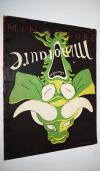 |
Ubac – Skira, Albert et E. Tériade (Ed.). Minotaure. Revue artistique et littéraire. No. 11. Paris, Albert Skira 1938. 4°. [2] Bl., 66, (1) S. mit zahlr. Abbildungen. Farbig illustr. Orig.-Kartonumschlag (von Max Ernst).
Wichtiges Heft der bedeutenden Zeitschrift. – Mit 9 Fotografien von Raoul Ubac, davon 4 zu dem Artikel „Miroirs“ von Pierre Mabille und 5 zu dem Artikel „Eritis sicut dii…“ von Maurice Heine. Außerdem enthält das Heft eine Aufnahme von Brassai (nach Jacques Berthier) zu dem Beitrag „L’homme qui perd son ombre“ von Paul Recht und Reproduktioen von Arbeiten von André Masson, Georges Seurat, Hans Arp, Max Ernst, Yves Tanguy, Wolfgang Paalen, Botticelli, Piero di Cosimo und Bartolomeo Veneto. – Der in Köln geborene Fotograf R. Ubac (d. i. Rudolf Gustav Maria Ernst Ubach, 1910-1985) lebte und arbeitete seit 1929 mit Unterbrechungen in Paris. – „Wenn Man Ray versucht hatte, die Form durch ein vor das Objektiv geschobenes Prisma aufzulösen, so ist Ubac seinerseits der Ansicht, man müsse die Materie selbst zum sprechen bringen. Er entwickelt die Vorstellung, hinter dem schmalen Schleier, der die Dinge umhüllt, existiere eine andere Wirklichkeit im latenten Zustand. Fünfzig Jahre später wird Dieter Appelt das Prinzip für seine Serie überlagerter Gesichter wieder aufnehmen. Ubac schafft durch das Mittel des kontrollierten Zufalls und durch die Auflösung der Materie eine neue Bilderwelt“ (C. Bouqueret in Koetzle). – „Le Minotaure, die letzte bedeutende Zeitschrift des Surrealismus, zeigt die Bewegung in ihrer neuen Phase: der Surrealismus ist zu einer Bewegung geworden, dessen künstlerische Lehren allgemeine Anerkennung gefunden haben und die ungeheure Anziehung auf die dichterischen und künstlerischen Kräfte ausüben. Minotaure wird die luxuriöseste vielseitigste Zeitschrift und die mit der breitesten Wirkung“ (H. Bolliger). – Rücken restauriert, sonst gut erhalten. Schlagwörter: Surrealismus, Zeitschrift |
200,-- | |
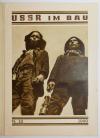 |
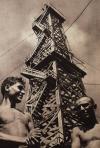
Pjatakov, G(eorgi Leonidowitsch, Editor in Chief). USSR im Bau. Illustrierte Monatsschrift. (Erster Jahrgang) 1930. 9 Hefte (Heft 5/6, 7/8 und 10/11 als Doppel-Nr.). Moskau, State Publishing House of the RSFSR 1930. Folio (43 x 30 cm.). Mit zahlreichen Abbildungen. Orig.-Kartonumschläge.
Hellyer 860. Karasik/Heiting 17 ff. Parr/Badger I, 148 f. Rowell/Wye 242 f. – Erster Jahrgang des wichtigsten sowjetischen Propagandamagazins. Die Zeitscchrift erschien von 1930 bis 1949 monatlich in fünf Sprachen (Russisch, Englisch, Französisch, Spanisch und Deutsch). Jede Ausgabe war einem anderen Thema gewidmet, beispielsweise Lebensmittel- und Industrieproduktion, der Republik Georgien, dem sowjetischen Kino und Wahlen. – „In the early 1930s photo-reportage became the foundation of the magazine USSR in Construction that „was created as a publication for the popularization of large-scale construction projects by photographic means. But as the magazine grew and developed, the task of ‘popularization’ evolved into that of presenting Socialist reality with dramatic artistry.“ (L. Mezhericher, „Na putiakh k sotsialisticheskomu stiliu fotografii” [“On the way to a Socialist style of photography“], No. 2, p. 14). Well known Soviet designers and photographers worked on USSR in Construction. The industrial spirit of the magazine, expressed in compositionally sharp subjects, panoramas and dynamic shots evokes admiration even today and conveys the atmosphere of enthusiasm that carried along not just the photographers, but also the builders themselves. The creative scale of the construction engendered the photographic epic, a style of monumental artistic photography. The founders of this most successful and high-quality periodical were Gorky and Koltsov“ (Mikhail Karasik). – Umschläge teils etwas fleckig und am Rücken berieben, 3 Hefte mit Fehlstellen am Rücken, sonst gut erhalten. Schlagwörter: Avantgarde, Magazines, Propaganda, Soviet Union, Zeitschriften |
2.000,-- | |
 |
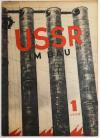
Pjatakov, G(eorgi Leonidowitsch, Editor in Chief). USSR im Bau. Illustrierte Monatsschrift. (Zweiter Jahrgang) 1931. 10 Hefte (Heft 1/2 und 7/8 als Doppel-Nr.). Moskau, State Publishing House of the RSFSR 1931. Folio (43 x 30 cm.). Mit zahlreichen Abbildungen. Orig.-Kartonumschläge (Heft 12 mit illustriertem Umschlag von John Heartfield).
Hellyer 860. Karasik/Heiting 17 ff. Parr/Badger I, 148 f. Rowell/Wye 242 f. – Zweiter Jahrgang des wichtigsten sowjetischen Propagandamagazins. Die Zeitscchrift erschien von 1930 bis 1949 monatlich in fünf Sprachen (Russisch, Englisch, Französisch, Spanisch und Deutsch). Jede Ausgabe war einem anderen Thema gewidmet, beispielsweise Lebensmittel- und Industrieproduktion, der Republik Georgien, dem sowjetischen Kino und Wahlen. – „In the early 1930s photo-reportage became the foundation of the magazine USSR in Construction that „was created as a publication for the popularization of large-scale construction projects by photographic means. But as the magazine grew and developed, the task of ‘popularization’ evolved into that of presenting Socialist reality with dramatic artistry.“ (L. Mezhericher, „Na putiakh k sotsialisticheskomu stiliu fotografii” [“On the way to a Socialist style of photography“], No. 2, p. 14). Well known Soviet designers and photographers worked on USSR in Construction. The industrial spirit of the magazine, expressed in compositionally sharp subjects, panoramas and dynamic shots evokes admiration even today and conveys the atmosphere of enthusiasm that carried along not just the photographers, but also the builders themselves. The creative scale of the construction engendered the photographic epic, a style of monumental artistic photography. The founders of this most successful and high-quality periodical were Gorky and Koltsov“ (Mikhail Karasik). – Umschlag von Heft 1/2 etwas angestaubt, sonst sehr schön erhalten. Schlagwörter: Avantgarde, Magazines, Propaganda, Soviet Union, Zeitschriften |
2.400,-- | |
 |
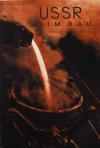
Pjatakov, G(eorgi Leonidowitsch, Editor in Chief). USSR im Bau. Illustrierte Monatsschrift. (Dritter Jahrgang) 1932. 12 Hefte. Moskau, State Publishing House of the RSFSR 1932. Folio (43 x 30 cm.). Mit zahlreichen Abbildungen. Orig.-Kartonumschläge (Heft 1 mit illustr. Umschlag von N. Troschin).
Hellyer 860. Karasik/Heiting 17 ff. Parr/Badger I, 148 f. Rowell/Wye 242 f. – Dritter Jahrgang des wichtigsten sowjetischen Propagandamagazins. Die Zeitscchrift erschien von 1930 bis 1949 monatlich in fünf Sprachen (Russisch, Englisch, Französisch, Spanisch und Deutsch). Jede Ausgabe war einem anderen Thema gewidmet, beispielsweise Lebensmittel- und Industrieproduktion, der Republik Georgien, dem sowjetischen Kino und Wahlen. – „In the early 1930s photo-reportage became the foundation of the magazine USSR in Construction that „was created as a publication for the popularization of large-scale construction projects by photographic means. But as the magazine grew and developed, the task of ‘popularization’ evolved into that of presenting Socialist reality with dramatic artistry.“ (L. Mezhericher, „Na putiakh k sotsialisticheskomu stiliu fotografii” [“On the way to a Socialist style of photography“], No. 2, p. 14). Well known Soviet designers and photographers worked on USSR in Construction. The industrial spirit of the magazine, expressed in compositionally sharp subjects, panoramas and dynamic shots evokes admiration even today and conveys the atmosphere of enthusiasm that carried along not just the photographers, but also the builders themselves. The creative scale of the construction engendered the photographic epic, a style of monumental artistic photography. The founders of this most successful and high-quality periodical were Gorky and Koltsov“ (Mikhail Karasik). – Umschläge etwas berieben, alle Hefte sehr schön erhalten. Schlagwörter: Avantgarde, Magazines, Propaganda, Soviet Union, Zeitschriften |
3.200,-- | |
 |
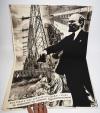
Pjatakov, G(eorgi Leonidowitsch, Editor in Chief). USSR im Bau. Illustrierte Monatsschrift. (Vierter Jahrgang) 1933. 12 Hefte. Moskau, State Publishing House of the RSFSR 1933. Folio (43 x 30 cm.). Mit zahlreichen Abbildungen, teils auf gefalteten Tafeln. Orig.-Kartonumschläge (Heft 2, 5, 9 und 12 mit illustr. Umschlägen von El Lissitzky und A. Rodchenko u. a.).
Hellyer 860. Karasik/Heiting 17 ff. Parr/Badger I, 148 f. Rowell/Wye 242 f. – Vierter Jahrgang des wichtigsten sowjetischen Propagandamagazins. Mit zwei von El Lissitzky und einer von A. Rodchenko gestalteten Nummern. Die Zeitschrift erschien von 1930 bis 1949 monatlich in fünf Sprachen (Russisch, Englisch, Französisch, Spanisch und Deutsch). Jede Ausgabe war einem anderen Thema gewidmet, beispielsweise Lebensmittel- und Industrieproduktion, der Republik Georgien, dem sowjetischen Kino und Wahlen. – „In the early 1930s photo-reportage became the foundation of the magazine USSR in Construction that „was created as a publication for the popularization of large-scale construction projects by photographic means. But as the magazine grew and developed, the task of ‘popularization’ evolved into that of presenting Socialist reality with dramatic artistry.“ (L. Mezhericher, „Na putiakh k sotsialisticheskomu stiliu fotografii” [“On the way to a Socialist style of photography“], No. 2, p. 14). Well known Soviet designers and photographers worked on USSR in Construction. The industrial spirit of the magazine, expressed in compositionally sharp subjects, panoramas and dynamic shots evokes admiration even today and conveys the atmosphere of enthusiasm that carried along not just the photographers, but also the builders themselves. The creative scale of the construction engendered the photographic epic, a style of monumental artistic photography. The founders of this most successful and high-quality periodical were Gorky and Koltsov“ (Mikhail Karasik). – Umschläge teils leicht berieben und etwas angestaubt, außergewöhnlich schön erhalten. Schlagwörter: Avantgarde, Magazines, Propaganda, Soviet Union, Zeitschriften |
3.400,-- | |
 |
Pjatakov, G(eorgi Leonidowitsch, Editor in Chief). USSR im Bau. Illustrierte Monatsschrift. (Fünfter Jahrgang) 1934. 11 Hefte (Heft 7/8 als Doppelheft). Moskau, State Publishing House of the RSFSR 1934. Folio (43 x 30 cm.). Mit zahlreichen Abbildungen. Orig.-Kartonumschläge (Heft 1, 3, 6, 7/8 und 11 mit illustr. Umschlägen von I. Urasow (1), N. Troschin und El Lissitzki (6)).
Hellyer 860. Karasik/Heiting 17 ff. Parr/Badger I, 148 f. Rowell/Wye 242 f. – Fünfter Jahrgang des wichtigsten sowjetischen Propagandamagazins. Die Zeitschrift erschien von 1930 bis 1949 monatlich in fünf Sprachen (Russisch, Englisch, Französisch, Spanisch und Deutsch). Jede Ausgabe war einem anderen Thema gewidmet, beispielsweise Lebensmittel- und Industrieproduktion, der Republik Georgien, dem sowjetischen Kino und Wahlen. – „In the early 1930s photo-reportage became the foundation of the magazine USSR in Construction that „was created as a publication for the popularization of large-scale construction projects by photographic means. But as the magazine grew and developed, the task of ‘popularization’ evolved into that of presenting Socialist reality with dramatic artistry.“ (L. Mezhericher, „Na putiakh k sotsialisticheskomu stiliu fotografii” [“On the way to a Socialist style of photography“], No. 2, p. 14). Well known Soviet designers and photographers worked on USSR in Construction. The industrial spirit of the magazine, expressed in compositionally sharp subjects, panoramas and dynamic shots evokes admiration even today and conveys the atmosphere of enthusiasm that carried along not just the photographers, but also the builders themselves. The creative scale of the construction engendered the photographic epic, a style of monumental artistic photography. The founders of this most successful and high-quality periodical were Gorky and Koltsov“ (Mikhail Karasik). – Umschläge etwas berieben, alle Hefte sehr schön erhalten. Schlagwörter: Avantgarde, Magazines, Propaganda, Soviet Union, Zeitschriften |
2.800,-- | |
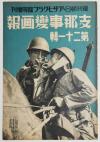 |
Kawabata, Ryushi (Cover art). Weekly Asahi (Photo Weekly). 3 special issues, November 22, 1934 „China affairs change report part 8“; December 17, 1938 „China affairs change 25th report“; August 25, 1942 „China affairs change report 21st“. Tokyo, Asahi Shimbun Company 1937-1942. Folio (39 x 26,5 cm.). 34, (2) pages each, with numerous illustrations based on photographs by Kageyama Masao, Otsuka Gen, Hashida Ken, Tabata Masa, Ueda Mutsuo. The publisher’s illustrated paper covers.
See Heiting/Ryuichi 99 ff. (″Shinajihen shashin zenshu, jo: Hokushi sensen“; Second Sino-Japanese War. Photographs Collection, Vol 1-6“ Tokyo 1937). – A rare Japanese weekly newspaper featuring photographic records from the Second Sino-Japanese War. – „On 7 July 1937, an incident occurred at the Marco Polo Bridge, during which Japanese and Chinese soldiers exchanged fire. Whether this incident was provoked by Japan is a matter of debate. This incident marked the start of the Second Sino-Japanese War. The Japanese had expected a swift victory, but the Second Battle of Shanghai lasted unexpectedly long and claimed numerous casualties. Around 200,000 Japanese and an unknown number of Chinese soldiers were embroiled in fierce street fighting. Casualties were very high on both sides; on the Kuomintang side, they are estimated at around one third of the soldiers fit for combat. Japan was not able to secure victory until mid-November, when the Japanese 10th Army landed in Hangzhou Bay and threatened to encircle the Chinese troops. … On 9 December 1941, China declared war on Germany, Italy and Japan. Until then, China had refrained from declaring war because, under international law, this would have allowed Japan to impose a blockade on all Chinese ports, thereby cutting off Chinese supplies by sea, and partly because an official declaration of war would have jeopardised American support due to US neutrality laws. The puppet regime (Reorganised Government of the Republic of China) installed by the Japanese in Nanjing under Wang Jingwei, in turn, declared war on the USA and the United Kingdom in 1943. In 1944, the Japanese went on the offensive once more and established a fragile land link between their conquered territories in northern and southern China“ (Wikipedia). – All issues are in very good condition. Schlagwörter: Documentary photography, Dokumentarfotografie, Dokumentarphotographie, Japan, Magazines, Second Sino-Japanese War, World War, 1939-1945, Zeitschriften |
450,-- | |
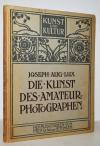 |
Lux, Joseph Aug(ust). Die Kunst des Amateurphotographen. 1. – 4. Tsd. Stuttgart, Strecker & Schröder 1910. 8°. 57, (7) S. mit 10 Textfiguren und 9 Portrait-Tafeln nach Fotografien von O(skar) v. Peteani. Illustr. Orig.-Pappband. (Kunst und Kultur, Band 8).
Heidtmann 3625. ÖBL V, 381 f. – Erste Ausgabe. – Frühe Veröffentlichung des Wiener Schriftstellers J. A. Lux (1871-1947). – Über den Münchner Fotograf O. v. Peteani ist nur bekannt, dass Emil Pirchan sein Exlibris gestaltete und er mit dem österreichischen Operntenor Eugen Reichsritter Peteani von Steinberg (1873–1913) und der bekannten Linzer Schriftstellerin und Grafikerin Maria von Peteani (1888-1960) verwandt war. – Sehr gutes Exemplar. Schlagwörter: Portrait photography, Portraitphotographie, Porträtfotografie, Porträtphotographie |
60,-- | |
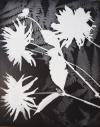 |
Man Ray – Ribemont-Dessaignes, G(eorges). Man Ray. In: Les Feuilles Libres. Nouvelle série. 6ième année, No. 40., Mai-Juin 1925. Paris, Librairie Stock 1925. Gr.-8° (22,5 x 18,5 cm.). Pp. 217–284, avec 6 illustrations (dont 4 à pleine page) et 4 planches contrecollées d’après des rayogrammes de Man Ray. Couverture en carton typographiée de l’éditeur.
Vgl. Dada global 188 (No. 26, avril-mai 1922). – Seltene Doppelnummer der wichtigen Dada-Zeitschrift zu Ehren von Man Ray. Außerdem mit den Beiträgen von Blaise Cendrars (″Mascha“), Jean Cocteu (″L’Ange Heurtebise“), Drieu La Rochelle (″Grandeur et Persécution“), Georges Hugnet (″Poésies“) und Marcel Arland (″Terre Natale“). – „Man Ray, der sich der Fotografie zunächst lediglich als Mittel zur Reproduktion seiner Gemälde genähert hatte, sollte schließlich zu einem ihrer Meister werden. Im Juli 1921 von der Dada-Gruppe (Tzara, Breton, Picabia u. a.) in Paris willkommen geheißen, richtete er rasch ein Fotostudio ein, um seinen Lebensunterhalt zu bestreiten. Auf das Frühjahr 1922 geht seine „zufällige“ Entdeckung des Rayogramms zurück. Zu dieser Zeit plante er eine Werkreihe, die er *Champs délicieux* nennen sollte – eine Anspielung auf *Les Champs magnétiques*, das 1921 von Breton und Soupault veröffentlichte Buch“ (C. Bouqueret, Paris zu „Champs déliceux“, Paris 1922, S. 13). – Umschlag im unteren Rand etwas bestoßen, sehr gutes oben unbeschnittenes Exemplar. Schlagwörter: Avantgarde, Dada, Dadaism, Dadaismus, Rayogramme, Rayograph, Rayographie, Surrealism, Surrealismus, Zeitschriften |
800,-- | |
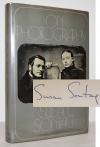 |
Sontag, Susan. On photography. Sixth printing. New York, Farrar, Straus and Giroux (1978). 8°. (7), 207 p. Publisher’s linen binding with an illustrated dust jacket.
Lederman/Yatskevich, What they saw 346. Roosens/Salu 2624. – Signed by Susan Sontag. – „Susan Sontag’s On Photography, a text-based work that does not include photographic illustrations, is a collection of six essays originally published in the New York Review of Books between 1973 and 1977. Written in a modernist style that crosses the boundaries between high and low culture, Sontag explores the power of photography and its unlimited authority in society from both a historical and 1970s perspective. With a background in English and philosophy and no formal training in art or photography, Sontag posits that a photograph is a perceived reality, a way of preserving the past while also holding on to the present. Referencing Plato’s allegory of the cave in the book’s first essay, she observes that photographs are perceived as representations of reality more than other art forms; and that the more pervasive photography becomes, the more photography shapes reality and how the world is seen. In the book’s successive essays, Sontag examines the representation of America by photographers, moving on to discussions of shock imagery, commodification in photography and the role images play in everyday life. On Photography remains one of the most celebrated books on the subject of photography, and has become essential reading for anyone involved in the field or study of photography“ (Anna Jacobsen in Lederman/Yatskevich). – Dust jacket on the back cover with a small tear; a very fine copy. Schlagwörter: Foto-Philosophie, Fotografiegeschichte, Photo Essays, Photo-Philosophy, Photography literature, Signed books, Signierte Bücher |
320,-- | |
 |
Mark, Mary Ellen. Ward 81. Photographs. Text by Karen Folger Jacobs. With an introduction by Milos Forman. Designed by Arne Lewis. New York, Simon and Schuster (1979). Quer-8° (20 x 28 cm.).. 96 p. with 82 duotone plates. Illustrated original cardboard softcover.
Koetzle, Fotografen A-Z 253. Lederman/Yatskevitch, What they saw 255. – First edition. – „In February 1975, photographer Mary Elen Mark and writer and social scientist Karen Folger Jacobs were given permission to live on Ward 81, the women’s security ward of the Oregon State Hospital. During their thirty-sixday stay, Mark photographed, and Jacobs interviewed the ward’s residents, women deemed highly disturbed and a danger to themselves and others. Purposely choosing not to review case files before their visit, Jacobs and Mark interacted with the patients in their daily routines. They were less interested in documenting their mental illness than learning about the women themselves. The resulting book, Ward 81, portrays the women, their mental illness’ contradictions and the institutional response to their treatment and care. Mark first learned of the Oregon State Hospital and the women in Ward 81 in 1974 when she was sent to photograph the cast on the set of One Flew Over the Cuckoo’s Nest, Milos Forman’s 1975 film based on Ken Kesey’s novel about patients in a psychiatric hospital. She vowed to return, and after a year-long request process, she and Jacobs installed themse Ives in the ward. The impact of their time on the ward was significant, with Jacobs stating in the book’s epilogue, „We felt the degeneration of our own bodies and the erosion of our self-confidence. We were horrified at the thought of what we might become after a year or two of confinement and therapy on Ward 81.“ The book contains eighty-two black-and white photographs, with an essay by Jacobs serving as an introduction to the visual flow. In it, she notes that women captured in Mark’s photographs could be in almost any institutional setting, but closer examination reveals their scars and signs of physical abuse, often self-inflicted“ (C. M. Riley in Lederman/Yatskevitch). – A very fine copy. Schlagwörter: Portrait photography, Portraitphotographie, Porträtfotografie, Porträtphotographie |
240,-- | |
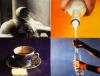 |
Noldus, Cecile (geb. 1961 in Breda). (Orchester der Dinge). Folge mit 6 C-Prints auf Fujicolor Crystal Archive Paper, alle verso mit Goldstift signiert. (Hamburg, Griffelkunst-Vereinigung 1998). 40 x 30 cm.
Griffelkunst, Verzeichnis der Editionen 292 C1-C6. – „Welcome to my Universe of Living Things! I am Cecile Noldus, and people call me animator, visual artist, animation filmer, workshop facilitator, event enricher, or simply artist. I am the creator of stories in which things come to life, read more tagging on to my childhood devotions, when I would roam the forests near my home in Brabant, in the Netherlands. To me, plants, stones, and insects all have animistic souls. They tell me stories. They always have. For as long as I can remember I have been trying to connect with these creatures by shaping them out of trash and objects to then animate them, giving them a soul. Recalling the mystic forests of my childhood, I draw, paint or create secret gardens out of various materials, mainly mixed textiles because of its softness and flexibility. I extended my world by sewing dadaistic costumes that can be worn by me or by the audience for performances or animation films. They seem inspired by my hometown hero Hieronymus Bosch; they are manic, colourful, mysterious and brave“ (Cacile Noldus 2024). – Ohne die illustr. Mappe mit dem Titel. Schlagwörter: Original-Photographie, Signierte Photographie |
240,-- | |
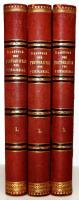 |
Pizzighelli, G(uiseppe und Arthur Baron v. Hübl). Handbuch der Photographie für Amateure und Touristen. I. Die photographischen Apparate. II. Die photographischen Prozesse. III. Die Anwendungen der Photographie. 2. Auflage. 3 Bände. Halle, Wilhelm Knapp 1891-1892. Gr.-8°. XII, 485 S.; XII, 539 S.; X, 496, 9, 28 S., 4 Bl., 15, 7, 15 S. mit 1036 Abb. im Text und auf teils gefalt. Tafeln. Weinrote Halblederbände der Zeit mit goldgepr. Rückentiteln und dezenter Rückenvergoldung.
Heidtmann 3582. – „Mit seiner außerordentlich fein differenzierten Halbtonskala lieferte der Platindruck, nach der Kalotypie die schönsten Abzüge. Sein silbergrauer Ton war vor allem bei Photographen beliebt, die ein mehr als durchschnittliches ästhetisches Empfinden besaßen. Zwei österreichische Offiziere, Hauptmann Giuseppe Pizzighelli und Arthur Baron von Hübl, modifizierten das Verfahren dahin, daß das Bild nicht mehr entwickelt, sondern ganz auskopiert wurde. Mit ihrem Handbuch (1882), das auch in englischen und französischen Übersetzungen erschien, trugen sie entschieden zur Popularität des Platindrucks bei. Aufgrund der ständig steigenden Preise des Edelmetalls (die Unze Platin kostete 1878 noch fünfundzwanzig Shilling, 1891 aber schon sechzig Shilling, zu Beginn des 20. Jahrhunderts noch mehr) mußte das Verfahren jedoch eingestellt werden“ (H. Gernsheim, Geschichte der Photographie, S. 416). – Exemplar des vollständig seltenen Werks. Schlagwörter: Fototechnik, Photographic equipment, Photographic technology, Technik |
380,-- | |
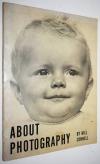 |
Connell, Will. About Photography. New York, T. J. Maloney Co. (1949). 4°. 64 S. mit teils doppelblattgr. Abbildungen. Illustr. Orig.-Kartonumschlag.
First edition. – „This little book is written for the knowledgable… The book will probably do nobody any good, because those who need it won’t understand it, and those who understand it won’t need it…“ (W. Connell in his introduction). – „Will Connell (1898-1961) was an influential photographer, teacher, and author in Southern California known for his often-satirical “modern pictorialist” style, commercial photography work, and mentorship of a generation of photographers. … Connell’s glamour shots of stars such as Myrna Loy, as well as his growing body of art photography, reveal pictorialist influence, and his work was often exhibited at salons and exhibitions throughout the United States. In the 1930s, Connell began working as a photographer for magazines including the Saturday Evening Post, Colliers, Time, and Vogue, started teaching photography at Art Center College, and continued work at the Los Angeles studio he opened in 1925. Connell spent the rest of his life in Los Angeles, teaching, judging work, producing commercial work, and writing, notably, his „Counsel by Connell“ column in US Camera, which he authored for 15 years“ (National Museum of American History, Washington). – Rücken leicht berieben, gutes Exemplar. Schlagwörter: Commercial photography |
70,-- | |
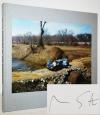 |
Soth, Alec. Sleeping by the Mississippi. Essays by Partricia Hampl and Anne Wilkes Tucker. Third edition. Göttingen, Steidl (2008). 4° (28 x 29 cm.). [120] S. mit 46 Farbtafeln. Orig.-Leinenband mit farbigem Deckelbild.
Koetzle, Fotografen A-Z 376. – Von Alec Soth auf dem Titelblatt signiert. – „Evolving from a series of road trips along the Mississippi River, Robert Frank’s The Americans. Like Frank’s classic book, Sleeping by the Mississippi merges a documentary style with a poetic sensibility. The Mississippi is less the subject of the book than its organizing structure. Not bound by a rigid concept or ideology, the series is created out of a quintessentially American spirit of wanderlust“ (Steidl). – „Mit erzählerisch-dokumentarischem Hintergrund entwickelt Soth in seinen Langzeitstudien eine eigene ästhetische und künstlerische Sprache. Als Mitglied der Fotografenvereinigung und -agentur Magnum (seit 2004) ist er ein typisches Beispiel für eine disziplinübergreifende Erweiterung, die sich nicht mehr in die Bereiche der „angewandten“ oder „künstlerischen“ Fotografie aufgliedern lässt“ (F. Hoffmann in Koetzle). – Neuwertiges Exemplar. Schlagwörter: Color photography, Farbfotografie, Farbphotographie, Mississippi River Valley, Signed books, Signierte Bücher, Soth, Alec, USA |
240,-- | |
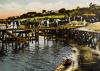 |
Spanos, (Demetrios) and (Panagiotis) Tsitsias. Territory of Lourenço Marques. Lourenço Marques, Spanos & Tsitsias not dated (ca.1910). Quer-8° (18 x 23,5 cm.). Title page and 18 color plates (collotypes). Publishers cardboard hardcover.
First and only edition. – The photos show: Public Park, passenger landing pier at Marracuene near Lourenço Marques, Port Melville, Inyack Island, Marracuene near Lourenço Marques, On the Umbeluzi River, Fishing village at Inyack Island, Moodie’s Creek near Barberton, Transvaal, Native Village Huts at Umbeluzi near Lourenço Marques and others. – The territory featured in these works is the former district and colonial capital of Lourenço Marques in Portuguese East Africa, which was renamed Maputo after Mozambique’s independence in 1975. Geographically, the territory is situated on the northern bank of the Espírito Santo Estuary at Delagoa Bay (Indian Ocean). The historical district and city historically spanned the immediate coastal region, acting as a major port and railway terminus connecting the hinterlands of South Africa (Transvaal) and Swaziland to the sea. – The two photographers, Demetrios Spanos and Panagiotis Tsitsias, were Greek immigrants who ran a well-known photography studio, a postcard publishing company, and a general store in Lourenço Marques (now Maputo). For their famous albums, they traveled throughout the region, documenting the architecture of the colonial city, everyday life, and the traditions of the local population. In addition to bound photo albums, they produced hundreds of numbered postcards (Postais de Moçambique), which today are valuable historical documents for research and popular collector’s items. They were part of a small group of early European professional photographers in Mozambique – much like the better-known Lazarus brothers, with whom they shaped the market for colonial photography around the turn of the century. – In very good condition. Schlagwörter: Africa, Afrika, Color photography, Farbfotografie, Farbphotographie, Kolonialismus, Kolonien, Maputo, Mozambique |
320,-- | |
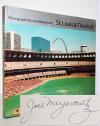 |
Meyerowitz, Joel. St. Louis & The Arch. Photographs. Preface by James N. Wood. Boston, Little, Brown & Co. (1980). Quer-4° (24,5 x 27,5 cm.). 112 p. with 107 color plates. Publisher’s linen binding with a color-illustrated dust jacket.
Koetzle, Fotografen A-Z 267. – Erste Ausgabe der zweiten Veröffentlichung. Von Joel Meyerowitz signiert. – Der New Yorker Fotograf J. Meyerowitz (geb. 1938), „Hauptvertreter der ‚new color photography‘ seit den 60er Jahren in den USA“ (H.-M. Koetzle), „hat sich beständig um Ehrlichkeit sowohl seinem Thema wie seinen eigenen Emotionen gegenüber bemüht. Seine Absicht beim Bildermachen ist es, ‚meine Gefühle angesichts des Themas einzufangen‘. Die so entstehende Arbeit … vermittelt eine positive und optimistische Haltung zur Welt, wie sie durch seine Linse zu sehen ist. Meyerowitz’ Blick ist nie durch formale Erwägungen bestimmt. Schönheit in seinen Fotografien entsteht durch den Ausdruck des menschlichen Gehalts des Motivs. Seine Bilder berühren uns mehr durch ihre Poesie denn durch ihre Komposition“ (Jim Wood in Koetzle). – Schutzumschlag am Kapital und den oberen Ecken mit Knickspuren, gutes Exemplar. Schlagwörter: Color photography, Farbfotografie, Farbphotographie, Signed books, Signierte Bücher, USA |
200,-- | |
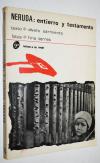 |
Torres – Sarmiento, Alvaro. Neruda. Entierro y testamento. Fotos: Fina Torres. Las Palmas de Gran Canaria, Inventarios Provisionales 1973. 8°. 151 S. mit 48 Duotone-Tafeln. Illustr. Orig.-Kartonumschlag. (Serie Letras a su himán, 14).
Fernadez, The Latin American Photobook 102. – Rare first edition. – „In September 1973, Fina Torres, a photojournalist active in Venezuela at the time, was in Santiago during the coup that overthrew the government of the Unidad Popular. She photographed the damage done by the artillery to the facade of the Palacio de la Moneda, the armed soldiers in the streets, and other unsettling scenes of everyday life at the time: the cleaning of painted slogans from the walls, people lining up to buy food, the surveillance of the embassies, and the anguished seriousness of people waiting outside the morgue. Photographs of similar scenes can be found in the photobook Chili September 1973 by Koen Wessing, one of whose images is virtually identical to another taken by Torres. Both photographed a darkhaired girl standing at the door of the morgue and showing the ID photo of a soldier. Torres decided to repeat the image to show more clearly the features of the young man who had disappeared, and Wessing did the same. Ten days after the coup, the poet Pablo Neruda died in a clinic in Santiago. Torres photographed the funeral procession, which also laid to rest the Unidad Popular and a whole era of leftist aspirations. The procession turned into a demonstration, in spite of the menacing presence of numerous armed soldiers. … Fina Torres left another testimony, that of the vigil held around the dead body of Neruda. As she recalls, she was „the only photographer in the writter ’s residence on the day of his death.“ The house had been entered and sacked by soldiers, an event almost prophesied in the lines „Traitor / generals: / behold my dead house“ from España en el Corazon (Spain in the Heart). The photos show empty shelves, ashes from the auto-da-fé, open closets, flooded rooms, and other signs of plunder and destruction-images of the desolation that the deceased poet’s relatives, also captured by Torres’s camera, seem not to notice“ (H. Fernández). – Back cover with a vertical tear, otherwise in good condition. Schlagwörter: Chile, Neruda, Pablo, Revolution, Santiago |
200,-- | |
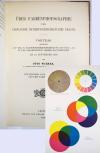 |
Wiener, Otto (Heinrich). Über Farbenphotographie und verwandte naturwissenschaftliche Fragen. Vortrag, gehalten auf der 80. Naturforscherversammlung zu Cöln a. Rh. in der Gesamtsitzung beider Hauptgruppen am 24. September 1908. Mit Zusätzen, Literaturnachweis und drei farbigen Tafeln. Leipzig, Johann Ambrosius Barth 1909. 8°. 88 S. und 3 farblithgr. Tafeln. Halbleinenband der Zeit.
Heidtmann 4948. NDB XXVIII, 88 ff. Roosens/Salu 2241. – Einzige Ausgabe. – Der bedeutende Physiker O. Wiener (1862-1927) wurde bekannt durch den experimentellen Nachweis stehender Lichtwellen; 1890 gelang ihm die Bestimmung der Wellenlänge des Lichts. Er „knüpfte in seiner Forschung mit der umfassenden Abhandlung „Farbenphotographie durch Körperfarben und mechanische Farbenanpassung in der Natur“ (Ann. d. Physik 55, 1895, S. 225–81) an frühere Arbeiten an“ (S. L. Wolff in NDB). – Beigebunden 7 weitere Vorträge und Arbeiten: Van der Waals, J(ohannes) D(iderik). Die Zustandsgleichung. Rede, gehalten am 12. Dez. 1910 in Stockholm bei Empfang des Nobelpreises für Pysik. Leipzig, Akademische Verlagsgesellschaft 1911. 24 S. – Löffler, Bernhard. Wann und auf welche Weise beeinflussen suspendierte Teilchen Gewicht und Auftrieb einer Flussigkeit ? Inaugural-Dissertation … der Universität Marburg. Marburg, Enz & Rudolph 1906. [3] Bl., 531 S. – Wiener, Otto. Ernst Abbe. Nekrolog gesprochen in der öffentlichen Gesamtsitzung beider Klassen am 11. November 1906. 18 S. – Wiener, Otto. Herstellung langsamer Kondensatorschwingungen in der Größenlage der Schwingungsdauer einer Sekunde und ihre Verfolgung mit geeignetem Galvanometer und Elektrometer. (Vorgetragen (bei) der 79. Versammlung Deutscher Naturforscher und Ärzte zu Dresden am 17. September 1907, …) S. 469-476. – Ludewig, Paul. Über die Notwendigkeit des Vorhandenseins von Selbstinduktion im Stromkreis des Wehneltunterbrechers. Separat-Abdruck aus den Annalen der Physik. Vierte Folge. Band 31. Leipzig, J. A. Barth 1910. Titel, S. 445-448, [1] Bl. – Ludewig, Paul. Der physikalische Vorgang in der Schlömilchzelle. Separatdruck aus Jahrbuch der drahtlosen Telegraphie und Telephonie. Leipzig, J. A. Barth 1910. S. 411-427. – Heideprim, P. Das Klima von Frankfurt am Main. Eine Zusammenstellung der wichtigsten meteorologischen Verhältnisse von Frankfurt a. M. Nachtrag II. Franfurt a. M., C. Naumann 1910. 79 S. – Gut erhaltener Sammelband mit 8 interessanten Abhandlungen. Schlagwörter: Color photography, Farbphotographie, Optics, Optik, Physics, Physik |
140,-- | |
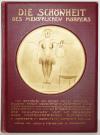 |
Daelen, Eduard, Gustav Fritsch, Joseph Kirchner, Bruno Meyer, Victorien du Sauffay und Guy de Téramond. Die Schönheit des menschlichen Körpers. Mit Beiträgen von E. Daelen u. a. und 322 malerischen Aktstudien nach der Natur von B. Arthur, H. v. Behringer, C. O. Freytag, Ernst Schneider, W. Hartwig, Hans Hildebrand, Otto Schmidt, Gugliemo Plüschow, F(red) Boissonnas, W. Collins u. a. 2., um 225 Abbildungen vermehrte und textlich erweiterte Auflage. Düsseldorf, Ulrich & Steinbecher (1907). Gr.-4° (30 x 22,5 cm.). 315 S. mit 322 Abbildungen nach Fotografien im Text und auf Tafeln. Dunkelroter Orig.-Leinenband mit goldgepr. Rücken- und Deckeltitel und großem goldgepr. Medaillon auf dem Vorderdeckel.
Heidtmann 11123. – Erweiterte Neuausgabe des zuerst 1905 in Lieferungen erschienenen Werks. – „Die so lange und oft recht heftig diskutierte Frage: „Ist die Photographie ein Kunst?“ scheint mit der Zeit in ein ruhigeres Stadium einzutreten. Sie ist inzwischen so weit zur Klärung gediehen, daß nun die kühn Fortschreitende bereits die allgemeine Anerkennung ihres Bürgerrechts in der Kunst errungen hat, und daß sonach jede Erörterung über Kunst im allgemeinen für sie mit gilt. Und zwar braucht sie auch nicht mehr von Unverstand und Anmaßung sich nur als eine scheel angesehene Konkurrentin oder Stieftochter der Malerei betrachten zu lassen. Sie geht ihre eigenen Wege, sie hat zu einer besonderen, zu einer selbständigen Ausdrucksweise künstlerischer Naturempfindung sich emporgearbeitet, und damit reift nun die Zeit heran, auf interne Fragen näher einzugehen, die höhere und höchste Aufgaben der künstlerischen Darstellung ins Auge fassen. Eine der wichtigsten Fragen auf diesem Gebiete ist die: „Welche Bedeutung hat das Nackte in der Kunst?“ Es gibt kaum eine andere Zeitfrage, die der Aufklärung noch mehr bedürfte wie diese, da man nirgendwo so viel trübem Unverstand und Vorurteil begegnet wie hier, da nirgendwo die Meinungen sich schroffer gegenüberstehen“ (E. Daelen in Kapitel VII. „Das Nackte in der Photographie“, S. 140 f.). – Sehr gutes sauberes Exemplar. Schlagwörter: Aktfotografie, Aktphotographie, Photography of the nude |
120,-- | |
 |
Wessing, Koen. Chili september 1973. Amsterdam, De Bezige Bij 1973. 4° (24,5 x 20 cm.). [48] p. with 24 Duotone plates, most of which are double-sheet size. Original cardboard cover.
Auer 562. Gierstberg/Suermondt 124 f. Heiting, Dutch photo publications 498. Parr/Badger I, 22. Vgl. Fernández, The Latin American Photobook 102 (Torres, Neruda: entierro y testamento. Las Palmas 1973). – „The book begins with a double-page spread of a pile of burning papers. On the top a face can be glimpsed President Salvador Allende of Chile, overthrown by military revolt. Allende had been democratically elected, but the United States, in one of the most disreputable episodes in its recent history, deemed his socialist government a Marxist threat to American interests in South America. The CIA actively worked to destabilize the country and supported the military junta of General Augusto Pinochet, who seized power in September 1973. The far-from-bloodless coup leaves today’s Chile still trying to come to terms with the damage done to its democratic institutions over three decades ago. The Dutch photographer Koen Wessing was on the streets of Santiago immediately after the coup happened. His gritty documentary pictures were quickly published in this no-frills, extremely elegant photobook by De Bezige Bij, publisher of so many of the best Dutch photographic books. There are not many images in the book, but each is carefully considered, modest and succinct, spread across a double page in graphic gravure. Despite the difficulties of taking photographs in such a tense and difficult situation, Wessing never forgets the value of composition and lighting control. The main thrust of the book is the coup’s immediate aftermath, the shock and grief of the people, the rounding up of Allende’s supporters (or suspected supporters) by the army, and their herding into the now notorious National Stadium in Santiago, where many would be tortured and killed. Wessing vividly captures one of these executions, in a two-page sequence that forms the book’s climax“ (Martin Parr). – The cover is slightly discolored, as usual, but it’s a very good copy. Schlagwörter: Chile, Politics and government, Politik, Santiago, South America, Street photography, Südamerika |
450,-- | |
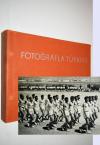 |
Pferschy, Othmar. Fotografla Türkiye. – La Turquie en image. – Turkey in Pictures. – Die Türkei im Bild. Ankara, Matbuat Umum Müdürlügü o. J. (1937). Quer-4° (25 x 34 cm.). [10] Bl. und 154 Duotone-Tafeln mit 5 Zwischentiteln. Hellroter Orig.-Leinenband mit Metallschrauben-Bindung, Schutzumschlag und Pappschuber.
Interessantes Propaganda-Album der „Neuen“ Republik Türkei. Mit viersprachigen Einleitungstexten in Türkisch, Französisch, Englisch und Deutsch. – Die Aufnahmen sind in fünf Abschnitte (A-F) gegliedert: A. Ankara (28 Fotos); B. Istanbul (23 Fotos); C. Städte und Landschaft (23 Fotos); D. Archäologie und Kunst (22 Fotos); E. Wirtschaft und Aufbau (44 Fotos) und F. Kultur und Mensch (14 Fotos). – „Das zentrale Argument, das die kemalistische Türkische Republik gegen den Begriff des „Alten“ im Osmanischen Reich vorbrachte, nämlich der Begriff des „Neuen“, zeigte sich in allen Bereichen, von der Industrie bis zur Kunst, vom gesellschaftlichen Leben bis zur Architektur. Um die durch die Revolutionen der Republik Türkei im Modernisierungsprozess zurückgelegten Fortschritte zu erkennen, ist es notwendig, die neue Ära angemessen darzustellen. Aufgrund ihrer besonderen Eigenschaften im Druck- und Verlagswesen wurde die Fotografie als das Medium angesehen, das den „neuen“ Staat am besten vermitteln kann. Im „Fotoalbum der Türkei“ wurde die Fotografie als Mittel der Werbung und Propaganda eingesetzt, um die kemalistischen Revolutionen sowie das sich entwickelnde und wandelnde Gesicht der „jungen“ Türkei der ganzen Welt zu vermitteln. … Das „Fotoalbum der Türkei“ wurde mit Inhalten zusammengestellt, die alle materiellen und ideellen Aktivitäten der Republik der kemalistischen Türkischen Republik in den 13 Jahren von 1923 bis 1936 widerspiegeln. … Das Album „Türkiye mit Fotos“, das einen der Grundsteine des fotografischen Gedächtnisses der Republik darstellt, war Zeuge der Entstehung der „neuen Türkei“ durch die nacheinander vollzogenen Revolutionen der Republik“ (G. Talebazadeh Atalay, Fotografla Türkiye Albümü’nde (1937) kültür varliklari ve çagdas mimarlik 2022, übersetzt aus dem Türkischen). – Der Grazer Fotograf O. Pferschy (1898-1984) arbeitete von 1926 bis 1969 in Instanbul. – Sehr gutes Exemplar mit dem meist fehlenden Schutzumschlag und Pappschuber. Schlagwörter: Propaganda, Türkei, Turkey |
450,-- | |
 |
Tadanori Yokoo. Adept arcana. Lisa Lyon by Tadanori Yokoo [based on the video „Adept Arcana / Lisa Lyon by Tadanori Yokoo“ produced by CBS/SONY groupe]. Tokyo, Parco (1985). 4°. 94 S., [1] Bl. mit mit 88 Farbtafeln. Illustr. Orig.-Kartonumschlag mit Bellyband (Obi) und Klarsicht-Schutzumschlag.
Erste Ausgabe. – Aktaufnahmen aus einem Video des japanischen Künstlers meist mit Farbeffekten verfremdet. – „Beeinflusst von der Pop Art und Bewegungen schließen seine Arbeiten Fotos, Stückchen aus der traditionellen japanischen Welt, aus der westlichen Welt und aus dem Buddhismus ein, oft alles zugleich in demselben Kunstwerk. Yokoo wurde im In- und Ausland vielfach prämiert. 1971 konnte er sich in einer Exklusiv-Schau im Museum of Modern Art in New York zeigen. … Einem breiten Publikum bekannt sind diverse Schallplattencover. Yokoo gestaltete beispielsweise von Santana die Alben Lotus (1974) und Amigos (1976), von Carlos Santana The Swing Of Delight (1980, nur ein Innenbild) und Divine Light (2001) sowie von Miles Davis Agharta (1975). Insbesondere dem opulent ausgestatteten Dreifachalbum Lotus mit seinen beiden Faltpostern dürfte er eine der aufwendigsten Aufmachungen in der Rockmusik mitgegeben haben“ (Wikipedia). – Tadellos. Schlagwörter: Aktfotografie, Aktphotographie, Photography of the nude, Pop art, Videokunst |
80,-- | |
 |
Wirtky, (Walter) J(ohannes). Huai Te Yue Han Na Si Wo Te Ji. Shanghai. Stuttgart, Süddeutsche Lichtdruck-Anstalt o. J. (um 1930). Quer-8° (21 x 30 cm.). [15] Bl. mit 73 Abbildungen in Heliogravure. Orig.-Kartonumschlag mit Kordel-Heftung.
Sehr seltene Foto-Dokumentation aus dem Shanghai der 1920er Jahre. Bildunterschriften in Deutsch und Englisch. – Mit interessanten Aufnahmen bedeutender Gebäude und aus dem Volksleben. Eine Foto-Strecke dokumentiert Straßenhändler in der Avenue Edward VII: „Strassen Küche“, „Holz-Oel-Händler“, „Briefschreiber“, „Wandrollen-Händler“, „Wahrsager“, „Mahjong-Spiel-Schnitzer“ und „Mahjong-Spieler“, „Ichang-Laden“ und „Gaukler“. Weitere Aufnahmen mit Straßenszenen aus Nantao (Vogelmarkt, Spielwaren-Verkäufer etc.), Rickschas im Schneetreiben, einer Kinder-Bücherei, Tee-Häuser, Drachen-Fest der Anamiten, Drach-Boot-Fest, Chinesische Hochzeit u. a. m. – Der Schweizer (?) Fotograf W. J. Wirtky (1894-1934) arbeitete wohl in den 1920er Jahren in Shanghai. – Umschlag etwas angestaubt, sonst sehr gut erhalten. Schlagwörter: China, Shanghai |
450,-- | |
 |
Becher, Bernd und Hilla. Hauts fourneaux. (München, Paris, London), Schirmer-Mosel (1990). 4°. 15 pages et 222 planches en bichromie, dont certaines occupent deux pages. Reliure en toile d’origine de l’éditeur, avec jaquette illustrée.
Vgl. Koetzle, Fotografen A-Z 31. – Erste französische Ausgabe von „Hochöfen“. – „The extensive series that the Bechers later made for Schirmer/Mosel and MIT Press, while preserving the aesthetic rigour of their earlier work, emphasizes the documentary aspect, and has a particular archival, historical value. Anonyme Skulpturen, though it hardly neglects the informational importance of their practice, seems much more about making an aesthetic statement and establishing the artists’ position in late twentieth-century art. All their books are polemical, but this represents their primary artistic credo. For those who are more interested in the Bechers as artists than as industrial archaeologists, this is the one to have on one’s shelf“ (Parr/Badger zu Anonyme Skulpturen 1970). – Neuwertiges Exemplar. Schlagwörter: Architektur, Architekturfotografie, Industriefotografie |
240,-- | |
 |
Chotjewitz, Peter O(tto). Roman. Ein Anpassungsmuster. Darmstadt, Joseph Melzer (1968). 4°. 248 S. mit zahlr. Abbildungen nach Fotos von Gunter Rambow. Farbig illustr. Orig.-Kartonumschlag.
Erste Ausgabe. – Die Photographien sind auf dünnes Transparentpapier gedruckt. – P. O. Chotjewitz (1934-2010) „arbeitete u.a. über H.C. Artmann und die Wiener Dichtergruppe und beteiligte sich an Aktionen der „Fluxus“ und Happening-Bewegung, es kam zur Zusammenarbeit mit Wolf Vostell. 1965 legte er die zweite juristische Staatsprüfung ab. Danach war er aber nicht als Jurist tätig, sondern entschied sich für ein Leben als Schriftsteller. 1965 hatte er eine Lesung bei der Gruppe 47 in Berlin. 1966 hatte er auf seiner ersten USA-Reise Begegnungen mit Künstlern der „Something Else-Press“ um Dick Higgins, Emett Williams und hatte eine Lesung bei der Gruppe 47 in Princeton. Danach arbeitete er für Giacomo Feltrinelli: er erstellte in seinem Auftrag eine Untersuchung über jugendliche Rebellen. Von 1967 bis 1973 lebte er in Rom, zunächst mit einem Stipendium der Villa Massimo. 1969 gab er seinen Wohnsitz in Deutschland auf, er lernte Dario Fo kennen und den Kreis der „Novissimi“ und die (literarische) „Gruppe 63“. Er beschäftigte sich mit der „Südfrage“ und unternahm Reisen nach Süditalien, Schwerpunkt Sizilien. 1971 inszenierte Grüber am Bremer Theater sein Stück: „Weltmeisterschaft im Klassenkampf“. 1973 kehrte er mit der Familie in die Bundesrepublik Deutschland zurück. In den 1970er Jahren war Peter O. Chotjewitz politisch stark engagiert, 1974 beantragte er die Zulassung zur Anwaltschaft und zu anwaltschaftlichen Tätigkeiten, um als Wahlverteidiger Andreas Baader und Peter-Paul Zahl zu vertreten und gründete einen Hilfsfonds für politische Gefangene“ (Literaturport). – Rückendeckel mit Knickspur, gutes Exemplar. Schlagwörter: Illustrated books, Illustrierte Bücher, Literatur, Studentenbewegung |
40,-- | |
 |
Ruetz, Michael. Beuys. 63 Photographien und ein Text von Novalis. Nördlingen, Greno 1986. 4°. 92 S. mit 63 Abb. Illustr. OKart. (Delphi, 1034).
Erste Ausgabe. – „Wann haben Sie Beuys zum ersten Mal getroffen? – Das muss 1969 in seinem Atelier in Oberkassel gewesen sein. Dänische Freunde hatten mich zu ihm mitgenommen. Kurioserweise war das nur ein knappes Jahr, nachdem ich die Fotografie zu meinem Beruf gemacht hatte. Eigentlich war ich Sprachwissenschaftler und schrieb im Fach Sinologie an meiner Dissertation. Der „Stern“ hatte mich als Fotograf in seine Redaktion aufgenommen. Bei dem Magazin habe ich meinen Beruf überhaupt erst erlernt. Ich hatte wenig Ahnung, bekam ein riesiges Gehalt und war eigentlich ein Lehrling. Aber ich wurde wie ein Profi behandelt und habe mich bewährt. Mit Beuys fängt sozusagen meine fotografische Karriere an, ist das nicht merkwürdig? Ich hatte bei unserem ersten Treffen keine Kamera dabei, wir saßen einfach zusammen“ (M. Ruetz in einem Interview mit Juliane Rohr anlässlich der Veröffentlichung von „Beuys bleibt – Beuys, a close up“). – Umschlag altersbedingt etwas gebräunt, sehr gutes Exemplar. Schlagwörter: Beuys, Joseph, Fluxus, Kunst |
30,-- | |
 |
Biermann – Eskildsen, Ute, Aenne Biermann. Fotografien 1925-1933. Berlin, Nishen (1987). 4°. 141, (1) S. mit zahlr. Abbildungen. Illustr. Orig.-Kartonumschlag. (Serie Folkwang).
Sehr gutes Exemplar. Schlagwörter: Bauhaus, Neues Sehen, New Vision |
30,-- | |
|
Einträge 1–50 von 810
Zurück · Vor
|
|||