



Tschechoslowakei
Die Liste enthält 8 Einträge. Suchergebnisse löschen und Gesamtbestand anzeigen.
| Abbildung |
Beschreibung Gesamte Buchaufnahme |
Preis EUR |
|
|---|---|---|---|
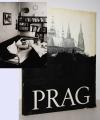 |
Seuss, Juergen und Günter Schindler. Prag. Ein Bildband. Mit einem Textbeitrag von Andreas Razumovsky. Frankfurt am Main, Büchergilde Gutenberg (1967). 4° (25,5 x 19,5 cm.). 15, 174, (2) S. mit ca. 140 Duotone-Tafeln. Orig.-Leinenband mit illustr. Schutzumschlag.
Heidtmann 18291. – Erste Ausgabe. – Mit 1 Orig.-Photographie von J. Seuss, Frauenakt „Interieur″ (Silbergelatine, 23 x 16,5 cm., rückseitig mit Stempel des Fotografen). – Erwarten Sie von diesem Bildband keine Sammlung schöner Ansichtspostkarten-Motive. Dieses Buch will Prag zeigen, wie es heute ist; es orientiert sich am Menschen, der in dieser Stadt lebt. Heute, das heißt nach deutscher Besetzung und zwanzig Jahren Volksdemokratie. Ist etwas geblieben von dem Charme der ‚tausendjährigen Stadt‘ der, ‚goldenen Stadt‘ oder was immer man sagte, um das Besondere dieser Stadt zu umreißen? Günter Schindler und Juergen Seuss haben versucht, die Fragen mit ihren Kameras zu beantworten. Beide sind den Liebhabern von Bildbänden der Büchergilde bekannt: der eine hat unseren Israel-Band, andere ‚Beat in Liverpool‘ fotografisch gestaltet. Das Ergebnis ihrer neuen fotografischen Exkursion: Prag hat trotz allem noch seinen Zauber bewahrt“ (Klappentext). – Schutzumschlag am Vorderdeckel mit kl. Randläsuren, sonst gut erhalten. Schlagwörter: Czech Republic, Czechoslovakia, Prag, Street photography, Tschechien, Tschechoslowakei |
160,-- |  |
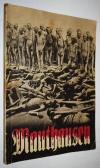 |
Rossmann, Zdenek (Book design). Mauthausen. (Vydavatel: Clenové illegálního výboru KSC v Mauthausenu. Fotografie: Fotosekce sekretariátu KSC Praha a z mauthausenského archivu). Praha, Fotosekce sekretariátu KSC Praha a z mauthausenského archivu (1946). 4° (29,3 x 20,7 cm.). [64] p. with numerous illustrations. Illustrated softcover.
Extremely rare early photographic documentation of “the largest Nazi concentration camp in the territory of Austria, the Ostmark, and, from 1942, the Alpen and Donau Reichsgaue. It was situated 20 kilometres east of Linz in Mauthausen and operated from 8 August 1938 until its closure following the liberation of its inmates by US troops on 5 May 1945. Around 200,000 people were imprisoned in Mauthausen concentration camp and its satellite camps, of whom more than 100,000 were killed. From 1947 onwards, a memorial and commemorative site of the Republic of Austria was established on the grounds of the former concentration camp; it was opened in 1949.“ (Wikipedia). – The photographs document the horrific conditions of life and death at the Mauthausen/Gusen concentration camp. – The typographical layout is created by Zdenek Rossmann (1905–1984), the Czech Bauhausler, avant-garde photographer and graphic designer and the publication was edited by the Members of the Committee of the Illegal Communist Party of Czechoslovakia in Mauthausen (Clenové illegálniho vyboru KSC v Mauthausenu). – „Der vieljährige Aufenthalt im Lager hat in uns das Verständnis für die Werte einer Verbrüderung der Völker vertieft. Treu diesen Idealen schwören wir, solidarisch und im gemeinsamen Einverständnis, den weiteren Kampf gegen den Imperialismus und nationale Verhetzung zu führen. So, wie die Welt durch die gemeinsame Anstrengung aller Völker von der Bedrohung durch die hitlerische Übermacht befreit wurde, so müssen wir diese erkämpfte Freiheit als das gemeinsame Gut aller Völker betrachten. Der Friede und die Freiheit sind die Garantien des Glücks der Völker, und der Aufbau der Welt auf neuen Grundlagen sozialer und nationaler Gerechtigkeit ist der einzige Weg zur friedlichen Zusammenarbeit der Staaten und Völker. Wir wollen nach erlangter Freiheit und nach Erkämpfung der Freiheit unserer Nationen die internationale Solidarität des Lagers in unserem Gedächtnis bewahren und daraus die Lehren ziehen: Wir werden einen gemeinsamen Weg beschreiten, den Weg der unteilbaren Freiheit aller Völker, den Weg der gegenseitigen Achtung, den Weg der Zusammenarbeit am großen Werk des Aufbaus einer neuen, für alle gerechten, freien Welt. Wir werden immer gedenken, mit welch großen blutigen Opfern aller Nationen diese neue Welt erkämpft wurde. Im Gedenken an das vergossene Blut aller Völker, im Gedenken an die Millionen, durch den Nazifaschismus ermordeten Brüder geloben wir, daß wir diesen Weg nie verlassen werden. Auf den sicheren Grundlagen internationaler Gemeinschaft wollen wir das schönste Denkmal, das wir den gefallenen Soldaten der Freiheit setzen können, errichten: DIE WELT DES FREIEN MENSCHEN. Wir wenden uns an die ganze Welt mit dem Ruf: Helft uns bei dieser Arbeit. Es lebe die internationale Solidarität! Es lebe die Freiheit!“ (Heinrich Dürmayer, „Mauthausen-Schwur“ am 16. Mai 1945). – “Our many years in the camp have deepened our understanding of the values of brotherhood amongst peoples. True to these ideals, we vow, in solidarity and by mutual agreement, to continue the struggle against imperialism and nationalist incitement. Just as the world was liberated from the threat of Hitler’s supremacy through the joint efforts of all peoples, so must we regard this hard-won freedom as the common heritage of all peoples. Peace and freedom are the guarantees of the peoples’ happiness, and the rebuilding of the world on new foundations of social and national justice is the only path to peaceful cooperation between states and peoples. Now that we have attained freedom and fought for the freedom of our nations, let us preserve in our memory the international solidarity of the Allied camp and learn the lessons from it: we shall tread a common path—the path of the indivisible freedom of all peoples, the path of mutual respect, the path of cooperation in the great task of building a new world that is just and free for all. We shall always remember the immense and bloody sacrifices made by all nations in the struggle to achieve this new world. In memory of the blood shed by all peoples, in memory of the millions of brothers murdered by Nazi-Fascism, we vow that we shall never stray from this path. On the secure foundations of the international community, we wish to build the most beautiful monument we can dedicate to the fallen soldiers of freedom: THE WORLD OF FREE PEOPLE. We call out to the whole world: Help us in this endeavour. Long live international solidarity! Long live freedom!” (Heinrich Dürmayer, “Mauthausen Oath”, 16 May 1945). – The cover is slightly rubbed and stained; there are some finger marks on parts of the lower white margin of the page; otherwise in good condition. Schlagwörter: Concentration camp, Czech Republic, Czechoslovakia, Holocaust, Konzentrationslager, Nationalsozialismus, Schoah, Tschechoslowakei |
1.200,-- | |
 |
Weingarten, Johann Jacob v. Extract der verneuerten Königl. Appellations-Instruction mit verschiedenen Annotatis, Kays. und Königl. Remissive allegirten auch etwelich erst new Allergnädigist ergangenen Rescripten. In Marginalibus angezogener Reichs-Hoff-Raths Ordnung, einen vollständigen Register, außgesetzten Taxen, Ferien und observirten Collegij Festis. Schlißlichen gefertiget zum Endt des Monaths Septembris. Sole Justitiae Signum ingresso. Prag, Johann Carl Gerzabek o. J. (1692). 8°. [2] Bl., 79, (25) S. Halbpergamentband des 20. Jahrhunderts mit schwarzgepr. Rückentitel.
Wurzbach, ÖBL LIV, 36 f. VD17 384:712259W. – J. J. v. Weingarten (1629-1707) war seit 1677 erster „Syndicus und zugleich Rath auf der Prager Kleinseite. 1678 erhielt er die Stelle eines deutschen Secretärs bei dem Appellationsgerichte auf dem Prager Schlosse. 1689 ward er zum Titularrathe daselbst ernannt und als solcher vom Kaiser beauftragt, den Codex Ferdinandeo-Leopoldinus auszuarbeiten, der auch 1701 im Druck erschien. 1693 erfolgte seine Einführung als wirklicher Appellationsrath, in welcher Eigenschaft er bis an sein Lebensende wirkte. In seinen letzten Jahren aber befand er sich mit seiner Familie in so mißlichen Vermögensumständen, daß er den Kaiser um ein Gnadengeld ansuchen mußte, welches ihm denn auch gewährt wurde. 1681 erhielt der verdiente Rechtsgelehrte von Kaiser Leopold I. den Adel, und 1683 wurde ihm der Sitz auf der böhmischen Ritterbank angewiesen. Die Zahl seiner Schriften ist so groß, daß sein Biograph Pelzel darüber bemerkt: „Wenn das Verdienst und die Größe eines Gelehrten nach der Menge und Größe der Werke, die er herausgibt, abgemessen werden sollte, so wäre Weingarten einer der größten Gelehrten, die Böhmen hervorgebracht hat“.“ (Wurzbach). – Einband etwas berieben, St.a.T., durchgehend teils stärker gebräunt und braunfleckig, sonst gut erhalten. Schlagwörter: Austriaca, Jura, Prag, Staatsrecht, Tschechoslowakei |
250,-- | |
 |
Prag – Kralovske hlavni mesto Praha. (Die königliche Hauptstadt Prag). Prag, Nakl. Obce Prazske 1911. 4°. [18] Bl. u. 30 mont. Tafeln sowie 10 Ansichtskarten in einem Umschlag am Rückendeckel. OHln. mit goldgepr. Jugendstil-Ornamentik.
Erweiterte Ausgabe des zuerst 1908 erschienenen schön ausgestatteten Ansichtenwerks, hier erstmals mit den Postkarten. – Mit Aufnahmen von Anton Bubenicek, Arnost Hofbauer, Vaclav Jansa, Adolf Kaspar, Julius Marak, Max Svabinsky, Jindr Tomec u.a. – Deckel etwas fleckig, sonst gut erhalten. Schlagwörter: Prag, Tschechien, Tschechoslowakei |
60,-- | |
 |
Lukas, Jan. Light and shade. (Preface by Jan Drda and Edwin Muir). Prague, Melantrich (1947). 4°. 63, (1) S., [1] Bl. mit 64 Tafeln in Heliogravure. OLn. mit illustr. OU.
Heiting, Czech and Slovak Photo Publications 281, 294. – Erste englische Ausgabe. – Erschien auch mit dem Titel „Land and People“. – „The photographer Jan Lukas, who had been a prominent member of the influential Association of Czech Amateur Photographers’ Club…, in the 1930s, and had worked for the Bat’a Film Studio in Zlin during the same period, contributed images for a large-format homage to Czech lands published in 1946 by Melantrich. Titeled Zeme a lidé, … Melantrich re-issued the volume with English text the following year under the title Land and People: Photographs of Czechoslovakia. It is perhaps the best of many photographic books of this era which directly celebrate the renewed spirit of the Czechoslovak nation and its culture“ (J. Steerman in Heiting S. 259). – Schutzumschlag mit leichten Gebrauchsspuren und rest. Randläsuren, sehr gutes sauberes Exemplar. Schlagwörter: Czechoslovakia, Tschechien, Tschechoslowakei |
180,-- | |
 |
Krejcar – Teige, Karel. Práce Jaromira Krejcara. Monografie staveb a projektu. Praha (Prag), Vaclav Petr (1932). Gr.-8°. 208 S. mit zahlr. Abb. u. Grundrissen. Moderner Leinenband mit mont. Orig.-Umschlag auf dem Vorder- u. Rückendeckel.
Dokumentations-Bibliothek VI, 696. Heiting, Czech and Slovac Photo Publikations 76, 45. – Erste Ausgabe der umfassenden Monographie über den bedeutendsten Vertreter des Neuen Bauens in der Tschecholslowakei. – Buchgestaltung: Karel Teige. – Der tschech. Architekt, Designer, Hochschulprofessor und Architekturtheoretiker Jaromír Krejcar (1895-1950) studierte 1918 bis 1921 bei Jan Kotera an der Akademie der Bildenden Künste Prag. Er war seit Mitte der 20er Jahre Mitglied der Avantgarde-Gruppe Devetsil und 1934-1935 am staatlichen Institut für die Stadt- und Investitionsplanung GIPROGOR in Moskau beschäftigt. Seine Entwürfe waren am Anfang stark von Le Corbusier und dem Konstruktivismus beeinflußt. – Der tschech. Kritiker, Kunsttheoretiker, Publizist und Künstler Karel Teige (1900-1951) beschäftigte sich kontinuierlich mit der Ästhetik und der Soziologie der Architektur und interessierte sich auch für die Fotografie und das Filmschaffen seiner Zeit. Am wichtigsten sind seine buchkünstlerischen Arbeiten und seine surrealistischen Fotomontagen und Collagen. – Einband und Vorsätze fachgerecht erneuert, sehr gutes sauberes Exemplar. Schlagwörter: Architecture, Architektur, Avantgarde, Tschechien, Tschechoslowakei |
400,-- | |
 |
Hipman, Vladimír. Práce je živá. Spredmluvou Jana Weniga. 1. vyd. Praha, Ceská Grafická Unie 1945. 4°. [96] Bl. mit 172 ganzs. Abb. Illustr. Orig.-Halbleinenband mit illustr. Schutzumschlag.
Auer 305. Heiting, Czech and Slovak Photo Publikations 276 f., 288. – Einzige Ausgabe. – Das Buch erschien in drei Einbandvarianten: dunkelbrauner Leineneinband und zwei Halbleinen-Ausgaben mit Deckeln in Olivgrün und marm. Hellbraun (wie hier). – Vladimir Hipman (1908-1976), „did his most important photographic work on the subjects of industrial and physical labour. He began collaborating with the Mining and Metallurgy Company (Banska a hutni spolecnost) in 1934 and in the ensuing decades took hundreds of photographs on the sites of the company’s different plants and workplaces. These images are representative of the strong New Objectivity and Constructivist movements. Hipman’s pre-war work culminated in an independent exhibition titled ‚Steel in Photography‘ (Ocel ve fotografii) in 1938 at the Museum of Decorative Arts in Prague, in which there are already signs of his experimenting with narrative arrangements of the photographs. This is something he later applied in his seminal book Prace je ziva (Work Is Alive; 1945), which sums up the characteristic attributes of pre-war photography, while also charting some of the new directions in which the field would set off in the 1950s. A restrained modernity and a realistic approach to portraiture characterise the photographs published in the book, and these qualities are clearly why Hipman’s work was well received in the late 1940s and early 1950s, as was the fact that he himself was regarded as the father of Socialist Realist industrial photography“ (M. Hola, A Fascination with Industry: The Photography of Vladimir Hipman between the 1930s and the 1950s). – Schutzumschlag stellenweise berieben und mit Randläsuren, papierbedingt etwas gebräunt, gutes Exemplar. Schlagwörter: Industrie-Photographie, Tschechien, Tschechoslowakei |
400,-- | |
 |
Illek & Paul, Karel Hájek, O. Stanek, K. Parik – Fierlinger, Z(denek), Václav Kopecky, B. Nemec u. a. Košický vládni Program. Program nové Ceskoslovenské vlády národni fronty cechu a slovaku. Prijaty na prvé schuzi vlády dne 1. dubna 1945 v Kosicich Praha (Prag), Svet v Obrazech (1945). 4°. [44] Bl. mit 18 (17 ganzs.) Foto-Montagen, meist in Rot und Schwarz. Farbig illustr. Orig.-Kartonumschlag.
Heiting, Czech and Slovak Photo Publikations 266. – Orig.-Ausgabe des seltenen Propagandawerks der neuen tschechischen Regierung anlässlich der Beendigung der nationalsozialistischen Besetzung durch deutsche Truppen und des deutschen Protektorats Böhmen und Mähren. „Bereits am 21. Oktober 1938 hatte Hitler die Wehrmacht angewiesen, sich auf die „Erledigung der Rest-Tschechei“ vorzubereiten. Nach einem deutschen Ultimatum erklärte sich die Slowakei am 14. März 1939 für unabhängig (Slowakischer Staat). Am nächsten Tag erreichte Hitler durch die Androhung einer Bombardierung Prags, dass der bisherige tschechoslowakische Staatspräsident Emil Hácha sein Land „dem Schutz des Deutschen Reiches“ unterstellte“ (Wikipedia). – Die interessanten an J. Heartfield oder Rodtschenko erinnernden Fotomontagen wurden unter Verwendung von Aufnahmen von Alexandr Paul (1907-1981) und Frantisek Illek (1904-1969), (Illek & Paul), Karel Hájek (1900-1978), O. Stanek, K. Parik und Pressefotos gestaltet. – Rücken u. vord. Gelenk etwas berieben, sehr gutes Exemplar. – Original edition of the rare propaganda work of the new Czech government on the occasion of the end of the National Socialist occupation by German troops and the German Protectorate of Bohemia and Moravia. “On October 21, 1938, Hitler had already instructed the Wehrmacht to prepare for the “liquidation of the rest of Czechoslovakia”. Following a German ultimatum, Slovakia declared itself independent (Slovakian state) on March 14, 1939. The next day, by threatening to bomb Prague, Hitler succeeded in getting the previous Czechoslovak President Emil Hácha to place his country “under the protection of the German Reich” (Wikipedia). – The interesting photomontages, reminiscent of J. Heartfield or Rodchenko, were created using photographs by Alexandr Paul (1907-1981) and Frantisek Illek (1904-1969), (Illek & Paul), Karel Hájek (1900-1978), O. Stanek, K. Parik and press photos. – Spine and front hinge somewhat rubbed, very good copy. Schlagwörter: Fotomontage, Nationalsozialismus, Propaganda, Tschechoslowakei, Weltkrieg <1939-1945> |
650,-- | |
|
Einträge 1–8 von 8
Zurück · Vor
|
|||
| Seite: 1 |