



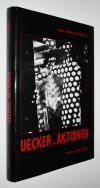

Magazines
Die Liste enthält 18 Einträge. Suchergebnisse löschen und Gesamtbestand anzeigen.
| Abbildung |
Beschreibung Gesamte Buchaufnahme |
Preis EUR |
|
|---|---|---|---|
 |
(Schmal, Adolf und Felix Sterne, Hrsg.). Allgemeine Automobil-Zeitung (AAZ). Illustriertes, wöchentlich (jeden Mittwoch) erscheinendes Fachblatt für Automobilismus. Officielle Mittheilungen des Deutschen (und) Oesterreichischen Automobil-Club. II. Jahrgang, Band I und II, Nr. 1-52. (Und): III. Jahrgang, Band I, Nr. 1-26. 3 Bände. Berlin und Wien, Deutscher und Oesterreichischer Automobil-Club 1901-1902. 4° (29 x 22,5 cm.). Mit zahlreichen Abbildungen. Halblederbände der Zeit mit goldgepr. Rückentiteln und Linienvergoldung.
Vollständiger zweiter Jahrgang und erster Band des dritten Jahrgangs der bedeutenden ersten Automobil-Zeitschrift. Die österreichische Ausgabe erschien wöchentlich bis 1938; die deutsche Ausgabe stellte erst 1943 ihr Erscheinen ein. – Am 10. März 1901 berichtete die AAZ ausführlich über die spektakulären Testfahrten eines neuartigen Motorschlittens auf den verschneiten Straßen Nürnbergs. Das vom Ingenieur Maurer (Nürnberger Motorfahrzeug-Fabrik „Union“) entwickelte Gefährt besaß Kufen statt Vorderrädern und bewies, dass Automobile auch im tiefsten Winter einsatzbereit sein können. Außerdem enthält der zweite Jahrgang interessante Berichte über das erste moderne Automobil, den Mercedes 35 PS und dessen wegweisenden Erfolgen bei der Rennwoche in Nizza. Mit seinem niedrigen Schwerpunkt, dem leichten Pressstahlrahmen und dem revolutionären Bienenwabenkühler setzte das Fahrzeug Maßstäbe, die das Profildesign von Autos weltweit für Jahrzehnte veränderten. Die Fernfahrt Paris–Berlin im Juni 1901 war das Medienereignis des Jahres. Die AAZ begleitete das prestigeträchtige Event, bei dem Henri Fournier auf einem Mors-Rennwagen siegte, mit dramatischen Berichten über die Etappen, die Staubentwicklung und die Begeisterung der Massen entlang der Strecke. Im ersten Halbjahresband 1902 berichtet die AAZ über die Fernfahrt Wien–Paris im Juni 1902. Das Rennen gilt als historischer Meilenstein, da hier erstmals die leichten, agilen französischen Wagen (wie der Renault von Marcel Renault) gegen die schweren, PS-starken Boliden gewannen. Im Frühjahr 1902 widmete sich die Zeitung in mehreren Artikeln intensiv dem Vergleich von Dampfwagen und Benzinautomobilen. Während in den USA Dampfwagen (wie jene von Stanley oder White) extrem populär waren, analysierte die AAZ präzise, warum sich der Verbrennungsmotor in Europa durchsetzte. – Der österreichische Fecht- und Radsportler und Journalist Adolf Schmal (1872-1919) gründete zusammen mit dem Journalist und Verleger Felix Sterne (1855-1933) am 7. Januar 1900 die AAZ. „Sterne fungierte als Chefredakteur, Schmal als „rasender Reporter“. In dieser Funktion besuchte Schmal Auto-Salons in ganz Europa, um sich über die neuesten technischen Entwicklungen zu informieren. Er engagierte sich für die Akzeptanz des Autos in der Bevölkerung, die den neuen Fahrzeugen zunächst skeptisch gegenüberstand. 1901 strengte er nach einem Unfall mit einem Pferdegespann einen Musterprozess an, um die grundsätzliche Verantwortlichkeit von Autofahrern zu klären: Obwohl er die Hupe betätigt hatte, war es zum Zusammenstoß gekommen. 1902 bestritt Adolf Schmal mit einem Motorrad eine „Tausend-Kilometer-Fahrt“ durch Österreich. Er prophezeite, dass aus jedem Radfahrer ein Motorradfahrer werden würde, sobald er das Geld habe, eines zu kaufen. Er regte Alpen-Tourenfahrten an, die vom Österreichischen Touring-Club organisiert wurden und sich zu den bedeutendsten Wettbewerben für Tourenwagen entwickelten“ (Wikipedia). – Alle Hefte auch mit teils ganzseitigen Werbeanzeigen von Auto-Herstellern und Zulieferer. – Rücken etwas berieben, sonst sehr gut erhalten. Schlagwörter: Automobil-/Motorradliteratur, Automobile industry and trade, Automobiles, Automobilsport, Automobiltechnik, Magazines, Zeitschriften |
1.400,-- |  |
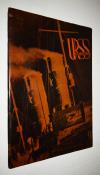 |
Lissitzky – Pjatakov, G(eorgi Leonidowitsch, Editor in Chief). URSS en construction. La seizième année de la Revolution. No. 9, Septembre 1933. Moscou, State Publishing House of the RSFSR 1933. Folio (43 x 30 cm.). 27 feuilles comportant de nombreuses photographies d’El Lissitzky. Couverture illustrée en carton de l’éditeur.
Hellyer 860. Karasik/Heiting 17 ff. Parr/Badger I, 148 f. Rowell/Wye 242 f. – L’un des numéros les plus importants de la quatrième année de parution du magazine de propagande soviétique. La revue paraissait tous les mois de 1930 à 1949 en cinq langues (russe, anglais, français, espagnol et allemand). Chaque numéro était consacré à un thème différent, comme la production alimentaire et industrielle, la République de Géorgie, le cinéma soviétique et les élections. – „In the early 1930s photo-reportage became the foundation of the magazine USSR in Construction that „was created as a publication for the popularization of large-scale construction projects by photographic means. But as the magazine grew and developed, the task of ‘popularization’ evolved into that of presenting Socialist reality with dramatic artistry.“ (L. Mezhericher, „Na putiakh k sotsialisticheskomu stiliu fotografii” [“On the way to a Socialist style of photography“], No. 2, p. 14). Well known Soviet designers and photographers worked on USSR in Construction. The industrial spirit of the magazine, expressed in compositionally sharp subjects, panoramas and dynamic shots evokes admiration even today and conveys the atmosphere of enthusiasm that carried along not just the photographers, but also the builders themselves. The creative scale of the construction engendered the photographic epic, a style of monumental artistic photography. The founders of this most successful and high-quality periodical were Gorky and Koltsov“ (Mikhail Karasik). – Très bel exemplaire. Schlagwörter: Avantgarde, Magazines, Propaganda, Soviet Union, Zeitschriften |
800,-- | |
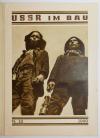 |
Pjatakov, G(eorgi Leonidowitsch, Editor in Chief). USSR im Bau. Illustrierte Monatsschrift. (Erster Jahrgang) 1930. 9 Hefte (Heft 5/6, 7/8 und 10/11 als Doppel-Nr.). Moskau, State Publishing House of the RSFSR 1930. Folio (43 x 30 cm.). Mit zahlreichen Abbildungen. Orig.-Kartonumschläge.
Hellyer 860. Karasik/Heiting 17 ff. Parr/Badger I, 148 f. Rowell/Wye 242 f. – Erster Jahrgang des wichtigsten sowjetischen Propagandamagazins. Die Zeitscchrift erschien von 1930 bis 1949 monatlich in fünf Sprachen (Russisch, Englisch, Französisch, Spanisch und Deutsch). Jede Ausgabe war einem anderen Thema gewidmet, beispielsweise Lebensmittel- und Industrieproduktion, der Republik Georgien, dem sowjetischen Kino und Wahlen. – „In the early 1930s photo-reportage became the foundation of the magazine USSR in Construction that „was created as a publication for the popularization of large-scale construction projects by photographic means. But as the magazine grew and developed, the task of ‘popularization’ evolved into that of presenting Socialist reality with dramatic artistry.“ (L. Mezhericher, „Na putiakh k sotsialisticheskomu stiliu fotografii” [“On the way to a Socialist style of photography“], No. 2, p. 14). Well known Soviet designers and photographers worked on USSR in Construction. The industrial spirit of the magazine, expressed in compositionally sharp subjects, panoramas and dynamic shots evokes admiration even today and conveys the atmosphere of enthusiasm that carried along not just the photographers, but also the builders themselves. The creative scale of the construction engendered the photographic epic, a style of monumental artistic photography. The founders of this most successful and high-quality periodical were Gorky and Koltsov“ (Mikhail Karasik). – Umschläge teils etwas fleckig und am Rücken berieben, 3 Hefte mit Fehlstellen am Rücken, sonst gut erhalten. Schlagwörter: Avantgarde, Magazines, Propaganda, Soviet Union, Zeitschriften |
2.000,-- | |
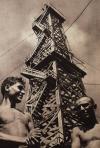 |
Pjatakov, G(eorgi Leonidowitsch, Editor in Chief). USSR im Bau. Illustrierte Monatsschrift. (Zweiter Jahrgang) 1931. 10 Hefte (Heft 1/2 und 7/8 als Doppel-Nr.). Moskau, State Publishing House of the RSFSR 1931. Folio (43 x 30 cm.). Mit zahlreichen Abbildungen. Orig.-Kartonumschläge (Heft 12 mit illustriertem Umschlag von John Heartfield).
Hellyer 860. Karasik/Heiting 17 ff. Parr/Badger I, 148 f. Rowell/Wye 242 f. – Zweiter Jahrgang des wichtigsten sowjetischen Propagandamagazins. Die Zeitscchrift erschien von 1930 bis 1949 monatlich in fünf Sprachen (Russisch, Englisch, Französisch, Spanisch und Deutsch). Jede Ausgabe war einem anderen Thema gewidmet, beispielsweise Lebensmittel- und Industrieproduktion, der Republik Georgien, dem sowjetischen Kino und Wahlen. – „In the early 1930s photo-reportage became the foundation of the magazine USSR in Construction that „was created as a publication for the popularization of large-scale construction projects by photographic means. But as the magazine grew and developed, the task of ‘popularization’ evolved into that of presenting Socialist reality with dramatic artistry.“ (L. Mezhericher, „Na putiakh k sotsialisticheskomu stiliu fotografii” [“On the way to a Socialist style of photography“], No. 2, p. 14). Well known Soviet designers and photographers worked on USSR in Construction. The industrial spirit of the magazine, expressed in compositionally sharp subjects, panoramas and dynamic shots evokes admiration even today and conveys the atmosphere of enthusiasm that carried along not just the photographers, but also the builders themselves. The creative scale of the construction engendered the photographic epic, a style of monumental artistic photography. The founders of this most successful and high-quality periodical were Gorky and Koltsov“ (Mikhail Karasik). – Umschlag von Heft 1/2 etwas angestaubt, sonst sehr schön erhalten. Schlagwörter: Avantgarde, Magazines, Propaganda, Soviet Union, Zeitschriften |
2.400,-- | |
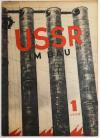 |
Pjatakov, G(eorgi Leonidowitsch, Editor in Chief). USSR im Bau. Illustrierte Monatsschrift. (Dritter Jahrgang) 1932. 12 Hefte. Moskau, State Publishing House of the RSFSR 1932. Folio (43 x 30 cm.). Mit zahlreichen Abbildungen. Orig.-Kartonumschläge (Heft 1 mit illustr. Umschlag von N. Troschin).
Hellyer 860. Karasik/Heiting 17 ff. Parr/Badger I, 148 f. Rowell/Wye 242 f. – Dritter Jahrgang des wichtigsten sowjetischen Propagandamagazins. Die Zeitscchrift erschien von 1930 bis 1949 monatlich in fünf Sprachen (Russisch, Englisch, Französisch, Spanisch und Deutsch). Jede Ausgabe war einem anderen Thema gewidmet, beispielsweise Lebensmittel- und Industrieproduktion, der Republik Georgien, dem sowjetischen Kino und Wahlen. – „In the early 1930s photo-reportage became the foundation of the magazine USSR in Construction that „was created as a publication for the popularization of large-scale construction projects by photographic means. But as the magazine grew and developed, the task of ‘popularization’ evolved into that of presenting Socialist reality with dramatic artistry.“ (L. Mezhericher, „Na putiakh k sotsialisticheskomu stiliu fotografii” [“On the way to a Socialist style of photography“], No. 2, p. 14). Well known Soviet designers and photographers worked on USSR in Construction. The industrial spirit of the magazine, expressed in compositionally sharp subjects, panoramas and dynamic shots evokes admiration even today and conveys the atmosphere of enthusiasm that carried along not just the photographers, but also the builders themselves. The creative scale of the construction engendered the photographic epic, a style of monumental artistic photography. The founders of this most successful and high-quality periodical were Gorky and Koltsov“ (Mikhail Karasik). – Umschläge etwas berieben, alle Hefte sehr schön erhalten. Schlagwörter: Avantgarde, Magazines, Propaganda, Soviet Union, Zeitschriften |
3.200,-- | |
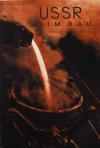 |
Pjatakov, G(eorgi Leonidowitsch, Editor in Chief). USSR im Bau. Illustrierte Monatsschrift. (Vierter Jahrgang) 1933. 12 Hefte. Moskau, State Publishing House of the RSFSR 1933. Folio (43 x 30 cm.). Mit zahlreichen Abbildungen, teils auf gefalteten Tafeln. Orig.-Kartonumschläge (Heft 2, 5, 9 und 12 mit illustr. Umschlägen von El Lissitzky und A. Rodchenko u. a.).
Hellyer 860. Karasik/Heiting 17 ff. Parr/Badger I, 148 f. Rowell/Wye 242 f. – Vierter Jahrgang des wichtigsten sowjetischen Propagandamagazins. Mit zwei von El Lissitzky und einer von A. Rodchenko gestalteten Nummern. Die Zeitschrift erschien von 1930 bis 1949 monatlich in fünf Sprachen (Russisch, Englisch, Französisch, Spanisch und Deutsch). Jede Ausgabe war einem anderen Thema gewidmet, beispielsweise Lebensmittel- und Industrieproduktion, der Republik Georgien, dem sowjetischen Kino und Wahlen. – „In the early 1930s photo-reportage became the foundation of the magazine USSR in Construction that „was created as a publication for the popularization of large-scale construction projects by photographic means. But as the magazine grew and developed, the task of ‘popularization’ evolved into that of presenting Socialist reality with dramatic artistry.“ (L. Mezhericher, „Na putiakh k sotsialisticheskomu stiliu fotografii” [“On the way to a Socialist style of photography“], No. 2, p. 14). Well known Soviet designers and photographers worked on USSR in Construction. The industrial spirit of the magazine, expressed in compositionally sharp subjects, panoramas and dynamic shots evokes admiration even today and conveys the atmosphere of enthusiasm that carried along not just the photographers, but also the builders themselves. The creative scale of the construction engendered the photographic epic, a style of monumental artistic photography. The founders of this most successful and high-quality periodical were Gorky and Koltsov“ (Mikhail Karasik). – Umschläge teils leicht berieben und etwas angestaubt, außergewöhnlich schön erhalten. Schlagwörter: Avantgarde, Magazines, Propaganda, Soviet Union, Zeitschriften |
3.400,-- | |
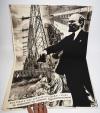 |
Pjatakov, G(eorgi Leonidowitsch, Editor in Chief). USSR im Bau. Illustrierte Monatsschrift. (Fünfter Jahrgang) 1934. 11 Hefte (Heft 7/8 als Doppelheft). Moskau, State Publishing House of the RSFSR 1934. Folio (43 x 30 cm.). Mit zahlreichen Abbildungen. Orig.-Kartonumschläge (Heft 1, 3, 6, 7/8 und 11 mit illustr. Umschlägen von I. Urasow (1), N. Troschin und El Lissitzki (6)).
Hellyer 860. Karasik/Heiting 17 ff. Parr/Badger I, 148 f. Rowell/Wye 242 f. – Fünfter Jahrgang des wichtigsten sowjetischen Propagandamagazins. Die Zeitschrift erschien von 1930 bis 1949 monatlich in fünf Sprachen (Russisch, Englisch, Französisch, Spanisch und Deutsch). Jede Ausgabe war einem anderen Thema gewidmet, beispielsweise Lebensmittel- und Industrieproduktion, der Republik Georgien, dem sowjetischen Kino und Wahlen. – „In the early 1930s photo-reportage became the foundation of the magazine USSR in Construction that „was created as a publication for the popularization of large-scale construction projects by photographic means. But as the magazine grew and developed, the task of ‘popularization’ evolved into that of presenting Socialist reality with dramatic artistry.“ (L. Mezhericher, „Na putiakh k sotsialisticheskomu stiliu fotografii” [“On the way to a Socialist style of photography“], No. 2, p. 14). Well known Soviet designers and photographers worked on USSR in Construction. The industrial spirit of the magazine, expressed in compositionally sharp subjects, panoramas and dynamic shots evokes admiration even today and conveys the atmosphere of enthusiasm that carried along not just the photographers, but also the builders themselves. The creative scale of the construction engendered the photographic epic, a style of monumental artistic photography. The founders of this most successful and high-quality periodical were Gorky and Koltsov“ (Mikhail Karasik). – Umschläge etwas berieben, alle Hefte sehr schön erhalten. Schlagwörter: Avantgarde, Magazines, Propaganda, Soviet Union, Zeitschriften |
2.800,-- | |
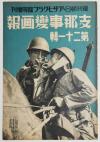 |
Kawabata, Ryushi (Cover art). Weekly Asahi (Photo Weekly). 3 special issues, November 22, 1934 „China affairs change report part 8“; December 17, 1938 „China affairs change 25th report“; August 25, 1942 „China affairs change report 21st“. Tokyo, Asahi Shimbun Company 1937-1942. Folio (39 x 26,5 cm.). 34, (2) pages each, with numerous illustrations based on photographs by Kageyama Masao, Otsuka Gen, Hashida Ken, Tabata Masa, Ueda Mutsuo. The publisher’s illustrated paper covers.
See Heiting/Ryuichi 99 ff. (″Shinajihen shashin zenshu, jo: Hokushi sensen“; Second Sino-Japanese War. Photographs Collection, Vol 1-6“ Tokyo 1937). – A rare Japanese weekly newspaper featuring photographic records from the Second Sino-Japanese War. – „On 7 July 1937, an incident occurred at the Marco Polo Bridge, during which Japanese and Chinese soldiers exchanged fire. Whether this incident was provoked by Japan is a matter of debate. This incident marked the start of the Second Sino-Japanese War. The Japanese had expected a swift victory, but the Second Battle of Shanghai lasted unexpectedly long and claimed numerous casualties. Around 200,000 Japanese and an unknown number of Chinese soldiers were embroiled in fierce street fighting. Casualties were very high on both sides; on the Kuomintang side, they are estimated at around one third of the soldiers fit for combat. Japan was not able to secure victory until mid-November, when the Japanese 10th Army landed in Hangzhou Bay and threatened to encircle the Chinese troops. … On 9 December 1941, China declared war on Germany, Italy and Japan. Until then, China had refrained from declaring war because, under international law, this would have allowed Japan to impose a blockade on all Chinese ports, thereby cutting off Chinese supplies by sea, and partly because an official declaration of war would have jeopardised American support due to US neutrality laws. The puppet regime (Reorganised Government of the Republic of China) installed by the Japanese in Nanjing under Wang Jingwei, in turn, declared war on the USA and the United Kingdom in 1943. In 1944, the Japanese went on the offensive once more and established a fragile land link between their conquered territories in northern and southern China“ (Wikipedia). – All issues are in very good condition. Schlagwörter: Documentary photography, Dokumentarfotografie, Dokumentarphotographie, Japan, Magazines, Second Sino-Japanese War, World War, 1939-1945, Zeitschriften |
450,-- | |
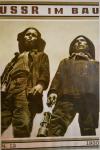 |
Pjatakov, G(eorgi Leonidowitsch, Editor in Chief). USSR im Bau. Illustrierte Monatsschrift. (Erster Jahrgang) 1930. 9 Hefte (Heft 5/6, 7/8 und 10/11 als Doppel-Nr.) in 1 Band. Moskau, State Publishing House of the RSFSR 1930. Folio (43 x 30 cm.). Mit zahlreichen Abbildungen. Halbleinenband der Zeit mit goldgepr. Rückenschild (Orig.-Umschläge beigebunden).
Hellyer 860. Karasik/Heiting 17 ff. Rowell/Wye 242 f. – Erster Jahrgang des wichtigsten sowjetischen Propagandamagazins. Die Zeitscchrift erschien von 1930 bis 1949 monatlich in fünf Sprachen (Russisch, Englisch, Französisch, Spanisch und Deutsch). Jede Ausgabe war einem anderen Thema gewidmet, beispielsweise Lebensmittel- und Industrieproduktion, der Republik Georgien, dem sowjetischen Kino und Wahlen. – „In the early 1930s photo-reportage became the foundation of the magazine USSR in Construction that „was created as a publication for the popularization of large-scale construction projects by photographic means. But as the magazine grew and developed, the task of ‘popularization’ evolved into that of presenting Socialist reality with dramatic artistry.“ (L. Mezhericher, „Na putiakh k sotsialisticheskomu stiliu fotografii” [“On the way to a Socialist style of photography“], No. 2, p. 14). Well known Soviet designers and photographers worked on USSR in Construction. The industrial spirit of the magazine, expressed in compositionally sharp subjects, panoramas and dynamic shots evokes admiration even today and conveys the atmosphere of enthusiasm that carried along not just the photographers, but also the builders themselves. The creative scale of the construction engendered the photographic epic, a style of monumental artistic photography. The founders of this most successful and high-quality periodical were Gorky and Koltsov“ (Mikhail Karasik). – Umschläge teils etwas fleckig, Umschläge von Heft 4-12 mit kleinen Abriebstellen im Rand, Heft 9 bis 12 mit Feuchtigkeitsspuren, teils etwas verfärbt, insgesamt noch ordendliches Exemplar. Schlagwörter: Avantgarde, Magazines, Propaganda, Soviet Union, Zeitschriften |
950,-- | |
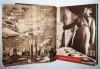 |
Pjatakov, G(eorgi Leonidowitsch, Editor in Chief). USSR im Bau. Illustrierte Monatsschrift. (Vierter Jahrgang) 1933. 12 Hefte in 1 Band. Moskau, State Publishing House of the RSFSR 1933. Folio (43 x 30 cm.). Mit zahlreichen Abbildungen, teils auf gefalteten Tafeln.. Halbleinenband der Zeit mit goldgepr. Rückenschild (Orig.-Umschläge beigebunden).
Hellyer 860. Karasik/Heiting 17 ff. Rowell/Wye 242 f. – Vierter Jahrgang des wichtigsten sowjetischen Propagandamagazins. Mit zwei von El Lissitzky und einer von A. Rodchenko gestalteten Nummern. Die Zeitschrift erschien von 1930 bis 1949 monatlich in fünf Sprachen (Russisch, Englisch, Französisch, Spanisch und Deutsch). Jede Ausgabe war einem anderen Thema gewidmet, beispielsweise Lebensmittel- und Industrieproduktion, der Republik Georgien, dem sowjetischen Kino und Wahlen. – „In the early 1930s photo-reportage became the foundation of the magazine USSR in Construction that „was created as a publication for the popularization of large-scale construction projects by photographic means. But as the magazine grew and developed, the task of ‘popularization’ evolved into that of presenting Socialist reality with dramatic artistry.“ (L. Mezhericher, „Na putiakh k sotsialisticheskomu stiliu fotografii” [“On the way to a Socialist style of photography“], No. 2, p. 14). Well known Soviet designers and photographers worked on USSR in Construction. The industrial spirit of the magazine, expressed in compositionally sharp subjects, panoramas and dynamic shots evokes admiration even today and conveys the atmosphere of enthusiasm that carried along not just the photographers, but also the builders themselves. The creative scale of the construction engendered the photographic epic, a style of monumental artistic photography. The founders of this most successful and high-quality periodical were Gorky and Koltsov“ (Mikhail Karasik). – Umschläge teils etwas berieben, sonst von leichten Gebrauchs- und Altersspuren abgesehen sehr gut erhalten. Schlagwörter: Avantgarde, Magazines, Propaganda, Soviet Union, Zeitschriften |
3.200,-- | |
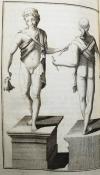 |
(Gottsched, Johann Christoph). Das Neueste aus der Anmuthigen Gelehrsamkeit. Jänner 1751 (bis) Christmonat 1751. 12 Hefte in 1 Band. Leipzig, Bernhard Christoph Breitkopf 1751. 8°. 912 S., [8] Bl. mit 12 (1 gefalt., 1 doppelblattgr.) Kupfertafeln. Halblederband der Zeit.
Diesch 630. Kirchner, Grundlagen 1030. Seebaß/Edelmann I, 332. – Vollständiger erster Jahrgang der kritischen Barock-Zeitschrift; herausgeben von J. G. Gottsched (1700-1766), der auch die meisten Artikel selbst verfasste. Die Zeitschrift erschien bis 1762. – „Die in der Mitte des 18. Jhdts. erschienenen literarischen Journale spiegeln die großen Spannungen und den sich vorbereitenden politischen und kulturellen Umbruch wieder. Die Auseinandersetzungen zwischen Gottsched und den Schweizern Bodmer und Breitinger auf dem Gebiete der dichterischen Ästhetik waren mehr als ein Professorenstreit, hier standen sich zwei Welten gegenüber, und eine neue Epoche kündigt sich an“ (Kirchner, Das deutsche Zeitungswesen S. 149). – Die Kupfertafeln zeigen „Ein Stück des abnehmenden Monds“, das „Leichengerüste des franz. Marschalls Graf Moritzens von Sachsen“, „Abbildung eines silbernen Schildes Hanibals, so man in Dauphiné gefunden“, Münzen und anderes. – Rücken und Deckel stellenweise mit Abriebstellen, sonst sehr gut erhalten. Schlagwörter: Barockliteratur, Magazines, Zeitschriften |
320,-- | |
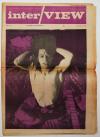 |
Warhol, Andy, Paul Morrissey, Gerard Malanga and John Wilcock (editors). Inter/View (Interview). A monthly film journal. Vol. 1, No. 2. (Staff photographer: Jed Johnston). New York, Poetry on Film Inc. (1969). Folio (41 x 28,5 cm.). 8 double pages with numerous illustrations. Illustrated original paper cover.
Very scarce second issue of the legendary magazine. – Table of contents: 3 Wheeler Dixon: Mick Jagger in “Performance“ Godard’s “One Plus One” and The Dave Clark Memorial and The Dave Clark 5 Memorial – 4 Robert Weiner: The 7th New York Film Festival / reviews – 5 Lite Elisu: Susan Sontag/interview – 6 Robert Weiner: Le Grande Dame of the NY Film Festival / interview – 7 Robert Weiner: Moses Ginsberg/interview – 8 Ann Pagina: „Hell’s Angels „69“/review – 9 – Dotson Rader: The Cowboy as Hustler in „Midnight Cowboy“ – 10 Soren Agenoux: Soren’s Column – 12 Donald Chase: “The Rain People” / review – 14 Viva: -Shelly Winters at the New York Film Festival screening of Olmi’s „One Fine Day“ / interview – 15 John Gruen: Roman Polanski / Interview – 16 Taylor Mead: „Lion’s Love“ / review – 17 Ondine: “DeSade” / review Dion McGregor: The Starlet @ MGM Robert Feiden: „The Sterile Cuckoo“ / review Frank Levy: Butch Cassidy/review – 18 William Terry Ork: Piero Heliczer, film-maker / interview – 19 Lil Picard inter/views Lil Picard – 21 David Dawdy: How to Make a Movie – 22 Robert Weiner: „Z“, „De Sade“, „The Secret of Santa Vittoria”, 1. Cuck Thraa “The Rattlo of Puitoin“ Sterile Cuckoo“, „Three“, „The Battle of Britain”, “Two Gentlemen Sharing”, “The Royal Hunt of the Sun“ / reviews – 24 Kenward Elmslie: Time Step Ode for Busby Berkely / poem – Gerard Malanga: Notes for Joanna Shimkus / poem Bill Knott (1940-1966 :) Poem (Failing) In (Adoration Of) Ultra(Violet) . – „In 1965, pop artist Andy Warhol announced his retirement from painting to focus on filmmaking. After he survived an assassination attempt in 1968, he began to concentrate on building a business enterprise.[5] When Warhol tried to obtain press permits for the New York Film Festival, he was denied. Therefore, having a formal method for obtaining press passes was one of the reasons he founded inter/VIEW: A Monthly Film Journal with British journalist John Wilcock in 1969“ (Wikipedia). – „I felt there was a need for an easygoing, conversational magazine,… Every other paper is full of bad news, but we publish only good“ (Andy Warhol). – Folded horizontally and browned due to the paper, otherwise in good condition apart from slight signs of wear and age. Schlagwörter: Film, Film history, Filmgeschichte, Jagger, Mick, Magazines, Photographie, Pop-art, Pop-Kultur, Rolling Stones, Underground, Zeitschriften |
300,-- | |
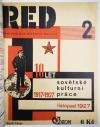 |
Teige, Karel. ReD. Revue Svazu moderni kultury „Devetsil“ – mesicnik pro moderni kulturu. Rocnik I (1927-1928). – Rocnik II (1928-1929). – Rocnik III (1929-1930). 30 issues in 3 volumes. Praha, Jan Fromek, Odeon 1927-1930 Gr.-8° (23 x 18 cm.). 360 S., [2] Bl.; [1] Bl., 324 S., [2] Bl.; 315 S. mit zahlr. Abbildungen. Orig.-Leinenband (Band II) und Halbleinenbände der Zeit mit goldgepr. Rückentiteln (28 von 29 Orig.-Umschläge beigebunden).
Bolliger, Dokumentations-Bibliothek VI, 810. Heiting, Czech and Slovak Photo Publications 1918-1989 12. Lang, Konstruktivismus und Buchkunst 72. – Vollständige Folge der „bedeutenden tschechischen avantgardistischen Zeitschrift Karel Teiges für Architektur, Film, Literatur, Malerei, Photographie, Theater etc. Texte und Abbildungen von praktisch allen bedeutenden Architekten, Künstlern und Schriftstellern der Moderne, darunter Albers, Apollinaire, Arp, Baumeister, Biebl, Boccioni, Breuer, Carrà, Chagall, Chirico, Delaunay, Albers, Apomat, nið, Baumeister, Biebl, Boccioni, Breuer, Carra, Chagall, Chirico, Delaunay, Döblin, van Doesburg, Domela, Max Ernst, Gabo, A. Giacometti, Gleizes, Gris, Gropius, Grosz, Kandinsky, Kassák, Klee, Kupka, Lautréamont, Le Corbusier, Léger, Lissitzky, Malewitsch, Marinetti, Miro, Moholy-Nagy, Mondrian, Nezval, Ozenfant, Picasso, Man Ray, Russolo, Sant’Elia, Schwitters, Seuphor, Severini, Mart Stam, Tatlin, Teige, Tschichold, Tzara, Vordemberge-Gildewart u.a. Sonderhefte über Apollinaire, Architektur und Soziologie, Bauhaus, Film-Photo und Typographie, Befreites Theater, Sowietische Kultur etc. Alle Hefte, inklusive Reklameseiten von Karel Teige einheitlich typographisch gestaltet. Reklameteil und sämtliche, zum Teil mehrfarbigen Karel Teige einheitlich typographisch gestaltet. Reklameteil und sämtliche, zum Teil mehrfarbigen Originalumschläge, viele mit Collagen und Photomontagen von Teige, beigebunden. Die meisten Originalumschläge, viele mit Collagen und Photomontagen von Teige, beigebunden. Die meisten Texte in tschechischer Sprache. Hervorragendes Dokument der tschechischen und internationalen Avantgarde…“ (Hans Bolliger). – Nr. 6/7 im Jahrgang 1930 als Doppelheft erschienen, Umschlag von Nr. 9 im Jahrgang 1930 nicht beigebunden, nur vereinzelt geringfügig fleckig, sonst sehr gut erhalten. Schlagwörter: Architecture, Architektur, Avantgarde, Bauhaus, Literatur, Magazines, Photographie, Photography, Zeitschriften |
6.500,-- | |
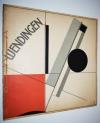 |
Lissitzky – Wijdeveld, H. Zh. (Ed.). Wendingen. (No.) 11 (Special issue: Frank Lloyd Wright). Amsterdam 1921. 4° (33,5 x 33,5 cm). 38 p. with 22 partly full-page illustrations. Colour illustrated original cardboard cover (bound as a block book and fastened with raffia cord).
Heiting, Dutch Photo Publications S. 62 ff. Katalog Kurt Schwitters Merzgebiete, S. 142 (mit farb. Abb.). Lissitzky-Küppers Abb. 70. Nisbet 1922/15. Rowell/Wye 346 (mit Abb. S. 196). – One of seven issues of the art and architecture magazine dedicated to Frank Lloyd Wright, featuring the famous constructivist colour lithograph by El Lissitzky, which ranks among his major works in terms of book design. – Text by H. P. Berlage. – „Each issue had six plates… The goal was to illustrate the current developments in the arts as related to architecture. This was made possible by photolithography. This new technique avoided the necessity of copying images first onto lithographic stones by hand, thus saving time. Another big advantage was that the plates would show reality. However, the reproduction of photo’s required special quality, and thus costlier, paper to print on as otherwise the ink would not dry quickly enough and might blur the image. … From 1921 onwards, every issue was to be devoted to just one topic, as by then the text had become a photobook on the subject. The American architect Frank Lloyd Wright (1867-1959) was the hero of the group „Wendingen“ as well as of of the group „de Stijl“.Wijdeveld dedicated a special issue to Wright’s work in 1922 and had Russian architect and designer El Lissitzky (1880-1941) design the cover, depicting the cosmos. Thatthe design also had undertones of Bolshevik propaganda was masked by an alternation of the design: the red sun (inspiring communism) was blackened. Today, Wendingen’s fame is mostly derivated from this important single issue“ (M. Le Coultre in Heiting, Dutch Photo Publications). – Spine slightly rubbed, cover slightly dusty at the edges, small bookplate on the title page, fine copy. Schlagwörter: Architectural photography, Architecture, Architekturfotografie, Architekturphotographie, Avantgarde, Konstruktivismus, Kunst, Magazines, Photographie, Zeitschriften |
2.400,-- | |
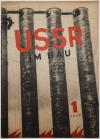 |
Pjatakov, G(eorgi Leonidowitsch, Editor in Chief). USSR in construction. – URSS en construction. Illustrated monthly magazine. – Revue mensuelle illustrée. – Year 1930 – 1937. – Année 1930 – 1937. 84 issues in 7 volumes and 12 issues unbound (1935). Moscow, State Publishing House of the RSFSR 1930-1937. Folio (43 x 30 cm.). With numerous illustrations and fold-out plates Contemporary linen bindings with gold-embossed spine titles (illustrated covers bound in, cover designs and layout by El Lissitzky, Aleksandr Rodchenko and others).
Hellyer 860. Karasik/Heiting 17 ff. Rowell/Wye 242 f. – The first eight volumes of the most important Soviet propaganda magazine. The volumes from 1930 to 1934 are in English and those from 1935 to 1937 are in French; the 1935 volume is available in individual issues. The magazine was published monthly from 1930 to 1949 in five languages (Russian, English, French, Spanish and German). Each issue was dedicated to a different subject, such as food and industrial production, the republic of Georgia, Soviet cinema and elections. – „In the early 1930s photo-reportage became the foundation of the magazine USSR in Construction that „was created as a publication for the popularization of large-scale construction projects by photographic means. But as the magazine grew and developed, the task of ‘popularization’ evolved into that of presenting Socialist reality with dramatic artistry.“ (L. Mezhericher, „Na putiakh k sotsialisticheskomu stiliu fotografii” [“On the way to a Socialist style of photography“], No. 2, p. 14). Well known Soviet designers and photographers worked on USSR in Construction. The industrial spirit of the magazine, expressed in compositionally sharp subjects, panoramas and dynamic shots evokes admiration even today and conveys the atmosphere of enthusiasm that carried along not just the photographers, but also the builders themselves. The creative scale of the construction engendered the photographic epic, a style of monumental artistic photography. The founders of this most successful and high-quality periodical were Gorky and Koltsov“ (Mikhail Karasik). – Binding slightly rubbed, otherwise in very good condition except for slight signs of wear and age. Schlagwörter: Avantgarde, Magazines, Propaganda, Soviet Union, Zeitschriften |
24.000,-- | |
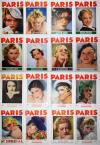 |
Bouchez, Simone (Ed.). Paris magazine. Revue mensuelle. 16 cahiers de la série. 16 Hefte. Paris, G. Desgrandchamps 1933-1935. 4° (27 x 18 cm.). Jeweils ca. 190 S. mit zahlr. teils farb. Abbildungen. Farbig illustr. Orig.-Broschurumschläge.
Dabei: 1932: Nr. 16 (Décembre); 1933: Nr. 17, 18, 20-22, 24 und 25; 1934: Nr. 31, 34-36, 38 und 40; 1935: Nr. 42 und 43. – Die Pariser Erotik-Zeitschrift erschien von 1932 bis 1939. – Mit teils erotischen Fotografien von Bill Brandt, Brassai, Caillaud, Kertesz, Lemare, Man Ray, Manassé, Jean Moral, Perckhammer, Schall, Zielke u.v.a. – Von leichten Gebrauchs- und Altersspuren abgesehen alle Hefte sehr gut erhalten. Schlagwörter: Aktfotografie, Aktphotographie, Erotica, Magazines, Photography of the nude, Zeitschriften |
320,-- | |
 |
Besson, George (Direction Artistique). Mieux Vivre. Revue mensuelle. (Prémiere à quatrième année, janvier 1936 à septrembre 1939 et un numéro hors-série. 46 fascicules en 2 volumes. Villefranche (Rhône), Socièté Publirex 1936-1939. 8°. Avec de nombreuses illustrations et planches en héliogravure. Reliure en demi-cuir de l’époque avec des étiquettes dorées sur le dos.
Série complète de la revue joliment décorée. – Avec des contributions de Marcel Aymé, Tristan Bernard, Jean-Richard Bloch, Francis Carco, Colette, Georges Duhamel, Élie Faure, Louis Guilloux, Francis Jourdain, Paul Léautaud, Georges Lecomte, Charles-Ferdinand Ramuz, Tristan Rémy, Pierre Scize, Emmanuel Sougez, Kees Van Dongen, Maurice de Vlaminck, Charles Vildrac, Henri Wallon et autres. Et avec des photographies de Denise Bellon, Blanc et Demilly, Brassaï, André Kertesz, Ergy Landau, Roger Schall, Emmanuel Sougez, Maurice Tabard, René Zuber et autres. – Chaque cahier traite d’un thème, par exemple: Le Ski, Manger, Boire, Dancer, La Music, Le Football, Les Fleurs, Lire, La Photographie (par Emmanuel Sougez) etc. – Exemplaire très bien conservé et propre. – Complete series of the beautifully decorated magazine. – With contributions by Marcel Aymé, Tristan Bernard, Jean-Richard Bloch, Francis Carco, Colette, Georges Duhamel, Élie Faure, Louis Guilloux, Francis Jourdain, Paul Léautaud, Georges Lecomte, Charles-Ferdinand Ramuz, Tristan Rémy, Pierre Scize, Emmanuel Sougez, Kees Van Dongen, Maurice de Vlaminck, Charles Vildrac, Henri Wallon and others. And with photographs by Denis Bellon, Blanc et Demilly, Brassaï, André Kertesz, Ergy Landau, Roger Schall, Emmanuel Sougez, Maurice Tabard, René Zuber and others. – Each issue deals with a theme, for example: Skiing, Eating, Drinking, Dancing, Music, Football, Flowers, Reading, Photography (by Emmanuel Sougez) etc. – A very well preserved and clean copy. Schlagwörter: France, Magazines, Périodiques, Zeitschriften |
450,-- | |
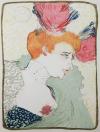 |
Bierbaum, Otto Julius, Julius Meier-Graefe u. a. (Red.). Pan. (Herausgegeben von der) Genossenschaft Pan. Erster (bis) Fünfter Jahrgang. 21 Hefte in 10 Bänden. Berlin, Verlag Pan 1895-1900. Folio (38 x 30 cm.). Mit 106 Originalgraphiken, 126 Tafeln, zwei Musikbeilagen und zahlreichen Textabbildungen sowie Buchschmuck. Orig.-Ledereinband mit goldgepr. Deckelvignette (Jahrgang 1896) und braune Halblederbände der Zeit mit blindgepr. Rückentiteln (illustr. Orig.-Umschläge beigebunden).
Dokumentations-Bibliothek I, 426. Schauer I, 20 ff. Schlawe I, 48 ff. Söhn HDO 525, 526–530. – Eines von 70 num. Exemplaren der Vorzugsausgabe auf Kupferdruck-Papier von E. Obst & Co., Strassburg und Berlin, die Tafeln meist auf Kaiserl. Japan von R. Wagner in Berlin. – Sehr gutes und vollständiges Exemplar mit allen Originalgraphiken, einschließlich der bedeutenden Farblithographie „Mad. Marcelle Lender en buste“ von Henri Toulouse-Lautrec. – Mit den farbigen Umschlägen mit dem Pan-Kopf nach Franz Stuck, allen Titelblättern und Inhaltsverzeichnissen. – „Die nach ihrer Ausstattung erlesenste deutsche Zeitschrift; ihr Hauptverdienst liegt in der Förderung der neuen Buchkunst, die im wesentlichen mit ihr in Deutschland beginnt. … Von den anderen literarischen Zeitschriften unterscheidet ‚Pan‘ besonders sein umgreifender Inhalt (Literatur und Kunst), sein buchkünstlerisches Wollen und seine Ausstattung“ (F. Schlawe). – Mit Originalgraphiken unter anderem von Peter Behrens, Otto Eckmann, Ludwig von Kalckreuth, Max Klinger, Käthe Kollwitz, Max Liebermann, Hans Olde, August Rodin, Paul Signac, Otto Ubbelohde und Henry van de Velde. – Dazu: Pan. Prospect-Buch. Inhalts- und Mitgliederverzeichnis der drei Jahre 1895, 1896, 1897 der Zeitschrift „Pan“. Berlin 1898. OKart. – Der Jahrgang 1896 vollständig auf Kaiserl. Japan gedruckt und im Orig.-Verlagseinband mit einer signierten Orig.-Lithographie von Franz Naager. – Der Ledereinband teils geringfügig berieben, die Deckel der Halblederbände und Schnitte etwas braunfleckig, sehr schönes Exemplar; alle Originalgraphiken alle fleckenfrei. Schlagwörter: Art nouveau, Deluxe edition, Edition de luxe, Jugendstil, Magazines, Nummerierte Bücher, Signierte Künstler-Graphik, Vorzugsausgaben, Zeitschriften |
18.000,-- | |
|
Einträge 1–18 von 18
Zurück · Vor
|
|||
| Seite: 1 |